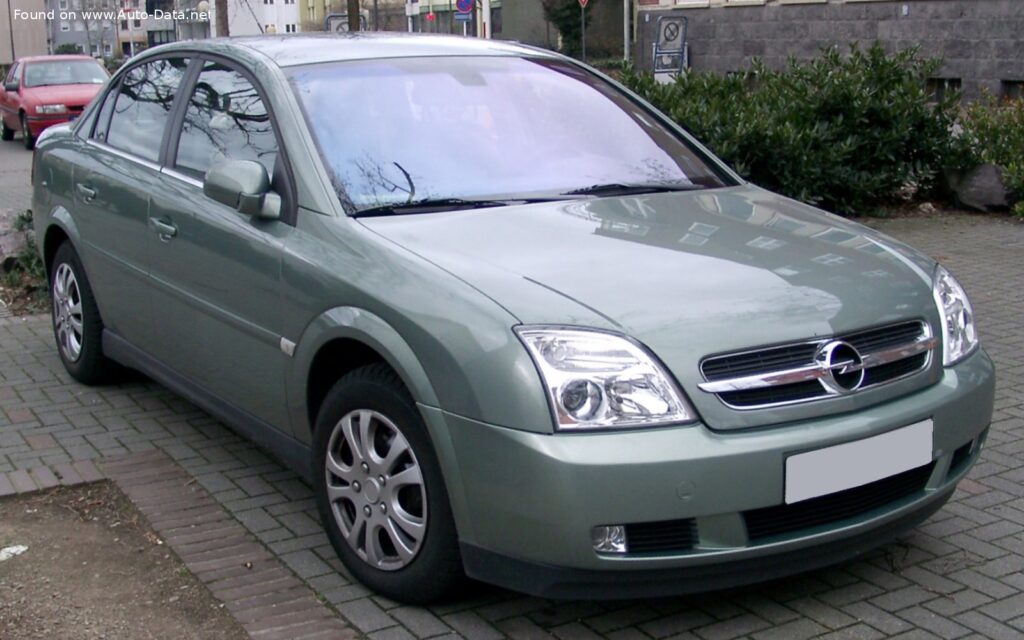
The Opel Vectra C 3.0 CDTI, produced between 2003 and 2005, represents a significant iteration in Opel’s mid-size family car lineage. As the successor to the Vectra B, the C model aimed to offer a more refined driving experience, improved safety features, and a more modern aesthetic. While not officially sold in the United States, the Vectra C was a popular choice in Europe as a practical and relatively affordable family sedan, competing with models like the Ford Mondeo, Volkswagen Passat, and Peugeot 406. The 3.0 CDTI variant, equipped with a turbocharged diesel engine, was positioned as the performance-oriented option within the Vectra C range.
Opel Vectra C 3.0 CDTI: An Overview
The Vectra C marked a departure from previous generations with its more sculpted bodywork and a focus on interior quality. Opel aimed to elevate the Vectra’s image, moving it slightly upmarket. The 3.0 CDTI model, with its larger displacement diesel engine, offered a compelling blend of fuel efficiency and respectable performance. It was primarily sold in European markets, where diesel engines held a significant market share due to favorable taxation and fuel economy.
Engine & Performance
The heart of the Vectra C 3.0 CDTI is its 2.958-liter V6 diesel engine, designated the Y30DT. This engine produces 177 horsepower at 4000 rpm and a substantial 370 Nm (272.9 lb.-ft.) of torque at 1900 rpm. The engine utilizes a common rail direct injection system and is equipped with a turbocharger and intercooler to enhance power and efficiency. This configuration allows for strong acceleration and effortless cruising. Performance figures include a 0-100 km/h (0-62 mph) time of 9.3 seconds, and a 0-60 mph time of 8.8 seconds. The vehicle boasts a maximum speed of 226 km/h (140.43 mph). The engine’s power-to-weight ratio is 9.1 kg/Hp, and the torque-to-weight ratio is 4.4 kg/Nm, contributing to a responsive driving experience. Fuel economy is a strong point, with combined cycle consumption rated at 7.0 l/100 km (33.6 US mpg, 40.4 UK mpg, 14.3 km/l).
Design & Features
The Opel Vectra C is a four-door, five-seat sedan. Its design language, penned under the direction of Martin Smith, featured a more rounded and flowing aesthetic compared to the angular styling of the Vectra B. The interior was designed with practicality and comfort in mind, offering a spacious cabin and a reasonably sized trunk. Trunk space ranges from 500 liters (17.66 cu. ft.) with the rear seats up to 1050 liters (37.08 cu. ft.) with the seats folded down. Safety features, while not as comprehensive as those found in modern vehicles, included ABS (Anti-lock Braking System) as standard. The Vectra C also offered features such as power windows, central locking, and air conditioning, depending on the trim level. The suspension utilizes a spring strut setup at the front and a multi-link system at the rear, providing a balance between ride comfort and handling. The vehicle rides on 215/55 R16 tires mounted on 6.5J x 16 inch wheel rims.
Technical Specifications
| Brand | Opel |
| Model | Vectra |
| Generation | Vectra C |
| Type (Engine) | 3.0 CDTI (177 Hp) |
| Start of production | July, 2003 |
| End of production | June, 2005 |
| Powertrain Architecture | Internal Combustion engine |
| Body type | Sedan |
| Seats | 5 |
| Doors | 4 |
| Fuel consumption (urban) | 9.8 l/100 km (24 US mpg, 28.8 UK mpg, 10.2 km/l) |
| Fuel consumption (extra urban) | 5.4 l/100 km (43.6 US mpg, 52.3 UK mpg, 18.5 km/l) |
| Fuel consumption (combined) | 7 l/100 km (33.6 US mpg, 40.4 UK mpg, 14.3 km/l) |
| Fuel Type | Diesel |
| Acceleration 0 – 100 km/h | 9.3 sec |
| Acceleration 0 – 62 mph | 9.3 sec |
| Acceleration 0 – 60 mph | 8.8 sec |
| Maximum speed | 226 km/h (140.43 mph) |
| Weight-to-power ratio | 9.1 kg/Hp |
| Weight-to-torque ratio | 4.4 kg/Nm |
| Power | 177 Hp @ 4000 rpm |
| Torque | 370 Nm @ 1900 rpm (272.9 lb.-ft. @ 1900 rpm) |
| Engine layout | Front, Transverse |
| Engine Model/Code | Y30DT |
| Engine displacement | 2958 cm3 (180.51 cu. in.) |
| Number of cylinders | 6 |
| Engine configuration | V-engine |
| Cylinder Bore | 87.5 mm (3.44 in.) |
| Piston Stroke | 82 mm (3.23 in.) |
| Compression ratio | 18.5:1 |
| Number of valves per cylinder | 4 |
| Fuel injection system | Diesel Commonrail |
| Engine aspiration | Turbocharger, Intercooler |
| Valvetrain | DOHC |
| Engine oil capacity | 7.25 l (7.66 US qt | 6.38 UK qt) |
| Coolant | 8.3 l (8.77 US qt | 7.3 UK qt) |
| Kerb Weight | 1613 kg (3556.06 lbs.) |
| Max. weight | 2110 kg (4651.75 lbs.) |
| Max load | 497 kg (1095.7 lbs.) |
| Trunk (boot) space – minimum | 500 l (17.66 cu. ft.) |
| Trunk (boot) space – maximum | 1050 l (37.08 cu. ft.) |
| Fuel tank capacity | 61 l (16.11 US gal | 13.42 UK gal) |
| Length | 4596 mm (180.94 in.) |
| Width | 1798 mm (70.79 in.) |
| Height | 1460 mm (57.48 in.) |
| Wheelbase | 2700 mm (106.3 in.) |
| Front track | 1535 mm (60.43 in.) |
| Rear (Back) track | 1525 mm (60.04 in.) |
| Drivetrain Architecture | ICE drives front wheels |
| Drive wheel | Front wheel drive |
| Number of gears and type of gearbox | 6 gears, manual transmission |
| Front suspension | Spring Strut |
| Rear suspension | Several levers and rods |
| Front brakes | Ventilated discs |
| Rear brakes | Disc |
| Assisting systems | ABS (Anti-lock braking system) |
| Steering type | Steering rack and pinion |
| Tires size | 215/55 R16 |
| Wheel rims size | 6.5J x 16 |
The Opel Vectra C 3.0 CDTI, while not a performance car in the purest sense, offered a compelling package of practicality, efficiency, and reasonable performance for European buyers. Its blend of features and its relatively affordable price point contributed to its popularity in a competitive segment. Although it never reached American shores, the Vectra C remains a noteworthy example of Opel’s engineering and design capabilities during the early 2000s.