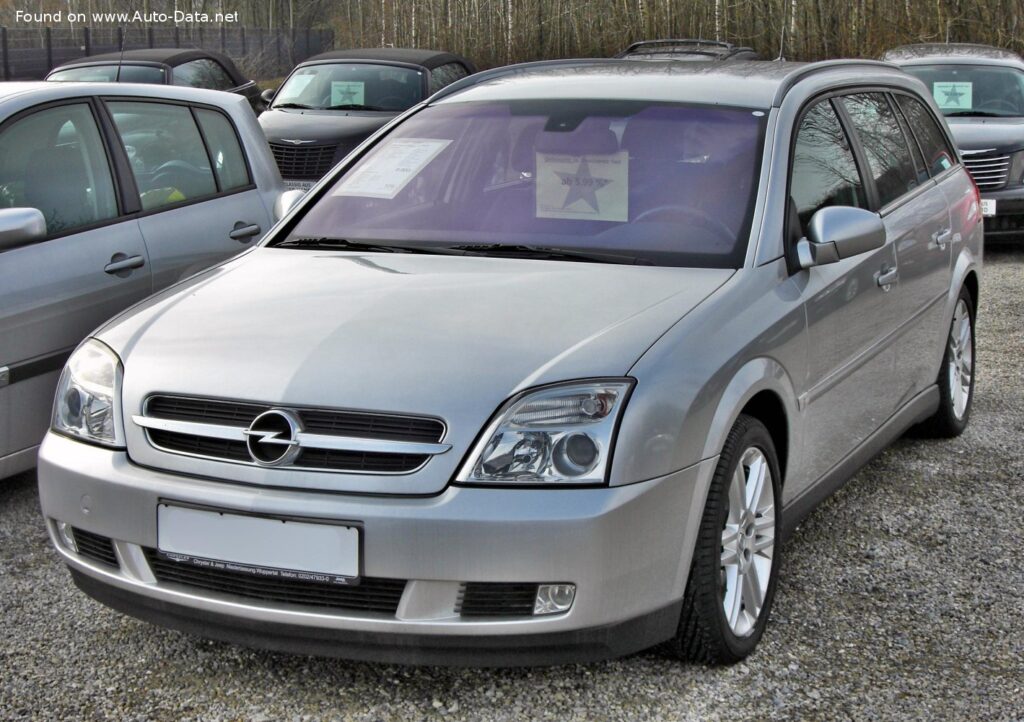
The Opel Vectra C Caravan 1.9 CDTI, produced from 2004 to 2005, represents a significant iteration in Opel’s mid-size family car lineage. As a station wagon (estate) variant of the Vectra C, it aimed to provide practicality and versatility to European drivers. While the Vectra nameplate wasn’t widely marketed in the United States, the model was a popular choice in Europe, competing with vehicles like the Ford Mondeo Estate, Peugeot 407 SW, and Volkswagen Passat Variant. The Vectra C Caravan offered a blend of comfort, space, and relatively efficient diesel power, catering to families and those requiring substantial cargo capacity.
Opel Vectra C Caravan 1.9 CDTI: An Overview
The Vectra C generation, launched in 2002, marked a departure from its predecessors with a more modern design and improved interior quality. The Caravan (estate) version specifically targeted buyers needing a larger, more adaptable vehicle. The 1.9 CDTI engine option, producing 150 horsepower, was a popular choice due to its balance of performance and fuel economy. This model year saw refinements to the engine and transmission systems, aiming for smoother operation and reduced emissions. The Vectra C Caravan was positioned as a practical and reasonably priced option within the competitive European D-segment.
Engine & Performance
The heart of the Vectra C Caravan 1.9 CDTI is a 1.9-liter, inline-four cylinder diesel engine, designated the Z19DTH. This engine utilizes a common rail direct injection system and is turbocharged with an intercooler, allowing it to produce 150 horsepower at 4000 rpm and 320 Nm (236 lb-ft) of torque at 2000 rpm. This torque output provides strong mid-range acceleration, making it well-suited for everyday driving and hauling loads. The engine’s power-to-weight ratio is 10.8 kg/Hp, and the torque-to-weight ratio is 5.1 kg/Nm. The engine’s displacement of 1910 cm³ (116.56 cu. in.) and a compression ratio of 17.5:1 contribute to its efficiency. The engine is transversely mounted at the front of the vehicle, driving the front wheels through a six-speed manual transmission. Acceleration from 0 to 100 km/h (0-62 mph) takes 10.5 seconds, with a top speed of 212 km/h (131.73 mph). Fuel economy is a strong point, with combined cycle consumption rated at 6.1 l/100 km (38.6 US mpg or 46.3 UK mpg).
Design & Features
The Vectra C Caravan boasts a traditional station wagon body style, characterized by its extended roofline and large rear cargo area. The design, while not overtly sporty, is clean and functional. The interior prioritizes practicality and comfort, offering seating for five passengers. Key features included a spacious trunk with a minimum capacity of 530 liters (18.72 cu. ft.), expandable to 1850 liters (65.33 cu. ft.) with the rear seats folded down. Standard safety equipment for the time included ABS (Anti-lock Braking System). The vehicle’s dimensions are 4822 mm (189.84 in) in length, 1798 mm (70.79 in) in width, and 1500 mm (59.06 in) in height. The wheelbase measures 2830 mm (111.42 in). The suspension utilizes a spring strut setup at the front and a multi-link arrangement at the rear, aiming for a balance between ride comfort and handling. Ventilated discs are used for the front brakes, while solid discs are employed at the rear.
Technical Specifications
| Brand | Opel |
| Model | Vectra |
| Generation | Vectra C Caravan |
| Type (Engine) | 1.9 CDTI (150 Hp) |
| Start of production | January, 2004 |
| End of production | 2005 |
| Powertrain Architecture | Internal Combustion engine |
| Body type | Station wagon (estate) |
| Seats | 5 |
| Doors | 5 |
| Fuel consumption (urban) | 7.8 l/100 km (30.2 US mpg) |
| Fuel consumption (extra urban) | 5.1 l/100 km (46.1 US mpg) |
| Fuel consumption (combined) | 6.1 l/100 km (38.6 US mpg) |
| Fuel Type | Diesel |
| Acceleration 0 – 100 km/h | 10.5 sec |
| Acceleration 0 – 62 mph | 10.5 sec |
| Acceleration 0 – 60 mph | 10 sec |
| Maximum speed | 212 km/h (131.73 mph) |
| Weight-to-power ratio | 10.8 kg/Hp |
| Weight-to-torque ratio | 5.1 kg/Nm |
| Power | 150 Hp @ 4000 rpm |
| Torque | 320 Nm @ 2000 rpm (236.02 lb.-ft. @ 2000 rpm) |
| Engine layout | Front, Transverse |
| Engine Model/Code | Z19DTH |
| Engine displacement | 1910 cm3 (116.56 cu. in.) |
| Number of cylinders | 4 |
| Engine configuration | Inline |
| Cylinder Bore | 82 mm (3.23 in.) |
| Piston Stroke | 90.4 mm (3.56 in.) |
| Compression ratio | 17.5:1 |
| Number of valves per cylinder | 4 |
| Fuel injection system | Diesel Commonrail |
| Engine aspiration | Turbocharger, Intercooler |
| Valvetrain | DOHC |
| Engine oil capacity | 4.3 l (4.54 US qt | 3.78 UK qt) |
| Coolant | 7 l (7.4 US qt | 6.16 UK qt) |
| Kerb Weight | 1625 kg (3582.51 lbs.) |
| Max. weight | 2160 kg (4761.98 lbs.) |
| Max load | 535 kg (1179.47 lbs.) |
| Trunk (boot) space – minimum | 530 l (18.72 cu. ft.) |
| Trunk (boot) space – maximum | 1850 l (65.33 cu. ft.) |
| Fuel tank capacity | 60 l (15.85 US gal | 13.2 UK gal) |
| Length | 4822 mm (189.84 in.) |
| Width | 1798 mm (70.79 in.) |
| Height | 1500 mm (59.06 in.) |
| Wheelbase | 2830 mm (111.42 in.) |
| Front track | 1536 mm (60.47 in.) |
| Rear (Back) track | 1525 mm (60.04 in.) |
| Drivetrain Architecture | Front wheel drive |
| Number of gears and type of gearbox | 6 gears, manual transmission |
| Front suspension | Spring Strut |
| Rear suspension | Several levers and rods |
| Front brakes | Ventilated discs |
| Rear brakes | Disc |
| Tires size | 195/65 R15 |
| Wheel rims size | 6.5J X 15 |
The Opel Vectra C Caravan 1.9 CDTI, while not a performance icon, offered a compelling package of practicality, efficiency, and reasonable performance for European buyers. Its spacious interior, large cargo area, and fuel-efficient diesel engine made it a popular choice for families and those needing a versatile vehicle. Though not sold in the US market, it represents a significant example of European automotive engineering during the early 2000s.