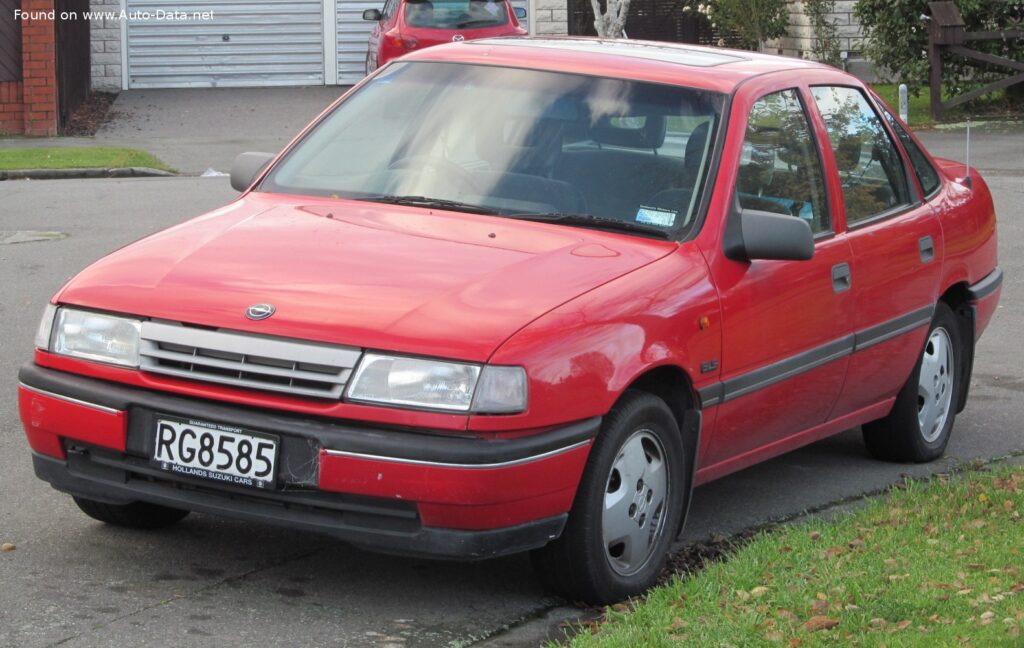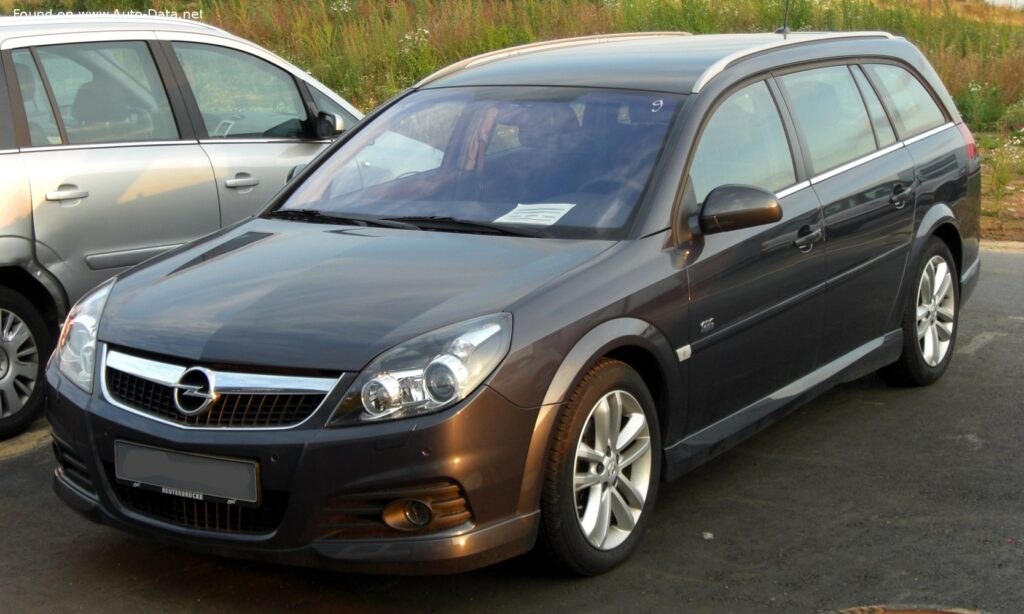
The Opel Vectra C Caravan OPC 2.8i V6 24V Turbo, produced from November 2005 to June 2006, represents the high-performance variant of the Vectra C series, a mid-size family car engineered by the German automaker Opel. The “OPC” designation (Opel Performance Center) signified a focus on enhanced performance and handling. While not officially sold in the United States, the Vectra C was a popular model in Europe, competing with vehicles like the Ford Mondeo and Volkswagen Passat. The Caravan body style, essentially a station wagon or estate, offered increased practicality and cargo space, making it a versatile choice for families and those requiring substantial load-carrying capacity. This facelifted 2005 model featured a potent turbocharged V6 engine, aiming to deliver a sporty driving experience within the confines of a practical family vehicle.
Opel Vectra C Caravan OPC: A Performance Estate
The Vectra C Caravan OPC was designed to appeal to drivers seeking a blend of performance and practicality. It occupied a niche market segment, offering a more engaging driving experience than standard family wagons. The OPC model distinguished itself through a more aggressive exterior styling, a sport-tuned suspension, and, most notably, its powerful engine. The facelift in 2005 brought subtle cosmetic updates to the Vectra C range, including revised front and rear fascias, and interior refinements. The OPC version benefited from these updates, further enhancing its visual appeal. The vehicle’s front-wheel-drive configuration was a common setup for European performance cars of this era, balancing cost and efficiency with handling characteristics.
Engine & Performance
At the heart of the Vectra C Caravan OPC lies the Z28NET 2.8-liter V6 engine. This powerplant is equipped with a turbocharger and intercooler, boosting output to 255 horsepower at 5500 rpm and 355 Nm (261.83 lb.-ft.) of torque available from 1800 to 4500 rpm. This configuration provides a broad torque curve, ensuring strong acceleration across a wide range of engine speeds. The engine’s 91.3 hp per liter specific output demonstrates its relatively high level of tuning. Power is delivered to the front wheels through a six-speed manual transmission, allowing for precise driver control. Performance figures include a 0-100 km/h (0-62 mph) acceleration time of 6.9 seconds and a top speed of 254 km/h (157.83 mph). The 0-60 mph time is calculated at 6.6 seconds. The weight-to-power ratio of 6.1 kg/Hp and weight-to-torque ratio of 4.4 kg/Nm further highlight the vehicle’s performance capabilities.
Design & Features
The Vectra C Caravan OPC is a five-door, five-seat station wagon. Its body style prioritizes practicality, offering a generous 530 liters (18.72 cu. ft.) of trunk space with the rear seats up, expanding to a substantial 1850 liters (65.33 cu. ft.) when the rear seats are folded down. The OPC variant featured unique styling cues, including a more aggressive front bumper, side skirts, and a rear spoiler, differentiating it from the standard Vectra Caravan. Inside, the OPC typically included sport seats, a leather-wrapped steering wheel, and aluminum trim accents. Safety features, common for vehicles of this era, included ABS (Anti-lock Braking System) and ventilated disc brakes on all four wheels. The vehicle rides on 18-inch wheels fitted with 235/40 R18 tires. The overall design aimed to balance sporty aesthetics with the functional requirements of a family estate car.
Technical Specifications
| Brand | Opel |
| Model | Vectra |
| Generation | Vectra C Caravan (facelift 2005) |
| Type (Engine) | OPC 2.8i V6 24V Turbo (255 Hp) |
| Start of production | November, 2005 |
| End of production | June, 2006 |
| Powertrain Architecture | Internal Combustion engine |
| Body type | Station wagon (estate) |
| Seats | 5 |
| Doors | 5 |
| Fuel consumption (urban) | 15.6 l/100 km (15.1 US mpg, 18.1 UK mpg, 6.4 km/l) |
| Fuel consumption (extra urban) | 7.5 l/100 km (31.4 US mpg, 37.7 UK mpg, 13.3 km/l) |
| Fuel consumption (combined) | 10.5 l/100 km (22.4 US mpg, 26.9 UK mpg, 9.5 km/l) |
| Fuel Type | Petrol (Gasoline) |
| Acceleration 0 – 100 km/h | 6.9 sec |
| Acceleration 0 – 62 mph | 6.9 sec |
| Acceleration 0 – 60 mph | 6.6 sec |
| Maximum speed | 254 km/h (157.83 mph) |
| Weight-to-power ratio | 6.1 kg/Hp, 165 Hp/tonne |
| Weight-to-torque ratio | 4.4 kg/Nm, 229.8 Nm/tonne |
| Power | 255 Hp @ 5500 rpm |
| Power per litre | 91.3 Hp/l |
| Torque | 355 Nm @ 1800-4500 rpm (261.83 lb.-ft. @ 1800-4500 rpm) |
| Engine layout | Front, Transverse |
| Engine Model/Code | Z28NET |
| Engine displacement | 2792 cm3 (170.38 cu. in.) |
| Number of cylinders | 6 |
| Engine configuration | V-engine |
| Cylinder Bore | 89 mm (3.5 in.) |
| Piston Stroke | 74.8 mm (2.94 in.) |
| Compression ratio | 9.5:1 |
| Number of valves per cylinder | 4 |
| Fuel injection system | Multi-port manifold injection |
| Engine aspiration | Turbocharger, Intercooler |
| Engine oil capacity | 6 l (6.34 US qt | 5.28 UK qt) |
| Coolant | 7.5 l (7.93 US qt | 6.6 UK qt) |
| Kerb Weight | 1545 kg (3406.14 lbs.) |
| Max. weight | 2190 kg (4828.12 lbs.) |
| Max load | 645 kg (1421.98 lbs.) |
| Trunk (boot) space – minimum | 530 l (18.72 cu. ft.) |
| Trunk (boot) space – maximum | 1850 l (65.33 cu. ft.) |
| Fuel tank capacity | 60 l (15.85 US gal | 13.2 UK gal) |
| Length | 4870 mm (191.73 in.) |
| Width | 1798 mm (70.79 in.) |
| Height | 1487 mm (58.54 in.) |
| Wheelbase | 2830 mm (111.42 in.) |
| Front track | 1536 mm (60.47 in.) |
| Rear (Back) track | 1525 mm (60.04 in.) |
| Drivetrain Architecture | The Internal combustion engine (ICE) drives the front wheels of the vehicle. |
| Drive wheel | Front wheel drive |
| Number of gears and type of gearbox | 6 gears, manual transmission |
| Front suspension | Independent coil spring |
| Rear suspension | Independent coil spring |
| Front brakes | Ventilated discs |
| Rear brakes | Ventilated discs |
| Assisting systems | ABS (Anti-lock braking system) |
| Tires size | 235/40 R18 |
| Wheel rims size | 18 |