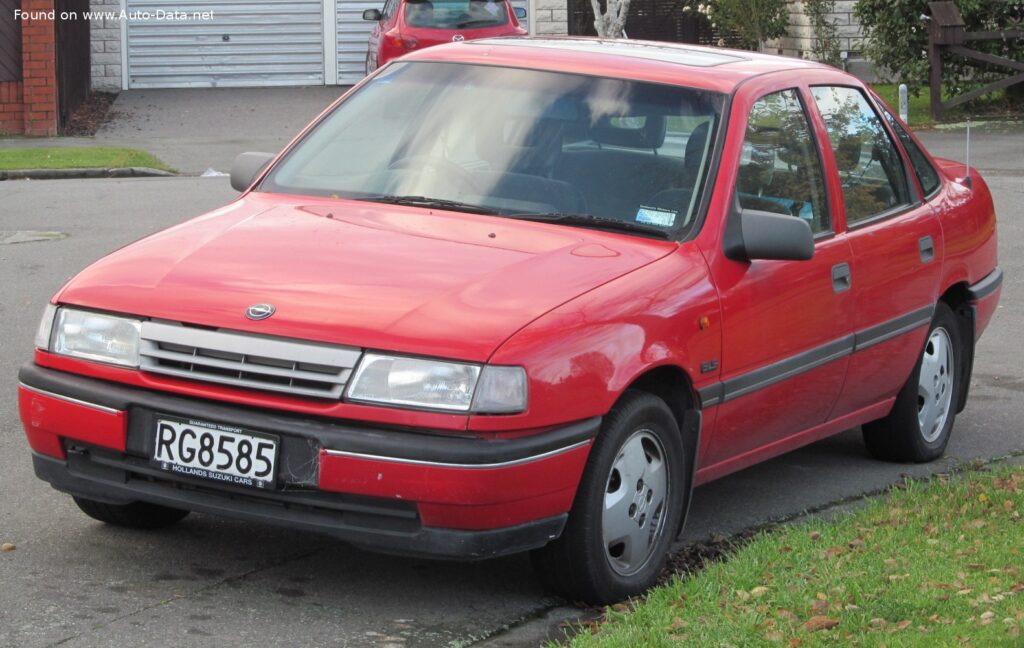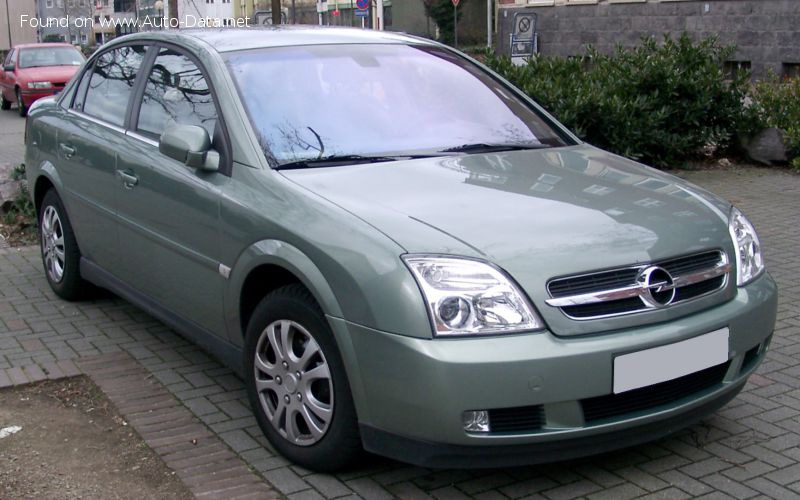
The Opel Vectra C CC 2.0 DTI (100 Hp) stands as a notable entry in the European mid-size segment, representing a key offering during its production run from April 2002 to November 2004. As part of the third generation of the Opel Vectra, known internally as the Vectra C, this particular variant distinguished itself with its five-door hatchback body style, often referred to as a “CC” or “Caravan Concept” in certain markets, emphasizing its practical yet stylish appeal. While the Opel brand was not directly marketed in the United States during this period, the Vectra C played a crucial role in Opel’s strategy across Europe, competing fiercely in a segment characterized by a demand for efficiency, comfort, and versatile cargo capacity. This model, equipped with a robust diesel powertrain, was engineered to deliver a balance of economical operation and reliable performance, catering to both family users and business fleets seeking a dependable daily driver.
The Opel Vectra C CC: Engineering for the European Market
The Opel Vectra C CC 2.0 DTI (100 Hp) was a testament to Opel’s commitment to engineering a car that met the stringent demands of the European automotive landscape in the early 2000s. Its powertrain architecture, based on an internal combustion engine driving the front wheels, was a conventional and proven setup for the segment, prioritizing efficiency and predictable handling. The choice of a diesel engine for this variant was particularly strategic, aligning with the growing preference for diesel powertrains in Europe due to their superior fuel economy and lower CO2 emissions compared to gasoline counterparts of similar output. The Vectra C generation itself marked a significant evolution in design and technology for Opel, moving towards more sophisticated chassis setups and improved interior refinement. The “CC” designation for this hatchback variant underscored its duality: offering the sleek lines of a conventional sedan when viewed from the side, yet providing the enhanced practicality of a large rear tailgate and flexible cargo space.
Engine and Performance of the Opel Vectra C CC 2.0 DTI (100 Hp)
At the heart of the Opel Vectra C CC 2.0 DTI (100 Hp) was a 1.9-liter (1910 cm³ or 116.56 cu. in.) inline four-cylinder diesel engine, codenamed Y20DTH. This powerplant was a prime example of the common-rail diesel technology that became prevalent in the automotive industry during this era, offering improved fuel atomization and combustion efficiency compared to earlier direct injection systems. The engine produced a respectable 100 horsepower at 4000 rpm, which, while not designed for blistering acceleration, provided ample motivation for everyday driving. More significantly, the engine delivered a substantial 236.02 lb.-ft. (320 Nm) of torque at a low 2000 rpm. This characteristic torque delivery was crucial for strong pulling power at lower engine speeds, making the vehicle feel responsive in city traffic and capable on highways, particularly when carrying passengers or cargo.
The engine’s configuration featured a DOHC (Double Overhead Camshaft) valvetrain with four valves per cylinder, optimizing airflow and combustion. Further enhancing its performance and efficiency was a turbocharger coupled with an intercooler, which compressed and cooled the intake air to allow for more oxygen in the combustion chamber, thereby boosting power output. With a compression ratio of 17.5:1, typical for a diesel engine, the Vectra C CC 2.0 DTI offered a balanced performance profile. It could accelerate from 0 to 60 mph in a calculated 12.4 seconds, reaching a maximum speed of 119.3 mph (192 km/h). These figures positioned it as a capable cruiser rather than a sports sedan, perfectly suited for the long distances often covered on European motorways.
Fuel economy was a major selling point for this diesel variant. The combined cycle fuel consumption was rated at an impressive 39.9 US mpg (5.9 l/100 km), with extra-urban driving achieving an even more economical 49 US mpg (4.8 l/100 km). Even in urban conditions, the vehicle managed 29.8 US mpg (7.9 l/100 km), showcasing the inherent efficiency of its diesel powertrain. A 16.11 US gallon (61 liter) fuel tank provided a substantial cruising range, a desirable trait for both commuters and travelers. The engine’s oil capacity was 3.7 US quarts (3.5 liters), and the cooling system held 7.4 US quarts (7 liters) of coolant, indicating a well-engineered thermal management system for durability.
Design, Features, and Practicality
The Opel Vectra C CC sported a contemporary design for its time, characterized by clean lines and a purposeful stance. Its hatchback body type, with five doors and seating for five occupants, emphasized versatility. The vehicle measured 180.94 inches (4596 mm) in length, 70.79 inches (1798 mm) in width (80.16 inches or 2036 mm including mirrors), and 57.48 inches (1460 mm) in height. A generous wheelbase of 106.3 inches (2700 mm) contributed significantly to interior space and ride comfort, while front and rear tracks of 59.96 inches (1523 mm) and 59.57 inches (1513 mm), respectively, ensured stable road holding.
One of the most compelling features of the Vectra C CC was its exceptional cargo capacity. With the rear seats in place, the trunk offered a substantial 17.66 cubic feet (500 liters) of space. Folding down the rear seats expanded this volume to a cavernous 48.03 cubic feet (1360 liters), making it highly practical for transporting larger items, luggage for extended trips, or even catering to small business needs. This flexibility was a key differentiator for the hatchback variant, providing an advantage over its sedan counterpart.
The vehicle’s chassis and suspension systems were designed to provide a comfortable yet composed ride. The front suspension utilized a spring strut setup, a common and effective design for front-wheel-drive vehicles, while the rear suspension featured a more sophisticated multi-link arrangement, enhancing stability and handling dynamics. Braking performance was handled by ventilated discs at the front and solid discs at the rear, complemented by an Anti-lock Braking System (ABS) for enhanced safety during emergency stops. The steering system employed a rack and pinion setup, offering direct and responsive feedback to the driver. Standard tire size was 215/55 R16, mounted on 6.5J x 16 wheel rims, providing a good balance of grip and ride comfort. With a curb weight of 3163.63 lbs (1435 kg) and a maximum permissible weight of 4376.18 lbs (1985 kg), indicating a maximum load capacity of 1212.54 lbs (550 kg), the Vectra C CC was engineered to be a robust and capable vehicle for a wide range of uses.
Technical Specifications: Opel Vectra C CC 2.0 DTI (100 Hp)
| Brand | Opel |
| Model | Vectra |
| Generation | Vectra C CC |
| Type (Engine) | 2.0 DTI (100 Hp) |
| Production Start | April, 2002 |
| Production End | November, 2004 |
| Powertrain Architecture | Internal Combustion engine |
| Body Type | Hatchback |
| Seats | 5 |
| Doors | 5 |
| Fuel Consumption (Urban) | 29.8 US mpg (7.9 l/100 km) |
| Fuel Consumption (Extra Urban) | 49 US mpg (4.8 l/100 km) |
| Fuel Consumption (Combined) | 39.9 US mpg (5.9 l/100 km) |
| Fuel Type | Diesel |
| Acceleration 0 – 60 mph | 12.4 sec |
| Acceleration 0 – 100 km/h | 13 sec |
| Maximum Speed | 119.3 mph (192 km/h) |
| Weight-to-Power Ratio | 14.4 kg/Hp |
| Weight-to-Torque Ratio | 4.5 kg/Nm |
| Power | 100 Hp @ 4000 rpm |
| Power per Liter | 52.4 Hp/l |
| Torque | 236.02 lb.-ft. (320 Nm) @ 2000 rpm |
| Engine Layout | Front, Transverse |
| Engine Model/Code | Y20DTH |
| Engine Displacement | 116.56 cu. in. (1910 cm³) |
| Number of Cylinders | 4 |
| Engine Configuration | Inline |
| Cylinder Bore | 3.23 in. (82 mm) |
| Piston Stroke | 3.56 in. (90.4 mm) |
| Compression Ratio | 17.5:1 |
| Valves per Cylinder | 4 |
| Fuel Injection System | Diesel Commonrail |
| Engine Aspiration | Turbocharger, Intercooler |
| Valvetrain | DOHC |
| Engine Oil Capacity | 3.7 US qt (3.5 l) |
| Engine Oil Specification | Not specified in data |
| Coolant Capacity | 7.4 US qt (7 l) |
| Kerb Weight | 3163.63 lbs (1435 kg) |
| Max. Weight | 4376.18 lbs (1985 kg) |
| Max Load | 1212.54 lbs (550 kg) |
| Trunk Space (Minimum) | 17.66 cu. ft. (500 l) |
| Trunk Space (Maximum) | 48.03 cu. ft. (1360 l) |
| Fuel Tank Capacity | 16.11 US gal (61 l) |
| Length | 180.94 in. (4596 mm) |
| Width | 70.79 in. (1798 mm) |
| Width (inc. Mirrors) | 80.16 in. (2036 mm) |
| Height | 57.48 in. (1460 mm) |
| Wheelbase | 106.3 in. (2700 mm) |
| Front Track | 59.96 in. (1523 mm) |
| Rear Track | 59.57 in. (1513 mm) |
| Front Overhang | 35.63 in. (905 mm) |
| Rear Overhang | 39.02 in. (991 mm) |
| Drivetrain Architecture | Internal combustion engine drives front wheels |
| Drive Wheel | Front wheel drive |
| Gearbox Type | 5 gears, manual transmission |
| Front Suspension | Spring Strut |
| Rear Suspension | Several levers and rods (Multi-link) |
| Front Brakes | Ventilated discs |
| Rear Brakes | Disc |
| Assisting Systems | ABS (Anti-lock braking system) |
| Steering Type | Steering rack and pinion |
| Tires Size | 215/55 R16 |
| Wheel Rims Size | 6.5J x 16 |