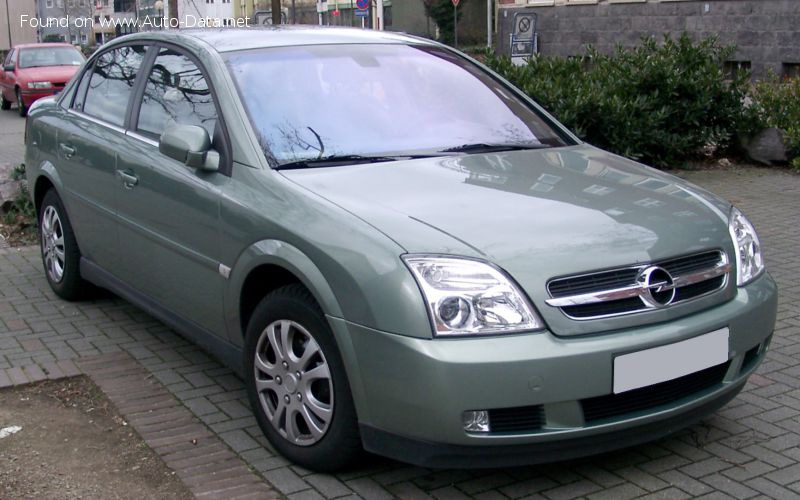
The Opel Vectra C CC 2.0i 16V Turbo, produced between 2003 and 2005, represents a significant iteration in Opel’s mid-size family car lineage. As part of the Vectra C generation (introduced in 2002), the “CC” designation denotes the *Caravan* or station wagon body style, offering increased practicality alongside the standard saloon and hatchback variants. While the Vectra nameplate was discontinued in 2008, replaced by the Insignia, the Vectra C held a prominent position in the European market, competing with vehicles like the Ford Mondeo, Volkswagen Passat, and Peugeot 406. The 2.0i 16V Turbo model, generating 175 horsepower, was a popular choice for drivers seeking a balance of performance and fuel efficiency.
Opel Vectra C CC: A Detailed Overview
The Vectra C represented a substantial leap forward for Opel in terms of design, technology, and overall refinement. It moved away from the more angular styling of its predecessor, adopting a smoother, more contemporary aesthetic. The CC variant, in particular, appealed to buyers needing the versatility of a wagon without sacrificing style. The 2.0i 16V Turbo engine was a key component of the Vectra C’s appeal, offering a responsive driving experience suitable for both daily commutes and longer journeys.
Engine & Performance
At the heart of the Vectra C CC 2.0i 16V Turbo lies a 1998cc (121.93 cubic inches) inline-four cylinder engine. This powerplant, designated Z20NET, utilizes a turbocharger and intercooler to boost output to 175 horsepower at 5500 rpm and 265 Nm (195.45 lb-ft) of torque at 2500 rpm. The engine features multi-port fuel injection and a double overhead camshaft (DOHC) valvetrain with four valves per cylinder. This configuration delivers a respectable power-to-weight ratio of 8.3 kg/Hp and a torque-to-weight ratio of 5.5 kg/Nm. The engine is transversely mounted at the front of the vehicle, driving the front wheels through a five-speed manual transmission. Performance figures include a 0-100 km/h (0-62 mph) acceleration time of 9.1 seconds, and a 0-60 mph time of 8.6 seconds, with a maximum speed of 230 km/h (142.92 mph). Fuel economy is rated at 8.9 l/100 km (26.4 US mpg) combined, with 12.8 l/100 km (18.4 US mpg) in urban conditions and 6.6 l/100 km (35.6 US mpg) on the extra-urban cycle.
Design & Features
The Vectra C CC is a five-door hatchback (wagon) offering seating for five passengers. Its design emphasizes practicality and space, with a focus on maximizing cargo capacity. The rear seats can be folded down to create a significantly larger load area, expanding from a minimum of 500 liters (17.66 cubic feet) to a maximum of 1360 liters (48.03 cubic feet). Safety features, typical for vehicles of this era, include an Anti-lock Braking System (ABS). The vehicle’s dimensions are: length 4596 mm (180.94 in), width 1798 mm (70.79 in) including mirrors 2036 mm (80.16 in), and height 1460 mm (57.48 in). The wheelbase measures 2700 mm (106.3 in), providing a stable and comfortable ride. The front suspension utilizes a spring strut setup, while the rear employs a multi-link system for improved handling and ride quality. Ventilated disc brakes are fitted to the front wheels, with solid discs at the rear. The vehicle rides on 215/55 R16 tires mounted on 6.5J x 16 inch wheel rims.
Technical Specifications
| Brand | Opel |
| Model | Vectra |
| Generation | Vectra C CC |
| Type (Engine) | 2.0i 16V Turbo (175 Hp) |
| Start of production | April, 2003 |
| End of production | 2005 |
| Powertrain Architecture | Internal Combustion engine |
| Body type | Hatchback |
| Seats | 5 |
| Doors | 5 |
| Fuel consumption (urban) | 12.8 l/100 km (18.4 US mpg) |
| Fuel consumption (extra urban) | 6.6 l/100 km (35.6 US mpg) |
| Fuel consumption (combined) | 8.9 l/100 km (26.4 US mpg) |
| Fuel Type | Petrol (Gasoline) |
| Acceleration 0 – 100 km/h | 9.1 sec |
| Acceleration 0 – 62 mph | 9.1 sec |
| Acceleration 0 – 60 mph | 8.6 sec |
| Maximum speed | 230 km/h (142.92 mph) |
| Weight-to-power ratio | 8.3 kg/Hp |
| Weight-to-torque ratio | 5.5 kg/Nm |
| Power | 175 Hp @ 5500 rpm |
| Torque | 265 Nm @ 2500 rpm (195.45 lb.-ft. @ 2500 rpm) |
| Engine layout | Front, Transverse |
| Engine Model/Code | Z20NET |
| Engine displacement | 1998 cm3 (121.93 cu. in.) |
| Number of cylinders | 4 |
| Engine configuration | Inline |
| Cylinder Bore | 86 mm (3.39 in.) |
| Piston Stroke | 86 mm (3.39 in.) |
| Compression ratio | 9.5:1 |
| Number of valves per cylinder | 4 |
| Fuel injection system | Multi-port manifold injection |
| Engine aspiration | Turbocharger, Intercooler |
| Valvetrain | DOHC |
| Engine oil capacity | 6 l (6.34 US qt | 5.28 UK qt) |
| Coolant capacity | 7.5 l (7.93 US qt | 6.6 UK qt) |
| Kerb Weight | 1455 kg (3207.73 lbs.) |
| Max. weight | 1930 kg (4254.92 lbs.) |
| Max load | 475 kg (1047.2 lbs.) |
| Trunk (boot) space – minimum | 500 l (17.66 cu. ft.) |
| Trunk (boot) space – maximum | 1360 l (48.03 cu. ft.) |
| Fuel tank capacity | 61 l (16.11 US gal | 13.42 UK gal) |
| Length | 4596 mm (180.94 in.) |
| Width | 1798 mm (70.79 in.) |
| Width including mirrors | 2036 mm (80.16 in.) |
| Height | 1460 mm (57.48 in.) |
| Wheelbase | 2700 mm (106.3 in.) |
| Front track | 1523 mm (59.96 in.) |
| Rear track | 1513 mm (59.57 in.) |
| Front overhang | 905 mm (35.63 in.) |
| Rear overhang | 991 mm (39.02 in.) |
| Drivetrain | Front wheel drive |
| Number of gears | 5 gears, manual transmission |
| Front suspension | Spring Strut |
| Rear suspension | Several levers and rods |
| Front brakes | Ventilated discs |
| Rear brakes | Disc |
| Assisting systems | ABS (Anti-lock braking system) |
| Steering type | Steering rack and pinion |
| Tires size | 215/55 R16 |
| Wheel rims size | 6.5J x 16 |
The Opel Vectra C CC 2.0i 16V Turbo, while not officially sold in the United States, represents a well-engineered and practical family car that was popular in Europe. Its combination of performance, fuel efficiency, and spaciousness made it a compelling choice for buyers seeking a versatile vehicle for both everyday use and longer journeys.