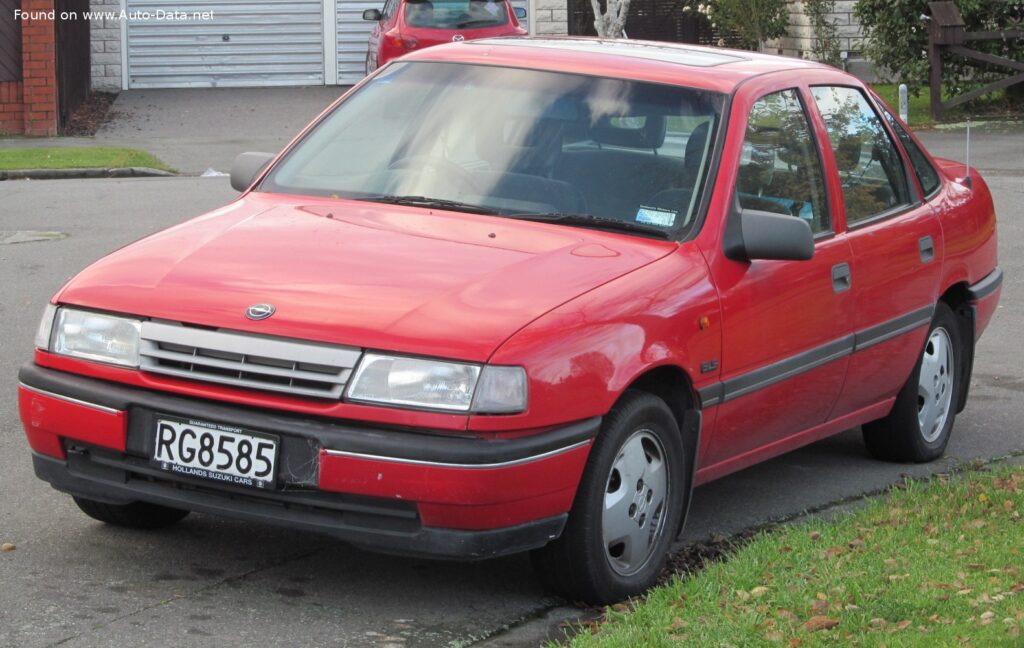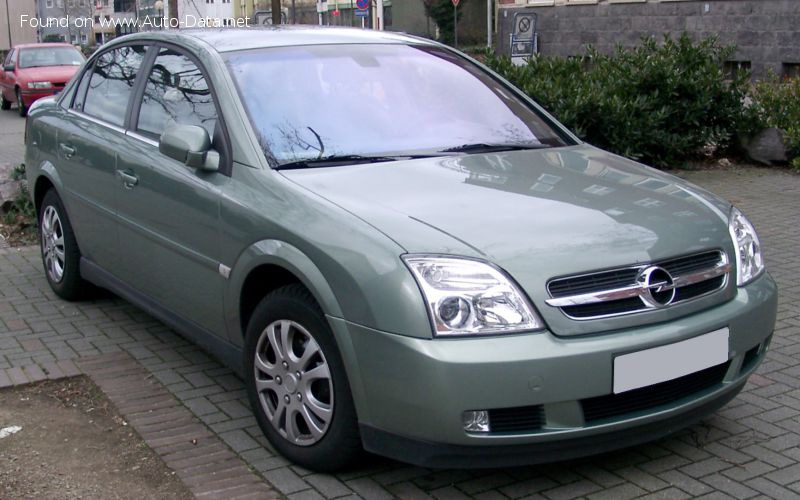
The Opel Vectra C CC 2.2 ECOTEC (147 Hp) represents a significant iteration in Opel’s mid-size family car lineage. Produced between April 2002 and December 2003, this model, specifically the “CC” or Comfort Coupe variant, aimed to blend practicality with a more stylish, hatchback body style. While the Vectra nameplate was well-established in Europe, the C generation marked a move towards more contemporary design and technology. The Vectra C was never officially sold in the United States; however, understanding its specifications provides insight into the European automotive landscape of the early 2000s and Opel’s engineering capabilities during that period. It competed directly with vehicles like the Ford Mondeo, Volkswagen Passat, and Peugeot 406, offering a balance of comfort, performance, and affordability.
Opel Vectra C CC 2.2 ECOTEC: An Overview
The Vectra C CC distinguished itself from the traditional saloon (sedan) version with its five-door hatchback configuration. This body style offered increased versatility and cargo space, appealing to families and those requiring a practical vehicle. The 2.2 ECOTEC engine was a key component of the range, providing a reasonable level of performance for everyday driving. The “ECOTEC” designation signified Opel’s commitment to fuel efficiency and reduced emissions, although these were relative terms for the time. The Vectra C CC was positioned as a mainstream, family-oriented vehicle, prioritizing comfort and usability over outright sportiness.
Engine & Performance
At the heart of the Vectra C CC 2.2 ECOTEC lies a 2.2-liter, inline-four cylinder petrol (gasoline) engine, designated the Z22SE. This naturally aspirated engine produces 147 horsepower at 5600 rpm and 203 Newton-meters (149.73 lb.-ft.) of torque at 4000 rpm. The engine features multi-port fuel injection and a double overhead camshaft (DOHC) valvetrain with four valves per cylinder. This configuration contributes to a respectable power output of 66.9 horsepower per liter. Power is delivered to the front wheels via a five-speed manual transmission. Performance figures include a 0-100 km/h (0-62 mph) acceleration time of 10.2 seconds, and a 0-60 mph time of approximately 9.7 seconds. The vehicle achieves a maximum speed of 216 km/h (134.22 mph). The weight-to-power ratio is 9.4 kg/Hp, and the weight-to-torque ratio is 6.8 kg/Nm, indicating a reasonably efficient powertrain for its time.
Design & Features
The Opel Vectra C CC boasts a five-door hatchback body style, offering a practical and versatile layout. Its dimensions are 4596 mm (180.94 in) in length, 1798 mm (70.79 in) in width, and 1460 mm (57.48 in) in height. The wheelbase measures 2700 mm (106.3 in). Inside, the Vectra C CC provides seating for five passengers. A key feature of the CC variant is its generous cargo capacity, ranging from a minimum of 500 liters (17.66 cu. ft.) to a maximum of 1360 liters (48.03 cu. ft.) with the rear seats folded down. Safety features, typical for the early 2000s, include an Anti-lock Braking System (ABS). The suspension utilizes a spring strut setup at the front and a multi-link arrangement at the rear, aiming to provide a comfortable ride. Ventilated disc brakes are fitted to the front wheels, while solid discs are used at the rear. The vehicle rides on 215/55 R16 tires mounted on 16-inch wheel rims.
Technical Specifications
| Brand | Opel |
| Model | Vectra |
| Generation | Vectra C CC |
| Type (Engine) | 2.2 ECOTEC (147 Hp) |
| Start of production | April, 2002 |
| End of production | December, 2003 |
| Powertrain Architecture | Internal Combustion engine |
| Body type | Hatchback |
| Seats | 5 |
| Doors | 5 |
| Fuel consumption (urban) | 11.9 l/100 km (19.8 US mpg, 23.7 UK mpg, 8.4 km/l) |
| Fuel consumption (extra urban) | 6.7 l/100 km (35.1 US mpg, 42.2 UK mpg, 14.9 km/l) |
| Fuel consumption (combined) | 8.6 l/100 km (27.4 US mpg, 32.8 UK mpg, 11.6 km/l) |
| Fuel Type | Petrol (Gasoline) |
| Acceleration 0 – 100 km/h | 10.2 sec |
| Acceleration 0 – 62 mph | 10.2 sec |
| Acceleration 0 – 60 mph | 9.7 sec |
| Maximum speed | 216 km/h (134.22 mph) |
| Weight-to-power ratio | 9.4 kg/Hp |
| Weight-to-torque ratio | 6.8 kg/Nm |
| Power | 147 Hp @ 5600 rpm |
| Power per litre | 66.9 Hp/l |
| Torque | 203 Nm @ 4000 rpm (149.73 lb.-ft. @ 4000 rpm) |
| Engine layout | Front, Transverse |
| Engine Model/Code | Z22SE |
| Engine displacement | 2198 cm3 (134.13 cu. in.) |
| Number of cylinders | 4 |
| Engine configuration | Inline |
| Cylinder Bore | 86 mm (3.39 in.) |
| Piston Stroke | 94.6 mm (3.72 in.) |
| Compression ratio | 10:1 |
| Number of valves per cylinder | 4 |
| Fuel injection system | Multi-port manifold injection |
| Engine aspiration | Naturally aspirated engine |
| Valvetrain | DOHC |
| Engine oil capacity | 5 l (5.28 US qt | 4.4 UK qt) |
| Coolant | 6.9 l (7.29 US qt | 6.07 UK qt) |
| Kerb Weight | 1375 kg (3031.36 lbs.) |
| Max. weight | 1925 kg (4243.9 lbs.) |
| Max load | 550 kg (1212.54 lbs.) |
| Trunk (boot) space – minimum | 500 l (17.66 cu. ft.) |
| Trunk (boot) space – maximum | 1360 l (48.03 cu. ft.) |
| Fuel tank capacity | 61 l (16.11 US gal | 13.42 UK gal) |
| Length | 4596 mm (180.94 in.) |
| Width | 1798 mm (70.79 in.) |
| Width including mirrors | 2036 mm (80.16 in.) |
| Height | 1460 mm (57.48 in.) |
| Wheelbase | 2700 mm (106.3 in.) |
| Front track | 1523 mm (59.96 in.) |
| Rear (Back) track | 1513 mm (59.57 in.) |
| Front overhang | 905 mm (35.63 in.) |
| Rear overhang | 991 mm (39.02 in.) |
| Drivetrain Architecture | ICE drives the front wheels |
| Drive wheel | Front wheel drive |
| Number of gears and type of gearbox | 5 gears, manual transmission |
| Front suspension | Spring Strut |
| Rear suspension | Several levers and rods |
| Front brakes | Ventilated discs |
| Rear brakes | Disc |
| Assisting systems | ABS (Anti-lock braking system) |
| Steering type | Steering rack and pinion |
| Tires size | 215/55 R16 |
| Wheel rims size | 16 |