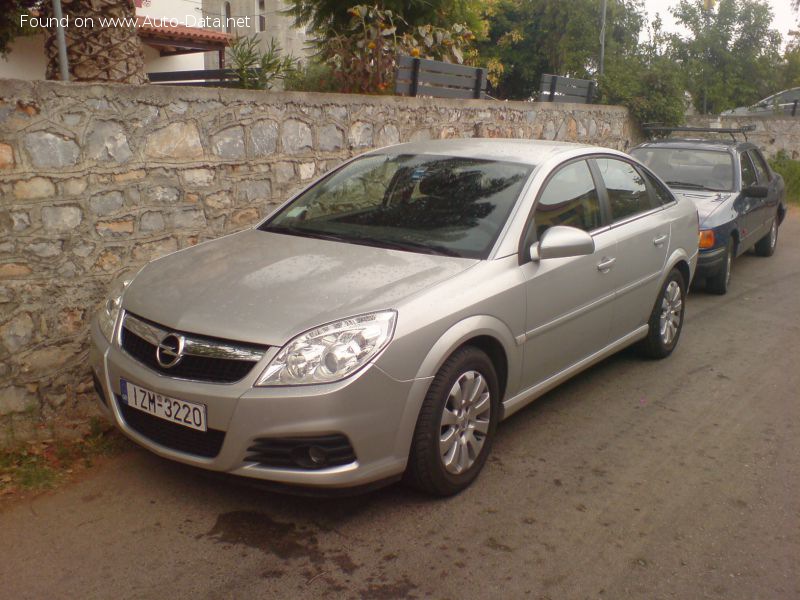
The Opel Vectra C CC (facelift 2005) 3.0 CDTI (184 Hp) represented a compelling offering in the highly competitive European mid-size segment during its production run from July 2005 to August 2008. As part of the third generation of the Vectra lineage, this particular variant, distinguished by its “CC” designation, presented a sleek hatchback body style that blended practicality with a dynamic aesthetic. Positioned as a versatile family car or executive cruiser in its primary markets, particularly across Europe, the Vectra C CC aimed to deliver a refined driving experience, robust performance, and impressive fuel efficiency, largely thanks to its advanced diesel powertrain. While never officially sold in the United States, its technical prowess and market relevance provide insight into the engineering priorities of European manufacturers during the mid-2000s, focusing on diesel technology, sophisticated chassis dynamics, and comprehensive safety features.
The Opel Vectra C CC (facelift 2005) 3.0 CDTI (184 Hp): A European Mid-Size Contender
Powertrain and Dynamic Capabilities
At the heart of the Opel Vectra C CC (facelift 2005) 3.0 CDTI (184 Hp) was a formidable 3.0-liter V6 diesel engine, internally designated as Z30DT. This powerplant, a testament to Opel’s commitment to diesel technology, featured a displacement of 2958 cubic centimeters (180.51 cubic inches). Engineered for both power and efficiency, it delivered a robust 184 horsepower at 4000 rpm, providing ample thrust for highway cruising and confident overtaking maneuvers. More significantly, the engine produced a substantial 400 Nm (295.02 lb.-ft.) of torque, available at a remarkably low 1900 rpm. This characteristic low-end torque is a hallmark of modern diesel engines, contributing to the vehicle’s effortless acceleration and flexible driving dynamics without constant downshifting.
The Z30DT engine incorporated several advanced features to achieve its performance and efficiency targets. A sophisticated direct injection fuel system ensured precise fuel delivery, optimizing combustion and minimizing emissions. Furthermore, the engine benefited from a turbocharger coupled with an intercooler, which significantly boosted air intake density, leading to greater power output and improved throttle response. With a high compression ratio of 18.5:1, typical for a diesel, the engine efficiently converted fuel energy into mechanical power. Power was channeled to the front wheels through a crisp and engaging 6-speed manual transmission, offering drivers direct control over the engine’s considerable output. This drivetrain architecture, combining a powerful V6 diesel with front-wheel drive, was a common and effective setup for European family cars of the era, balancing traction, packaging efficiency, and driving dynamics.
Performance figures underscored the Vectra C CC’s capability. The vehicle could accelerate from 0 to 60 mph in a swift 8.5 seconds (0-100 km/h in 8.9 seconds), making it one of the quicker diesel offerings in its class. Its maximum speed reached an impressive 142.92 mph (230 km/h), demonstrating its Autobahn-ready credentials. Despite its strong performance, fuel economy remained a significant advantage. The 3.0 CDTI achieved an urban fuel consumption of 24 US mpg (9.8 l/100 km) and an even more impressive extra-urban figure of 45.2 US mpg (5.2 l/100 km). These figures highlighted the inherent efficiency of diesel engines, which was a primary driver for their popularity in Europe. The vehicle’s weight-to-power ratio stood at 8.5 kg/Hp (117.6 Hp/tonne), while the weight-to-torque ratio was 3.9 kg/Nm (255.6 Nm/tonne), indicating a well-balanced power-to-weight characteristic for its segment.
Design, Utility, and Safety Innovations
The Opel Vectra C CC (facelift 2005) received a mid-cycle refresh that brought updated styling cues, enhancing its contemporary appeal. As a 5-door hatchback, the “CC” variant offered a distinct profile, blending the practicality of a wagon with the sleeker lines of a coupe, distinguishing it from the traditional sedan and wagon versions of the Vectra. Its dimensions, measuring 181.54 inches (4611 mm) in length, 70.79 inches (1798 mm) in width (80.16 inches or 2036 mm including mirrors), and 57.48 inches (1460 mm) in height, contributed to a substantial road presence while ensuring comfortable interior space for five occupants. The generous 106.3-inch (2700 mm) wheelbase was critical for providing a smooth ride and ample legroom for both front and rear passengers.
Practicality was a strong suit for the Vectra C CC. The hatchback design allowed for a highly versatile cargo area, offering a substantial 17.66 cubic feet (500 liters) of trunk space, which could be expanded further by folding the rear seats. This made it an ideal choice for families requiring flexible load-carrying capabilities, whether for groceries, luggage, or sports equipment. The vehicle’s kerb weight of 3450.23 lbs (1565 kg) contributed to its solid feel and stable handling, while a maximum permissible weight of 4651.75 lbs (2110 kg) indicated a robust build quality and considerable payload capacity of 1201.52 lbs (545 kg).
Underpinning the Vectra C CC’s driving dynamics was a sophisticated chassis featuring independent coil spring suspension at both the front and rear axles. This setup was designed to provide a comfortable ride quality, absorbing road imperfections effectively, while also maintaining composure and precise handling during spirited driving. The front track of 60.47 inches (1536 mm) and rear track of 60.04 inches (1525 mm) contributed to the vehicle’s stability. Braking performance was ensured by disc brakes on all four wheels, providing strong and consistent stopping power. Furthermore, the inclusion of an Anti-lock Braking System (ABS) as standard significantly enhanced safety by preventing wheel lock-up during emergency braking, allowing the driver to maintain steering control. The car rode on 16-inch wheel rims, fitted with 215/55 R16 tires, striking a balance between ride comfort, grip, and aesthetic appeal. The Opel Vectra C CC (facelift 2005) 3.0 CDTI (184 Hp) thus offered a well-rounded package of style, utility, performance, and safety, making it a competitive and desirable option in its segment.
Technical Specifications: Opel Vectra C CC (facelift 2005) 3.0 CDTI (184 Hp)
| Brand | Opel |
| Model | Vectra |
| Generation | Vectra C CC (facelift 2005) |
| Type (Engine) | 3.0 CDTI (184 Hp) |
| Start of production | July, 2005 year |
| End of production | August, 2008 year |
| Powertrain Architecture | Internal Combustion engine |
| Body type | Hatchback |
| Seats | 5 |
| Doors | 5 |
| Fuel consumption (economy) – urban | 9.8 l/100 km (24 US mpg) |
| Fuel consumption (economy) – extra urban | 5.2 l/100 km (45.2 US mpg) |
| Fuel Type | Diesel |
| Acceleration 0 – 62 mph (0-100 km/h) | 8.9 sec |
| Acceleration 0 – 60 mph (Calculated) | 8.5 sec |
| Maximum speed | 230 km/h (142.92 mph) |
| Weight-to-power ratio | 8.5 kg/Hp (117.6 Hp/tonne) |
| Weight-to-torque ratio | 3.9 kg/Nm (255.6 Nm/tonne) |
| Power | 184 Hp @ 4000 rpm |
| Power per liter | 62.2 Hp/l |
| Torque | 400 Nm @ 1900 rpm (295.02 lb.-ft. @ 1900 rpm) |
| Engine layout | Front, Transverse |
| Engine Model/Code | Z30DT |
| Engine displacement | 2958 cm3 (180.51 cu. in.) |
| Number of cylinders | 6 |
| Engine configuration | V-engine |
| Cylinder Bore | 87.5 mm (3.44 in.) |
| Piston Stroke | 82 mm (3.23 in.) |
| Compression ratio | 18.5:1 |
| Number of valves per cylinder | 4 |
| Fuel injection system | Direct injection |
| Engine aspiration | Turbocharger, Intercooler |
| Engine oil capacity | 7.5 l (7.93 US qt) |
| Coolant | 8.3 l (8.77 US qt) |
| Kerb Weight | 1565 kg (3450.23 lbs) |
| Max. weight | 2110 kg (4651.75 lbs) |
| Max load | 545 kg (1201.52 lbs) |
| Trunk (boot) space – maximum | 500 l (17.66 cu. ft.) |
| Fuel tank capacity | 61 l (16.11 US gal) |
| Length | 4611 mm (181.54 in.) |
| Width | 1798 mm (70.79 in.) |
| Width including mirrors | 2036 mm (80.16 in.) |
| Height | 1460 mm (57.48 in.) |
| Wheelbase | 2700 mm (106.3 in.) |
| Front track | 1536 mm (60.47 in.) |
| Rear (Back) track | 1525 mm (60.04 in.) |
| Drivetrain Architecture | The Internal combustion engine (ICE) drives the front wheels of the vehicle. |
| Drive wheel | Front wheel drive |
| Number of gears and type of gearbox | 6 gears, manual transmission |
| Front suspension | Independent coil spring |
| Rear suspension | Independent coil spring |
| Front brakes | Disc |
| Rear brakes | Disc |
| Assisting systems | ABS (Anti-lock braking system) |
| Tires size | 215/55 R16 |
| Wheel rims size | 16 |