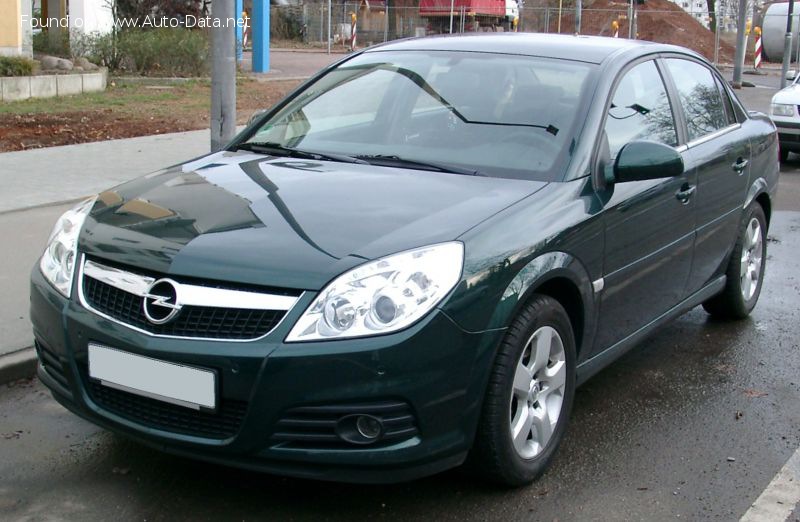
The Opel Vectra C (facelift 2005) 1.9 CDTI represents a significant iteration of Opel’s mid-size offering, positioned as a competitor to vehicles like the Ford Mondeo and Volkswagen Passat in the European market. While not officially sold in the United States, the Vectra C was a popular choice for fleet and private buyers alike, known for its practicality, comfort, and increasingly, its diesel engine efficiency. The 2005 facelift brought styling updates and mechanical refinements, solidifying its position in a competitive segment. This model, specifically the 1.9 CDTI variant producing 150 horsepower, aimed to balance performance with fuel economy, appealing to drivers seeking a versatile and economical vehicle.
Opel Vectra C (facelift 2005) 1.9 CDTI: An Overview
The Vectra C, produced from 2002 to 2008, was Opel’s attempt to modernize its mid-size lineup. The facelift in 2005 addressed some criticisms of the original C model, particularly regarding its interior quality and exterior styling. The 1.9 CDTI engine, a common-rail direct injection diesel, became a key powertrain option, offering a compelling alternative to gasoline engines, especially in Europe where diesel fuel was more affordable and offered better mileage. The Vectra C was primarily available as a four-door sedan and a five-door station wagon (estate), catering to a broad range of customer needs. It represented a step forward for Opel in terms of technology and refinement, though it ultimately faced stiff competition from established rivals.
Engine & Performance
The heart of the Vectra C 1.9 CDTI is its Z19DTH 1.9-liter inline-four cylinder diesel engine. This engine utilizes a turbocharger with an intercooler to boost power output to 150 horsepower at 4000 rpm and 320 Nm (236 lb-ft) of torque at 2000 rpm. The common-rail direct injection system ensures precise fuel delivery, contributing to both performance and fuel efficiency. The engine’s 17.5:1 compression ratio is typical for a diesel engine, maximizing combustion efficiency. Paired with a six-speed manual transmission, the Vectra C 1.9 CDTI achieves a 0-60 mph (0-96 km/h) time of approximately 9.3 seconds and a top speed of 134.84 mph (217 km/h). Fuel economy is a strong point, with combined cycle figures reaching 40.6 US mpg (5.8 l/100 km), making it an attractive option for high-mileage drivers. The weight-to-power ratio of 10.2 kg/Hp and weight-to-torque ratio of 4.8 kg/Nm demonstrate a reasonable balance between engine output and vehicle mass.
Design & Features
The Vectra C facelift retained the overall silhouette of the original C model but received revised front and rear styling, including new headlights, a redesigned grille, and updated taillights. The interior was also subtly refreshed with improved materials and a more modern dashboard layout. As a mid-size sedan, the Vectra C offered comfortable seating for five passengers and a spacious trunk. The trunk capacity ranges from 500 liters (17.66 cu ft) with the rear seats up to 1050 liters (37.08 cu ft) with the seats folded down, providing ample cargo space. Safety features included ABS (Anti-lock Braking System), although more advanced safety systems common in modern vehicles were not as prevalent in the mid-2000s. The focus was on providing a well-rounded package with a good level of comfort and practicality for everyday use. The vehicle’s dimensions – a length of 4511 mm (177.6 in), a width of 1798 mm (70.79 in), and a height of 1460 mm (57.48 in) – positioned it squarely within the mid-size sedan segment.
Technical Specifications
| Brand | Opel |
| Model | Vectra |
| Generation | Vectra C (facelift 2005) |
| Type (Engine) | 1.9 CDTI (150 Hp) |
| Start of production | 2005 |
| End of production | June, 2008 |
| Powertrain Architecture | Internal Combustion engine |
| Body type | Sedan |
| Seats | 5 |
| Doors | 4 |
| Fuel consumption (urban) | 7.5 l/100 km (31.4 US mpg) |
| Fuel consumption (extra urban) | 4.8 l/100 km (49 US mpg) |
| Fuel consumption (combined) | 5.8 l/100 km (40.6 US mpg) |
| Fuel Type | Diesel |
| Acceleration 0 – 100 km/h | 9.8 sec |
| Acceleration 0 – 62 mph | 9.8 sec |
| Acceleration 0 – 60 mph | 9.3 sec |
| Maximum speed | 217 km/h (134.84 mph) |
| Weight-to-power ratio | 10.2 kg/Hp |
| Weight-to-torque ratio | 4.8 kg/Nm |
| Power | 150 Hp @ 4000 rpm |
| Torque | 320 Nm @ 2000 rpm (236.02 lb.-ft. @ 2000 rpm) |
| Engine layout | Front, Transverse |
| Engine Model/Code | Z19DTH |
| Engine displacement | 1910 cm3 (116.56 cu. in.) |
| Number of cylinders | 4 |
| Engine configuration | Inline |
| Cylinder Bore | 82 mm (3.23 in.) |
| Piston Stroke | 90.4 mm (3.56 in.) |
| Compression ratio | 17.5:1 |
| Number of valves per cylinder | 4 |
| Fuel injection system | Diesel Commonrail |
| Engine aspiration | Turbocharger, Intercooler |
| Valvetrain | DOHC |
| Engine oil capacity | 4.3 l (4.54 US qt | 3.78 UK qt) |
| Coolant | 7 l (7.4 US qt | 6.16 UK qt) |
| Kerb Weight | 1523 kg (3357.64 lbs.) |
| Max. weight | 2010 kg (4431.29 lbs.) |
| Max load | 487 kg (1073.65 lbs.) |
| Trunk (boot) space – minimum | 500 l (17.66 cu. ft.) |
| Trunk (boot) space – maximum | 1050 l (37.08 cu. ft.) |
| Fuel tank capacity | 61 l (16.11 US gal | 13.42 UK gal) |
| Length | 4511 mm (177.6 in.) |
| Width | 1798 mm (70.79 in.) |
| Height | 1460 mm (57.48 in.) |
| Wheelbase | 2700 mm (106.3 in.) |
| Front track | 1535 mm (60.43 in.) |
| Rear (Back) track | 1525 mm (60.04 in.) |
| Drivetrain Architecture | Front wheel drive |
| Number of gears and type of gearbox | 6 gears, manual transmission |
| Front suspension | Spring Strut |
| Rear suspension | Several levers and rods |
| Front brakes | Ventilated discs |
| Rear brakes | Disc |
| Assisting systems | ABS (Anti-lock braking system) |
| Steering type | Steering rack and pinion |
| Tires size | 195/65 R15 |
| Wheel rims size | 6.5J x 15 |