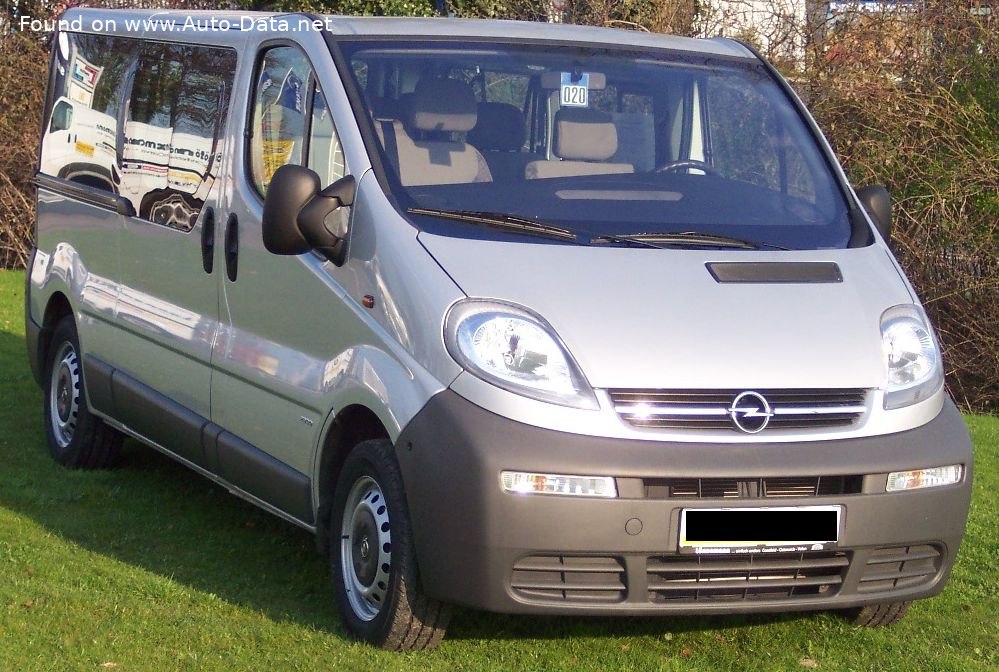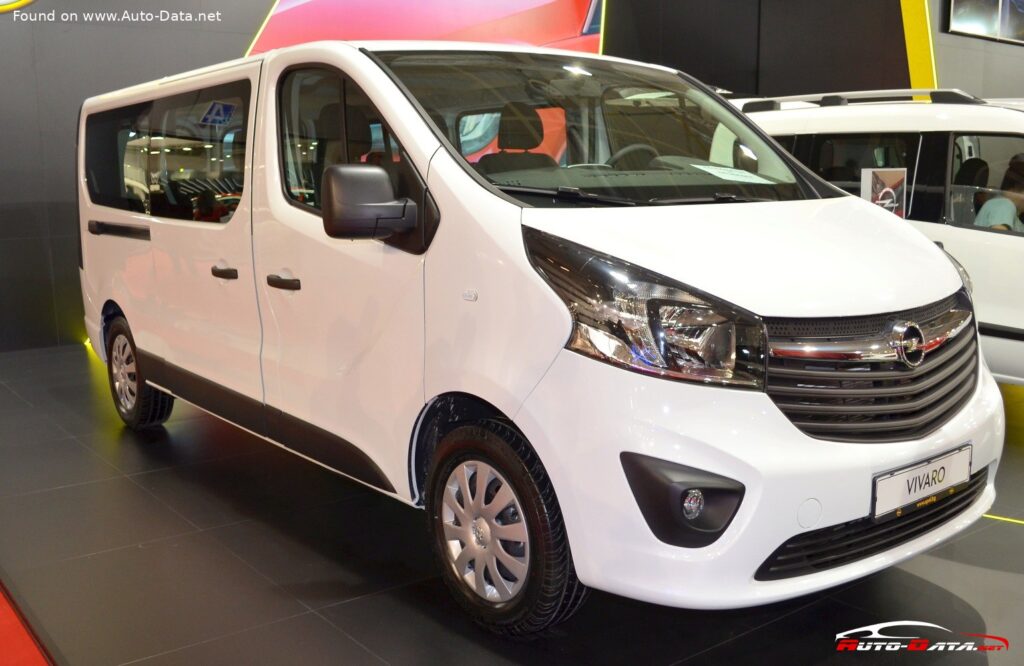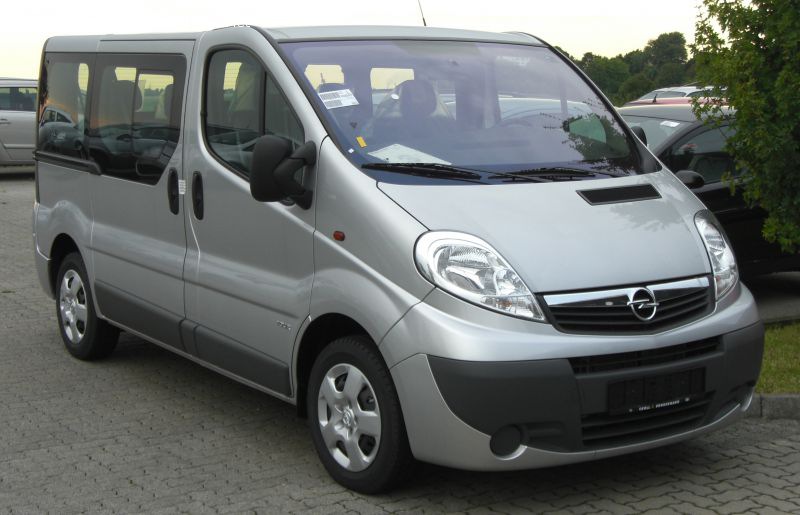
The Opel Vivaro A, particularly the facelifted version introduced in 2006, represents Opel’s entry into the mid-size van segment. While not officially sold in the United States, the Vivaro is a significant vehicle in the European market, competing with models like the Volkswagen Transporter, Ford Transit, and Renault Trafic. The 2010-2013 model year, equipped with the 2.0 CDTI engine producing 114 horsepower and paired with an automatic transmission, was a popular configuration for commercial and family use, offering a balance of practicality, efficiency, and comfort. This generation of the Vivaro catered to businesses needing a reliable workhorse and families requiring a spacious and versatile people carrier.
Opel Vivaro A (Facelift 2006) 2.0 CDTI: An Overview
The Vivaro A, launched in 2001 and receiving a notable facelift in 2006, was a collaborative effort between Opel and Renault, sharing its platform with the Renault Trafic and Nissan Primastar. This partnership allowed for shared development costs and economies of scale. The facelift brought updated styling, improved interior features, and refinements to the engine range. The 2.0 CDTI variant, specifically the 114 horsepower version with a Diesel Particulate Filter (DPF) and automatic transmission, became a mainstay in the lineup, offering a compelling option for those prioritizing ease of driving and reduced emissions. The van’s design focused on maximizing interior space while maintaining a relatively compact footprint for maneuverability in urban environments.
Engine & Performance
The heart of the 2010-2013 Opel Vivaro A 2.0 CDTI is a 1.995-liter inline four-cylinder diesel engine. This engine, designated M9R 782 or M9R 630, produces 114 horsepower at 3500 rpm and a respectable 290 Nm (213.89 lb.-ft.) of torque at 1600 rpm. The torque output, available at relatively low engine speeds, provides ample pulling power for carrying loads or navigating challenging terrain. The engine utilizes a diesel commonrail fuel injection system and is equipped with a turbocharger and intercooler to enhance performance and efficiency. Paired with a six-speed automatic transmission, the Vivaro offers smooth and effortless driving, particularly beneficial in stop-and-go traffic. Acceleration from 0 to 100 km/h (0-62 mph) takes approximately 15 seconds, while 0-60 mph is achieved in around 14.3 seconds. The vehicle has a maximum speed of 160 km/h (99.42 mph). Fuel economy is rated at 7.4 l/100 km (31.8 US mpg) combined, with 8.2 l/100 km (28.7 US mpg) in urban settings and 6.9 l/100 km (34.1 US mpg) on the open road. CO2 emissions range from 205-210 g/km, meeting Euro 5 emission standards.
Design & Features
The Opel Vivaro A is a front-wheel-drive minivan with a four-door configuration and seating for up to nine passengers. Its body style prioritizes practicality and space utilization. The van’s dimensions – 4782 mm (188.27 in) in length, 1904 mm (74.96 in) in width, and 1982 mm (78.03 in) in height – provide a generous interior volume. The wheelbase measures 3098 mm (121.97 in). The interior is designed for durability and ease of cleaning, reflecting its commercial vehicle roots. Key features include a flexible seating arrangement, allowing for various configurations to accommodate passengers and cargo. Trunk space ranges from a minimum of 1200 liters (42.38 cu. ft.) to a maximum of 3100 liters (109.48 cu. ft.) with the rear seats folded. Safety features, typical for the era, include ABS (Anti-lock Braking System) and ventilated front disc brakes, with disc brakes on the rear axle. The vehicle’s kerb weight is 2120 kg (4673.8 lbs), with a maximum permissible weight of 2835 kg (6250.11 lbs), allowing for a substantial payload of 715 kg (1576.31 lbs).
Technical Specifications
| Brand | Opel |
| Model | Vivaro |
| Generation | Vivaro A (facelift 2006) |
| Type (Engine) | 2.0 CDTI (114 Hp) DPF Automatic |
| Start of production | April, 2010 |
| End of production | November, 2013 |
| Powertrain Architecture | Internal Combustion engine |
| Body type | Minivan |
| Seats | 9 |
| Doors | 4 |
| Fuel consumption (urban) | 8.2 l/100 km (28.7 US mpg) |
| Fuel consumption (extra urban) | 6.9 l/100 km (34.1 US mpg) |
| Fuel consumption (combined) | 7.4 l/100 km (31.8 US mpg) |
| CO2 emissions | 210-205 g/km |
| Fuel Type | Diesel |
| Acceleration 0 – 100 km/h | 15 sec |
| Acceleration 0 – 62 mph | 15 sec |
| Acceleration 0 – 60 mph | 14.3 sec |
| Maximum speed | 160 km/h (99.42 mph) |
| Emission standard | Euro 5 |
| Weight-to-power ratio | 18.6 kg/Hp |
| Weight-to-torque ratio | 7.3 kg/Nm |
| Power | 114 Hp @ 3500 rpm |
| Torque | 290 Nm @ 1600 rpm (213.89 lb.-ft. @ 1600 rpm) |
| Engine layout | Front, Transverse |
| Engine Model/Code | M9R 782, M9R 630 |
| Engine displacement | 1995 cm3 (121.74 cu. in.) |
| Number of cylinders | 4 |
| Engine configuration | Inline |
| Number of valves per cylinder | 4 |
| Fuel injection system | Diesel Commonrail |
| Engine aspiration | Turbocharger, Intercooler |
| Engine oil capacity | 7.7 l (8.14 US qt | 6.78 UK qt) |
| Coolant capacity | 6.4 l (6.76 US qt | 5.63 UK qt) |
| Kerb Weight | 2120 kg (4673.8 lbs) |
| Max. weight | 2835 kg (6250.11 lbs) |
| Max load | 715 kg (1576.31 lbs) |
| Trunk (boot) space – minimum | 1200 l (42.38 cu. ft.) |
| Trunk (boot) space – maximum | 3100 l (109.48 cu. ft.) |
| Fuel tank capacity | 90 l (23.78 US gal | 19.8 UK gal) |
| Length | 4782 mm (188.27 in) |
| Width | 1904 mm (74.96 in) |
| Width including mirrors | 2232 mm (87.87 in) |
| Height | 1982 mm (78.03 in) |
| Wheelbase | 3098 mm (121.97 in) |
| Front track | 1615 mm (63.58 in) |
| Rear track | 1630 mm (64.17 in) |
| Ride height (ground clearance) | 164 mm (6.46 in) |
| Minimum turning circle | 12.4 m (40.68 ft) |
| Drive wheel | Front wheel drive |
| Number of gears | 6 gears, automatic transmission |
| Front brakes | Ventilated discs |
| Rear brakes | Disc |
| Tires size | 195/65 R16 |
| Wheel rims size | 16 |