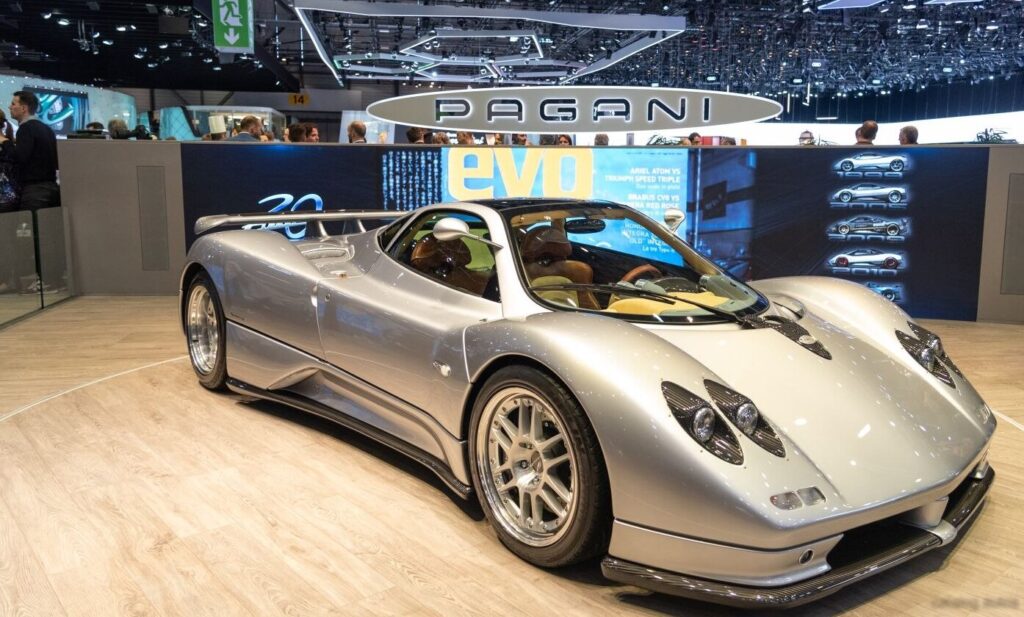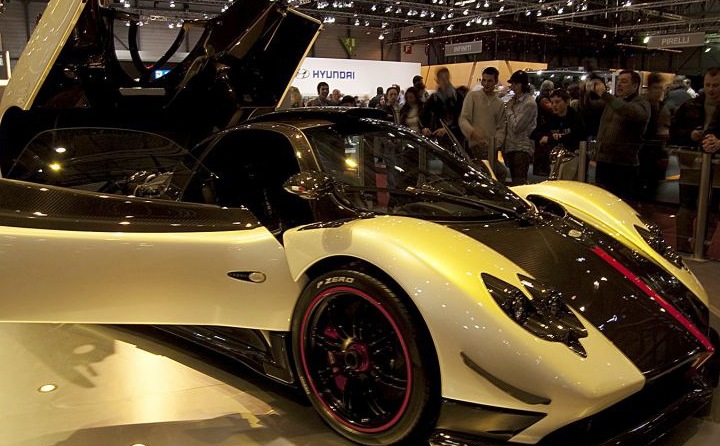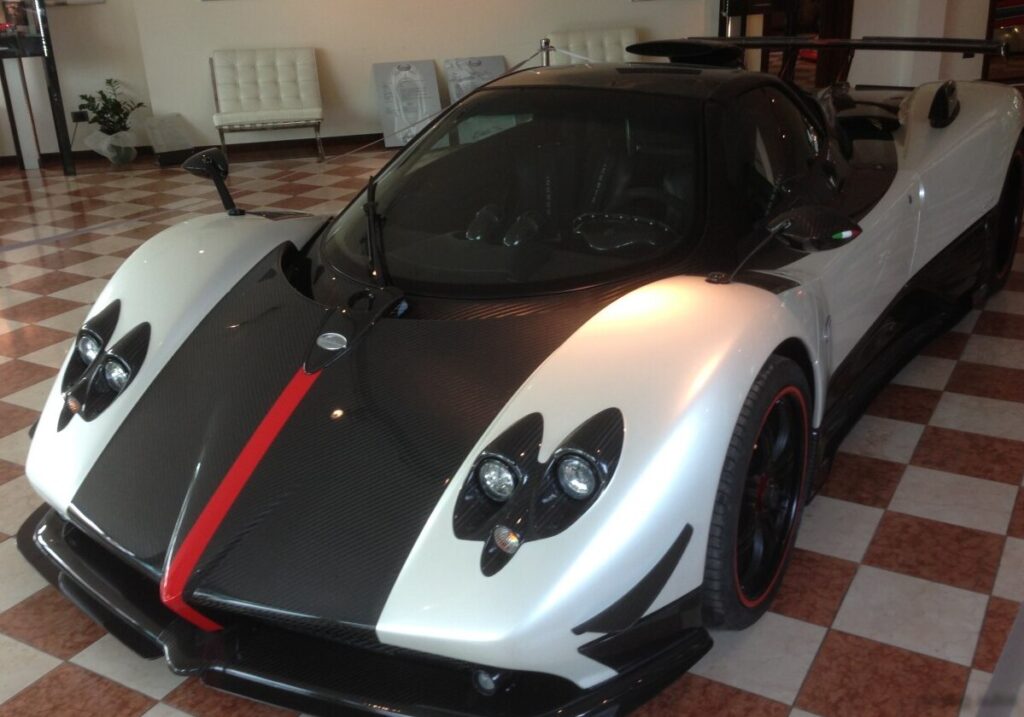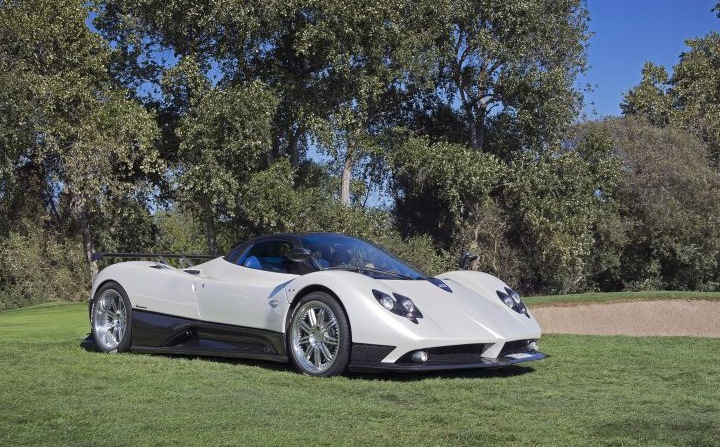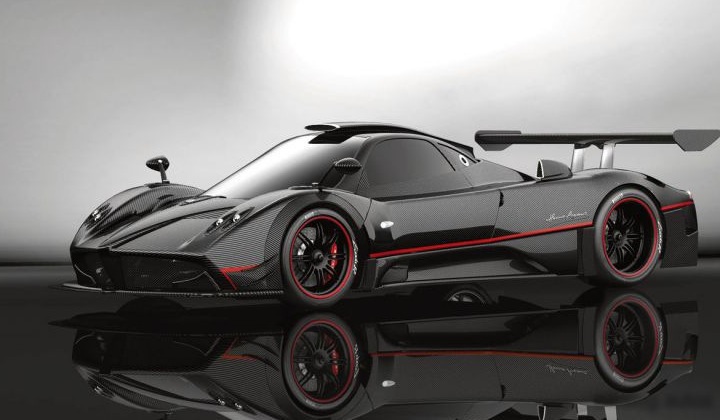
The Pagani Zonda R Revolucion is an extremely limited-production, track-focused variant of the iconic Zonda, produced in 2013. Representing the final iteration of the Zonda lineage before Pagani fully transitioned to the Huayra, the Revolucion was designed to push the boundaries of performance and handling. It was built as a bespoke commission for a single client, with only a handful of examples ultimately created, making it one of the rarest and most sought-after supercars ever produced. The Revolucion distinguishes itself with significant aerodynamic enhancements, a revised suspension setup, and a boosted version of the Zonda’s signature naturally aspirated V12 engine, paired with an automated manual transmission.
Technical Specifications
| Brand | Pagani |
| Model | Zonda |
| Generation | Zonda R |
| Type | Revolucion 6.0 V12 48V (800 Hp) Automatic |
| Start of production | 2013 |
| End of production | 2013 |
| Powertrain Architecture | Internal Combustion engine |
| Body type | Coupe |
| Seats | 2 |
| Doors | 2 |
| Fuel Type | Petrol (Gasoline) |
| Acceleration 0 – 100 km/h | 2.6 sec |
| Acceleration 0 – 62 mph | 2.6 sec |
| Acceleration 0 – 60 mph | 2.5 sec |
| Weight-to-power ratio | 1.3 kg/Hp, 747.7 Hp/tonne |
| Weight-to-torque ratio | 1.5 kg/Nm, 663.6 Nm/tonne |
| Power | 800 Hp @ 8000 rpm |
| Power per litre | 133.6 Hp/l |
| Torque | 710 Nm @ 5700 rpm (523.67 lb.-ft. @ 5700 rpm) |
| Engine layout | Middle, Longitudinal |
| Engine displacement | 5987 cm3 (365.35 cu. in.) |
| Number of cylinders | 12 |
| Engine configuration | V-engine |
| Cylinder Bore | 89 mm (3.5 in.) |
| Piston Stroke | 80.2 mm (3.16 in.) |
| Number of valves per cylinder | 4 |
| Engine aspiration | Naturally aspirated engine |
| Kerb Weight | 1070 kg (2358.95 lbs.) |
| Length | 4886 mm (192.36 in.) |
| Width | 2014 mm (79.29 in.) |
| Height | 1141 mm (44.92 in.) |
| Wheelbase | 2785 mm (109.65 in.) |
| Drivetrain Architecture | Rear wheel drive, Internal Combustion engine (ICE) |
| Number of gears and type of gearbox | 6 gears, automatic transmission |
| Front suspension | Double wishbone |
| Rear suspension | Double wishbone |
| Front brakes | Ventilated discs |
| Rear brakes | Ventilated discs |
| Assisting systems | ABS (Anti-lock braking system) |
| Steering type | Steering rack and pinion |
| Power steering | Electric Steering |
| Front Tires | 255/35 R19 |
| Rear Tires | 335/30 R20 |
| Front Wheel Rims | 19 |
| Rear Wheel Rims | 20 |
Powertrain & Engine Architecture
At the heart of the Zonda R Revolucion lies a 6.0-liter naturally aspirated V12 engine, internally designated as the M120. This engine is a direct descendant of the powerplant originally developed by Mercedes-AMG for racing applications. However, Pagani extensively modified the engine, increasing its output to a staggering 800 horsepower at 8000 rpm and 710 Nm (523.67 lb-ft) of torque at 5700 rpm. The engine features a 65-degree V-angle, four valves per cylinder, and dry-sump lubrication for optimal oil control during extreme cornering. The Revolucion utilizes a sophisticated Bosch Motronic engine management system to control fuel injection and ignition timing. The transmission is a 6-speed automated manual gearbox, offering rapid shifts and precise control. While marketed as an “automatic,” it lacks the smoothness of a traditional torque-converter automatic, prioritizing performance over comfort.
Driving Characteristics
The Zonda R Revolucion delivers a visceral and uncompromising driving experience. The combination of the high-revving V12 engine and the quick-shifting automated manual transmission results in breathtaking acceleration. The car is capable of reaching 0-60 mph in approximately 2.5 seconds and boasts a top speed exceeding 210 mph. The gear ratios are optimized for track use, providing strong acceleration throughout the rev range. Compared to the standard Zonda R, the Revolucion’s revised aerodynamics and suspension tuning contribute to increased downforce and improved handling. The car feels incredibly responsive and planted, inspiring confidence even at the limit. However, the stiff suspension and lack of sound insulation make it less suitable for everyday driving.
Equipment & Trim Levels
Given its ultra-exclusive nature, the Zonda R Revolucion was not offered with traditional trim levels or extensive options lists. Each car was essentially bespoke, tailored to the specific preferences of its owner. Standard features included a carbon fiber monocoque chassis, carbon-ceramic brakes, a fully adjustable suspension system, and a lightweight interior. The interior was typically trimmed in leather and carbon fiber, with minimal creature comforts. Air conditioning and a basic audio system were often included, but the focus remained firmly on performance. The exterior featured extensive carbon fiber bodywork, including a large rear wing, front splitter, and numerous aerodynamic elements designed to maximize downforce.
Chassis & Braking
The Zonda R Revolucion utilizes a carbon fiber monocoque chassis, providing exceptional rigidity and a low weight. The suspension system consists of double wishbones with adjustable dampers and anti-roll bars. The braking system features carbon-ceramic discs and six-piston calipers, delivering immense stopping power and resistance to fade. The car rides on 19-inch wheels at the front and 20-inch wheels at the rear, shod with high-performance tires. The Revolucion’s chassis and braking systems were specifically tuned to handle the car’s increased power and aerodynamic forces.
Market Reception & Comparison
The Zonda R Revolucion was universally praised by automotive journalists and enthusiasts for its incredible performance and uncompromising character. Critics lauded its raw power, exceptional handling, and stunning design. Compared to other Zonda variants, the Revolucion represented the pinnacle of the model’s development. It offered a significant performance advantage over the standard Zonda R, thanks to its increased power, improved aerodynamics, and revised suspension. The Revolucion’s price was estimated to be around $5.5 million, making it one of the most expensive cars of its time. Its exclusivity and limited production run ensured that it remained highly desirable among collectors.
Legacy
The Pagani Zonda R Revolucion stands as a testament to the artistry and engineering prowess of Horacio Pagani and his team. It represents the culmination of years of development and refinement, resulting in a truly exceptional supercar. The Revolucion’s advanced technologies and uncompromising performance paved the way for the Huayra, Pagani’s successor to the Zonda. Today, the Zonda R Revolucion remains highly collectible and sought-after by enthusiasts. Its rarity, performance, and historical significance ensure that it will continue to be celebrated as one of the greatest supercars ever built. The powertrain, while demanding in terms of maintenance, has proven remarkably durable in the hands of knowledgeable owners, and examples continue to be actively used on track days and at exclusive driving events.