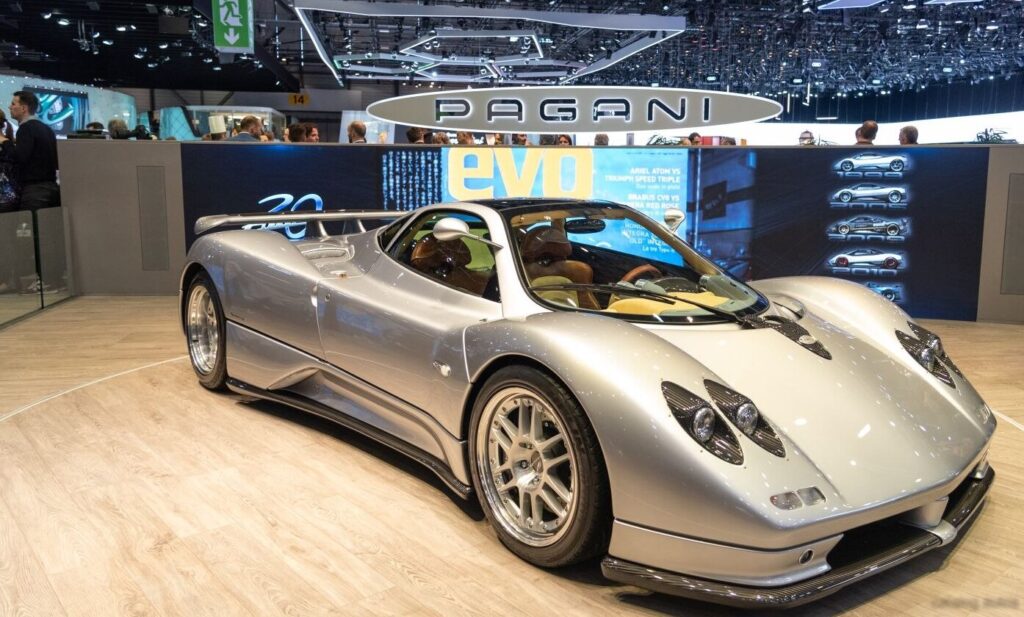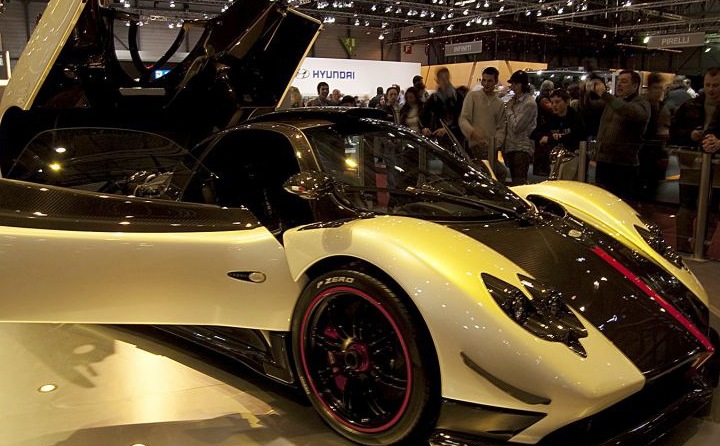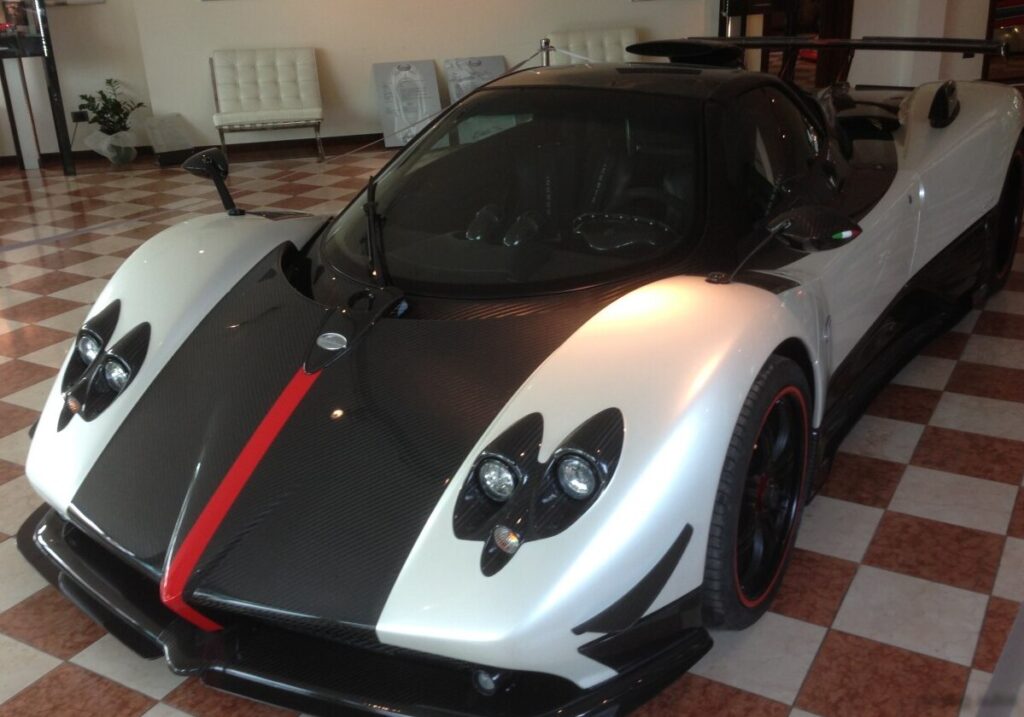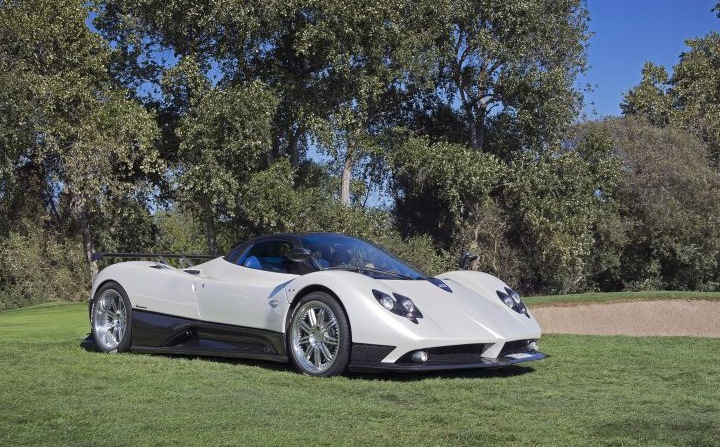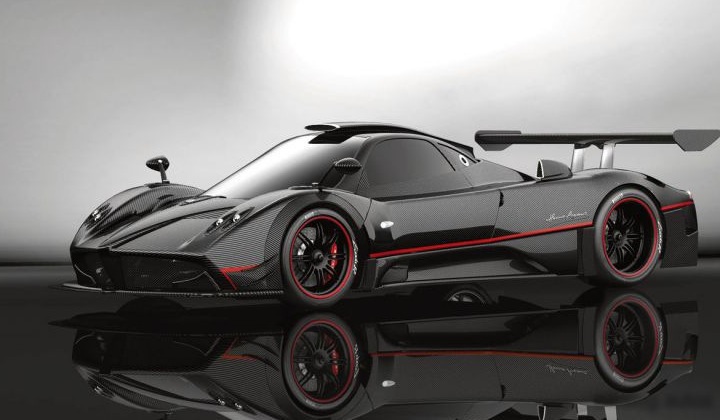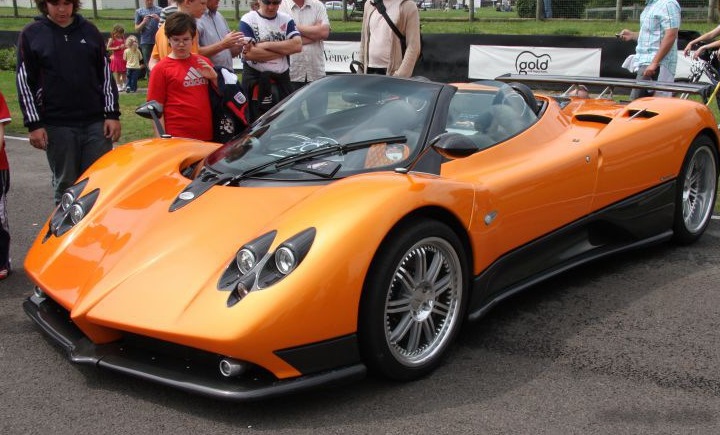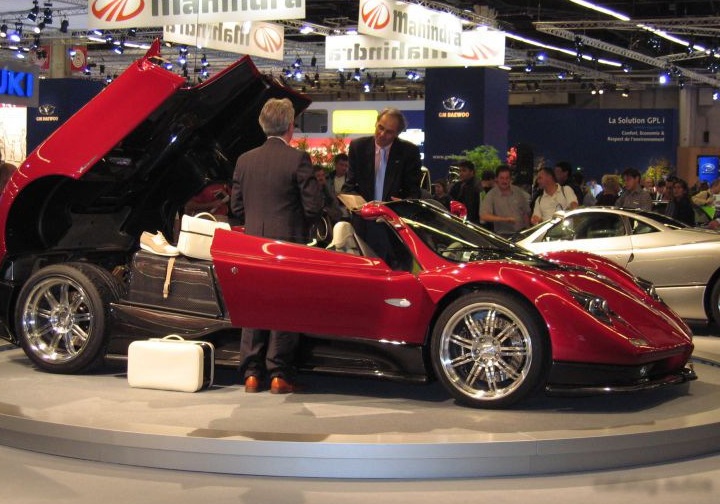
The Pagani Zonda Roadster 7.3 V12 (555 Hp) represents an extreme expression of open-top performance, built by the Italian manufacturer Pagani Automobili between 2002 and 2003. As a derivative of the groundbreaking Zonda coupe, the Roadster variant offered an even more visceral driving experience, sacrificing some of the coupe’s structural rigidity for the thrill of open-air motoring. It was positioned as the ultimate, no-compromise hypercar of its era, appealing to collectors and enthusiasts seeking exclusivity and unparalleled performance. The Zonda Roadster was built on the same carbon-fiber monocoque chassis as the coupe, but with significant modifications to maintain structural integrity after removing the roof.
Technical Specifications
| Brand | Pagani |
| Model | Zonda |
| Generation | Zonda Roadster |
| Type (Engine) | 7.3 V12 (555 Hp) |
| Start of production | 2002 |
| End of production | 2003 |
| Powertrain Architecture | Internal Combustion engine |
| Body type | Roadster |
| Seats | 2 |
| Doors | 2 |
| Fuel Type | Petrol (Gasoline) |
| Acceleration 0 – 100 km/h | 3.7 sec |
| Acceleration 0 – 62 mph | 3.7 sec |
| Acceleration 0 – 60 mph | 3.5 sec |
| Weight-to-power ratio | 2.3 kg/Hp, 433.6 Hp/tonne |
| Weight-to-torque ratio | 1.7 kg/Nm, 585.9 Nm/tonne |
| Power | 555 Hp @ 5900 rpm |
| Power per litre | 76.1 Hp/l |
| Torque | 750 Nm @ 4050 rpm (553.17 lb.-ft. @ 4050 rpm) |
| Engine layout | Middle, Longitudinal |
| Engine displacement | 7291 cm3 (444.92 cu. in.) |
| Number of cylinders | 12 |
| Engine configuration | V-engine |
| Engine aspiration | Naturally aspirated engine |
| Kerb Weight | 1280 kg (2821.92 lbs) |
| Length | 4395 mm (173.03 in) |
| Width | 2055 mm (80.91 in) |
| Height | 1151 mm (45.31 in) |
| Wheelbase | 2730 mm (107.48 in) |
| Drivetrain Architecture | Rear wheel drive. Internal Combustion engine (ICE) |
| Number of gears and type of gearbox | 6 gears, manual transmission |
| Front suspension | Double wishbone |
| Rear suspension | Double wishbone |
| Front brakes | Ventilated discs |
| Rear brakes | Ventilated discs |
| Assisting systems | ABS (Anti-lock braking system) |
| Steering type | Steering rack and pinion |
| Power steering | Electric Steering |
| Tires size | 255/35 R19; 345/30 R19 |
Powertrain & Engine Architecture
The heart of the Zonda Roadster is its M120 V12 engine, originally designed by Mercedes-AMG. Pagani significantly modified this engine, focusing on reducing weight and improving throttle response. The 7.3-liter engine produces 555 horsepower at 5900 rpm and a substantial 750 Nm (553 lb-ft) of torque at 4050 rpm. The engine features a naturally aspirated configuration, eschewing turbocharging or supercharging in favor of a more linear power delivery. Fuel is delivered via multi-port fuel injection, and the engine utilizes four overhead camshafts controlling four valves per cylinder. The engine is mounted longitudinally in a mid-engine layout, contributing to the car’s exceptional balance. The Roadster exclusively came equipped with a 6-speed manual transmission, providing drivers with complete control over the immense power. The transmission was sourced from Graziano Trasmissioni, known for its robust construction and precise shifting.
Driving Characteristics
The Zonda Roadster delivers a raw and uncompromising driving experience. The combination of the powerful V12 engine and the relatively lightweight construction (1280 kg or 2821 lbs) results in blistering acceleration. The 0-60 mph sprint is achieved in approximately 3.5 seconds, and the car can reach a top speed exceeding 200 mph. The manual transmission requires a skilled driver to extract the most performance, but it provides a direct connection to the engine. The Roadster’s open-top configuration amplifies the engine’s roar and the sensation of speed. Compared to potential future iterations with automated transmissions, the manual gearbox emphasizes driver engagement. While the removal of the roof slightly compromised the chassis stiffness compared to the coupe, Pagani engineers implemented reinforcements to minimize flex and maintain a high level of handling precision. The car’s responsiveness and direct steering make it a thrilling machine on winding roads.
Equipment & Trim Levels
The Zonda Roadster was largely a bespoke vehicle, with a high degree of customization available to buyers. Standard features included a leather-lined interior, air conditioning, and power windows. However, the majority of features were options, allowing customers to tailor the car to their specific preferences. Interior upholstery choices were extensive, with a wide range of leather and Alcantara options. Exterior paint colors were also virtually limitless. Optional extras included carbon-fiber trim, upgraded audio systems, and various aerodynamic enhancements. Due to the limited production run and the high price point, most Zonda Roadsters were equipped with a significant number of optional extras.
Chassis & Braking
The Zonda Roadster’s chassis is a carbon-fiber monocoque, providing exceptional strength and rigidity while minimizing weight. The suspension utilizes double wishbones at both the front and rear, with adjustable dampers and anti-roll bars. This setup provides a balance between ride comfort and handling performance. Braking is handled by ventilated discs at all four corners, coupled with an ABS (Anti-lock Braking System) for enhanced safety. The braking system was designed to withstand the extreme stresses of high-performance driving. The Roadster’s tires are specifically chosen for maximum grip, with 255/35 R19 tires at the front and 345/30 R19 tires at the rear.
Market Reception & Comparison
The Pagani Zonda Roadster was universally praised by automotive critics for its breathtaking performance, stunning design, and exclusivity. It was considered a direct competitor to other hypercars of the era, such as the Ferrari Enzo and the Porsche Carrera GT. However, the Zonda Roadster distinguished itself with its more raw and visceral driving experience, as well as its greater degree of customization. Fuel economy was, unsurprisingly, not a priority, with the Zonda Roadster returning relatively poor gas mileage. Reliability was also a concern, as with many high-performance cars, and maintenance costs were substantial. Compared to the Zonda coupe, the Roadster offered a more engaging sensory experience, but at the expense of some structural rigidity.
Legacy
The Pagani Zonda Roadster remains a highly sought-after collector’s item. Its limited production run and iconic status ensure that it will continue to appreciate in value. The M120 V12 engine, while aging, is known for its durability when properly maintained. However, the car’s complex systems and exotic materials require specialized knowledge and expensive parts. The Zonda Roadster’s influence can be seen in subsequent hypercars, which have adopted similar design philosophies and performance targets. It cemented Pagani’s reputation as a manufacturer of uncompromising, high-performance automobiles, and continues to be celebrated as a landmark achievement in automotive engineering.