
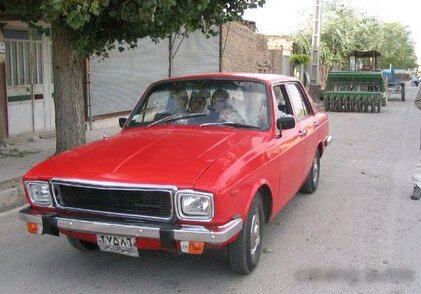
The Paykan Saloon 1.6 (65 hp) represents a significant iteration of Iran’s first domestically produced automobile, the Paykan. Produced from 1985 to 2005, this variant occupied a crucial position in the Iranian automotive market, offering a relatively affordable and practical sedan for a growing middle class. The Paykan, meaning “arrow” in Persian, was initially based on the Rootes Group’s Hillman Hunter, with production continuing long after the original British model ceased production. The 1.6-liter, 65 horsepower version was a mainstay of the lineup, representing a balance between cost, fuel economy, and usability. It was a common sight on Iranian roads for two decades, becoming a cultural icon.
Technical Specifications
| Brand | Paykan |
| Model | Saloon |
| Generation | Saloon |
| Type (Engine) | 1.6 (65 Hp) |
| Start of production | 1985 |
| End of production | 2005 |
| Powertrain Architecture | Internal Combustion engine |
| Body type | Sedan |
| Seats | 5 |
| Doors | 4 |
| Fuel consumption (urban) | 10 l/100 km (23.5 US mpg) |
| Fuel consumption (extra urban) | 8 l/100 km (29.4 US mpg) |
| Fuel Type | Petrol (Gasoline) |
| Maximum speed | 140 km/h (86.99 mph) |
| Weight-to-power ratio | 14.1 kg/Hp |
| Weight-to-torque ratio | 8.3 kg/Nm |
| Power | 65 Hp @ 5000 rpm |
| Power per litre | 40.7 Hp/l |
| Torque | 110 Nm @ 2800 rpm (81.13 lb.-ft. @ 2800 rpm) |
| Engine layout | Front, Longitudinal |
| Engine displacement | 1598 cm3 (97.52 cu. in.) |
| Number of cylinders | 4 |
| Engine configuration | Inline |
| Cylinder Bore | 87.4 mm (3.44 in.) |
| Piston Stroke | 66.7 mm (2.63 in.) |
| Compression ratio | 7.8:1 |
| Number of valves per cylinder | 2 |
| Fuel injection system | Carburettor |
| Engine aspiration | Naturally aspirated |
| Valvetrain | OHC |
| Kerb Weight | 915 kg (2017.23 lbs.) |
| Max. weight | 1380 kg (3042.38 lbs.) |
| Max load | 465 kg (1025.15 lbs.) |
| Trunk (boot) space | 510 l (18.01 cu. ft.) |
| Fuel tank capacity | 45 l (11.89 US gal) |
| Length | 4345 mm (171.06 in.) |
| Width | 1615 mm (63.58 in.) |
| Height | 1420 mm (55.91 in.) |
| Wheelbase | 2500 mm (98.43 in.) |
| Front track | 1320 mm (51.97 in.) |
| Rear track | 1320 mm (51.97 in.) |
| Drivetrain Architecture | Rear wheel drive |
| Drive wheel | Rear wheel drive |
| Number of gears | 4 |
| Type of gearbox | Manual transmission |
| Front suspension | Coil spring |
| Rear suspension | Coil spring |
| Front brakes | Disc |
| Rear brakes | Drum |
| Tires size | 155/85 R13 |
Powertrain & Engine Architecture
The heart of the Paykan Saloon 1.6 (65 hp) was the Paykan 1600 engine, a 1.6-liter inline-four cylinder engine. While derived from the original Hillman Hunter engine, it underwent modifications over the years to suit local conditions and manufacturing capabilities. The engine utilized a single overhead camshaft (OHC) valvetrain with two valves per cylinder. Fuel delivery was managed by a carburetor, a common feature for vehicles of this era, particularly in markets where fuel injection technology was less prevalent or more expensive. The engine produced 65 horsepower at 5000 rpm and 110 Nm (81.13 lb-ft) of torque at 2800 rpm. The engine was longitudinally mounted, driving the rear wheels. The four-speed manual transmission was the standard offering for this variant, providing a relatively simple and robust drivetrain.
Driving Characteristics
The Paykan 1.6 (65 hp) offered modest performance. Acceleration was leisurely, and highway passing required careful planning. The 65 horsepower output, combined with the car’s weight of around 915 kg (2017 lbs), resulted in a weight-to-power ratio of 14.1 kg/hp. The four-speed manual transmission featured relatively widely spaced gear ratios, prioritizing fuel economy over outright performance. Compared to later Paykan variants with larger engines or fuel injection, the 1.6-liter version felt noticeably underpowered. However, its simplicity and relatively low maintenance requirements made it a popular choice for everyday commuting and family transportation.
Equipment & Trim Levels
The Paykan Saloon 1.6 (65 hp) was typically offered with a basic level of equipment. Standard features included cloth upholstery, a simple dashboard layout with analog gauges, and basic exterior trim. Air conditioning and a radio were often optional extras. The interior was functional and durable, designed to withstand the harsh conditions often encountered in Iran. Trim levels were relatively limited, with most examples featuring similar levels of equipment. The focus was on providing a reliable and affordable vehicle rather than luxury or advanced features.
Chassis & Braking
The Paykan Saloon utilized a body-on-frame construction, a design characteristic of older vehicles. The suspension consisted of coil springs all around, providing a reasonably comfortable ride, although it wasn’t particularly sophisticated. The front brakes were disc brakes, while the rear brakes were drum brakes. This configuration was typical for vehicles of this era and price point. Steering was unassisted, requiring some effort at low speeds. The 155/85 R13 tires provided adequate grip for normal driving conditions.
Market Reception & Comparison
The Paykan Saloon 1.6 (65 hp) was well-received in the Iranian market as an affordable and practical family car. It offered a significant step up in terms of comfort and convenience compared to older, smaller vehicles. Critics generally praised its durability and ease of maintenance. Compared to other Paykan variants, such as those with larger engines or fuel injection, the 1.6-liter version was considered more economical to operate. However, its lack of power was a common criticism. Fuel economy was reasonable for the time, averaging around 10 liters per 100 km in urban driving and 8 liters per 100 km on the highway.
Legacy
The Paykan Saloon 1.6 (65 hp) holds a significant place in Iranian automotive history. It was a symbol of national pride and self-sufficiency, representing Iran’s first attempt at large-scale automobile production. While the Paykan has long been discontinued, it remains a popular classic car among enthusiasts. The 1.6-liter engine, while not particularly powerful, proved to be relatively reliable and durable. Parts availability remains good in Iran, making it relatively easy to keep these vehicles on the road. Today, well-maintained examples of the Paykan Saloon 1.6 (65 hp) are sought after by collectors and those seeking a nostalgic reminder of Iran’s automotive past.
