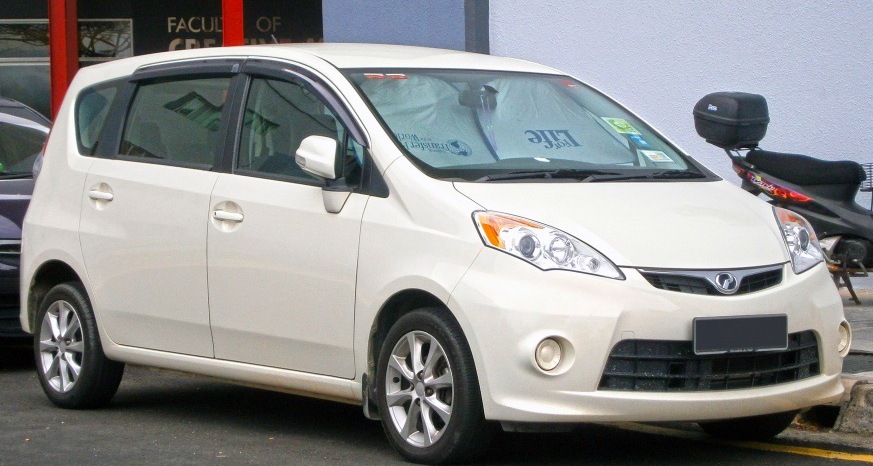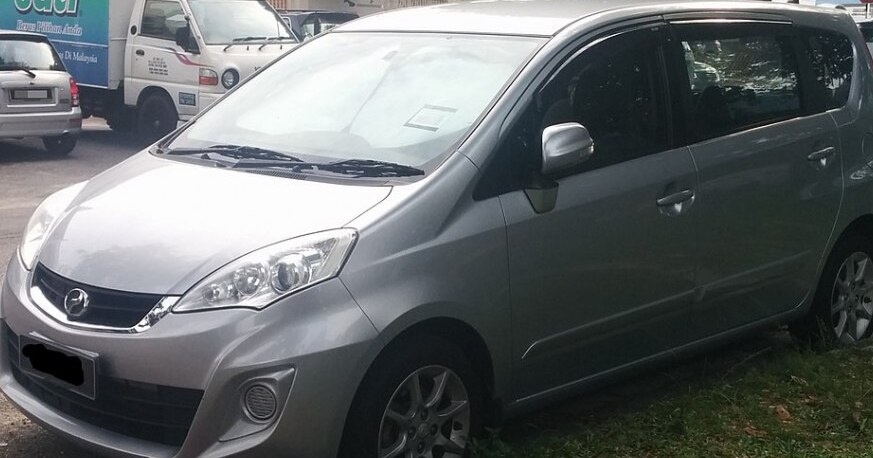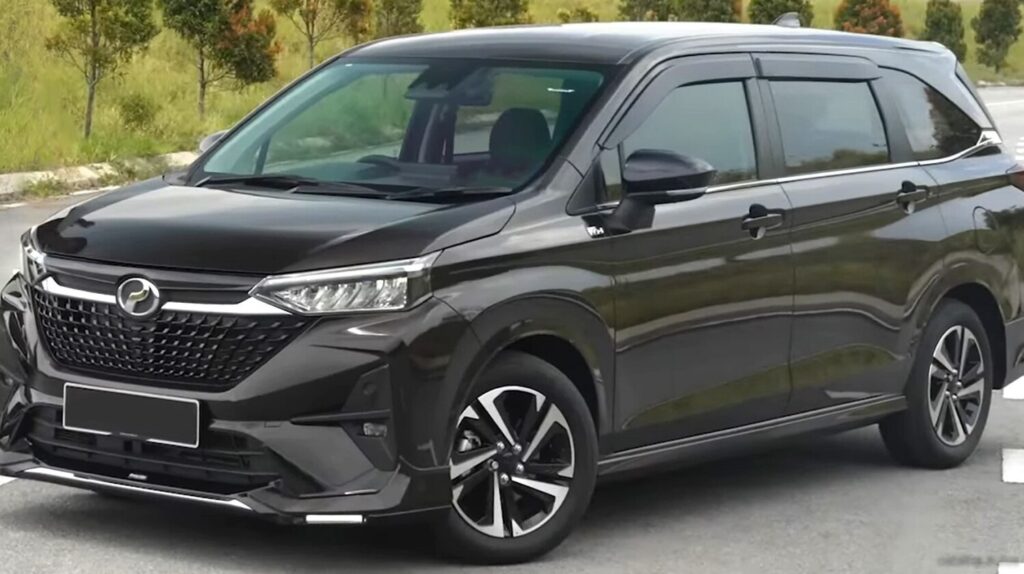
The Perodua Alza II (W150) 1.5L, producing 106 horsepower with a D-CVT transmission, represents a significant evolution in Perodua’s multi-purpose vehicle (MPV) offerings. Introduced in July 2022, this variant occupies a crucial position within the second-generation Alza lineup, designed to cater to families and practical transport needs in the Malaysian market. The W150 generation marked a shift from the first-generation Alza, utilizing a completely new platform and powertrain, moving away from a rebadged Daihatsu Xenia to a more modern and independent design. This specific 1.5L D-CVT configuration is positioned as the mainstream offering, balancing affordability with acceptable performance and fuel efficiency.
Technical Specifications
| Brand | Perodua |
| Model | Alza |
| Generation | Alza II (W150) |
| Type (Engine) | 1.5L (106 Hp) D-CVT |
| Start of production | July, 2022 |
| Powertrain Architecture | Internal Combustion engine |
| Body type | MPV |
| Seats | 7 |
| Doors | 5 |
| Fuel consumption (economy) – combined | 4.5 l/100 km (52.3 US mpg, 62.8 UK mpg, 22.2 km/l) |
| Fuel Type | Petrol (Gasoline) |
| Weight-to-power ratio | 10.8 kg/Hp, 92.6 Hp/tonne |
| Weight-to-torque ratio | 8.3 kg/Nm, 120.5 Nm/tonne |
| Power | 106 Hp @ 6000 rpm |
| Power per litre | 70.9 Hp/l |
| Torque | 138 Nm @ 4200 rpm (101.78 lb.-ft. @ 4200 rpm) |
| Engine layout | Front, Transverse |
| Engine Model/Code | 2NR-VE |
| Engine displacement | 1496 cm3 (91.29 cu. in.) |
| Number of cylinders | 4 |
| Engine configuration | Inline |
| Number of valves per cylinder | 4 |
| Fuel injection system | Multi-port manifold injection |
| Engine aspiration | Naturally aspirated engine |
| Valvetrain | DOHC, DUAL VVT-i |
| Engine oil capacity | 3.5 l (3.7 US qt | 3.08 UK qt) |
| Kerb Weight | 1145-1170 kg (2524.29 – 2579.41 lbs.) |
| Trunk (boot) space – minimum | 137 l (4.84 cu. ft.) |
| Trunk (boot) space – maximum | 498 l (17.59 cu. ft.) |
| Length | 4425 mm (174.21 in.) |
| Width | 1730 mm (68.11 in.) |
| Height | 1660-1670 mm (65.35 – 65.75 in.) |
| Wheelbase | 2750 mm (108.27 in.) |
| Ride height (ground clearance) | 150-160 mm (5.91 – 6.3 in.) |
| Minimum turning circle (turning diameter) | 10 m (32.81 ft.) |
| Drivetrain Architecture | The Internal combustion engine (ICE) drives the front wheels of the vehicle. |
| Drive wheel | Front wheel drive |
| Number of gears and type of gearbox | automatic transmission D-CVT |
| Front brakes | Ventilated discs |
| Rear brakes | Drum |
| Assisting systems | ABS (Anti-lock braking system) |
| Steering type | Steering rack and pinion |
| Power steering | Electric Steering |
| Tires size | 185/65 R15; 195/60 R16 |
| Wheel rims size | 15; 16 |
Powertrain & Engine Architecture
The heart of the Alza II 1.5L is the 2NR-VE engine, a 1.5-liter inline-four cylinder gasoline engine. This engine utilizes a multi-point fuel injection system and benefits from Toyota’s Dual VVT-i (Variable Valve Timing-intelligence) technology, optimizing valve timing for both intake and exhaust to improve efficiency and power delivery. The engine produces 106 horsepower at 6000 rpm and 138 Nm (101.78 lb-ft) of torque at 4200 rpm. The engine is transversely mounted, driving the front wheels. Paired with this engine is Perodua’s D-CVT (Dual-mode Continuously Variable Transmission). This isn’t a traditional CVT; it incorporates a first gear for initial acceleration and then seamlessly transitions to a CVT-like operation for smoother, more efficient cruising. This design aims to provide a more responsive feel than a standard CVT, addressing a common criticism of CVTs.
Driving Characteristics
The 1.5L D-CVT Alza delivers adequate performance for its intended purpose – family transportation. Acceleration is not brisk, but sufficient for everyday driving conditions. The D-CVT transmission contributes to smooth gear changes, although it can sometimes exhibit a slight “rubber band” feel characteristic of CVTs, particularly under hard acceleration. The transmission’s gear ratios are tuned for fuel economy, prioritizing efficiency over outright performance. Compared to a hypothetical manual transmission version (not offered), the D-CVT prioritizes ease of use and fuel savings, making it ideal for urban driving and less experienced drivers. It’s noticeably less powerful than higher-spec Alza variants, but the trade-off is improved fuel economy.
Equipment & Trim Levels
The 1.5L Alza typically comes with a reasonable level of standard equipment. This generally includes power windows, power door locks, air conditioning, and a basic audio system. Higher trim levels within the 1.5L range (and the 1.5S variant) add features like alloy wheels, a touchscreen infotainment system with Bluetooth connectivity, reverse parking sensors, and sometimes, a rearview camera. Interior upholstery is typically fabric, with options for different color schemes. Safety features generally include dual front airbags and ABS (Anti-lock Braking System). Optional extras often include body kits, upgraded audio systems, and window tinting.
Chassis & Braking
The Alza II utilizes a front MacPherson strut suspension and a rear torsion beam suspension. This setup is designed to provide a comfortable ride while maintaining reasonable handling characteristics. The front brakes are ventilated discs, providing adequate stopping power, while the rear brakes are drums, a cost-saving measure common in this segment. The steering is an electric power steering system, offering light and easy steering feel, particularly useful for maneuvering in tight urban spaces. Stabilizer bars are included to reduce body roll during cornering, enhancing stability.
Market Reception & Comparison
The Perodua Alza II 1.5L D-CVT has been well-received in the Malaysian market, largely due to its affordability, practicality, and fuel efficiency. Critics have praised its spacious interior and comfortable ride. However, some have noted the engine’s lack of outright power, particularly when fully loaded with passengers and luggage. Compared to the 1.5S variant, the base 1.5L model offers a more budget-friendly option, sacrificing some features and styling enhancements. Fuel economy is a key strength, consistently achieving around 4.5 liters per 100 kilometers in real-world driving conditions. Reliability is generally considered good, consistent with Perodua’s reputation for building durable and dependable vehicles.
Legacy
The Perodua Alza II 1.5L D-CVT is expected to have good long-term reliability, benefiting from Toyota’s engine technology and Perodua’s established maintenance network. The 2NR-VE engine is known for its durability, and the D-CVT transmission, while not without its quirks, has proven to be relatively reliable in other Perodua models. In the used car market, this variant is likely to hold its value reasonably well, appealing to budget-conscious buyers seeking a practical and spacious MPV. Its combination of affordability, fuel efficiency, and practicality ensures its continued relevance in the Malaysian automotive landscape for years to come.