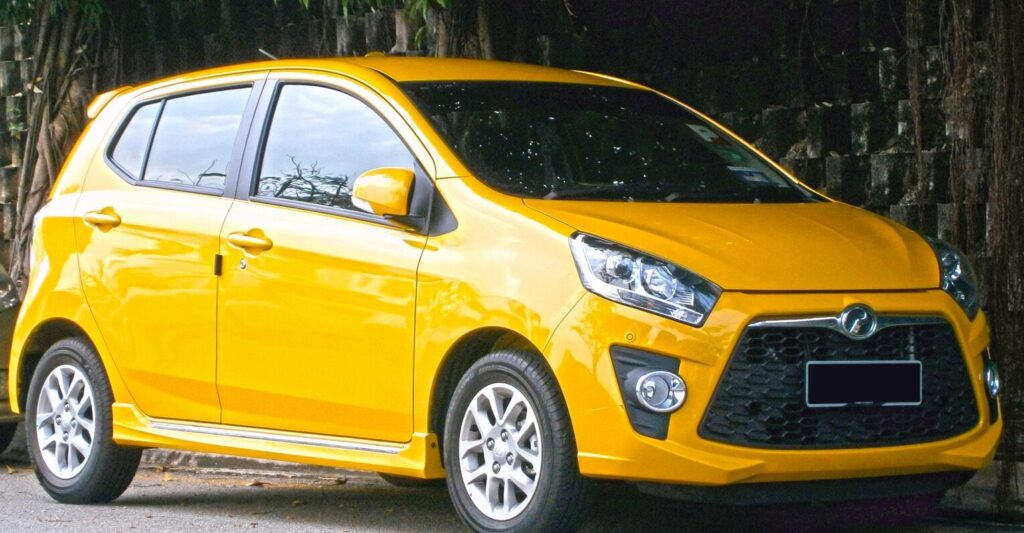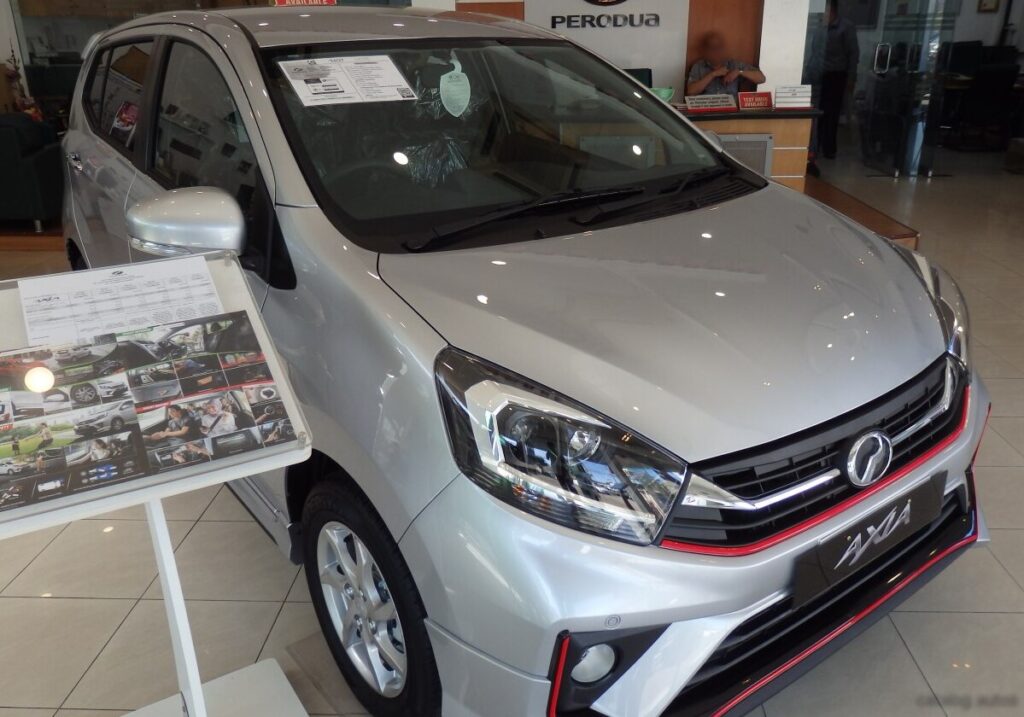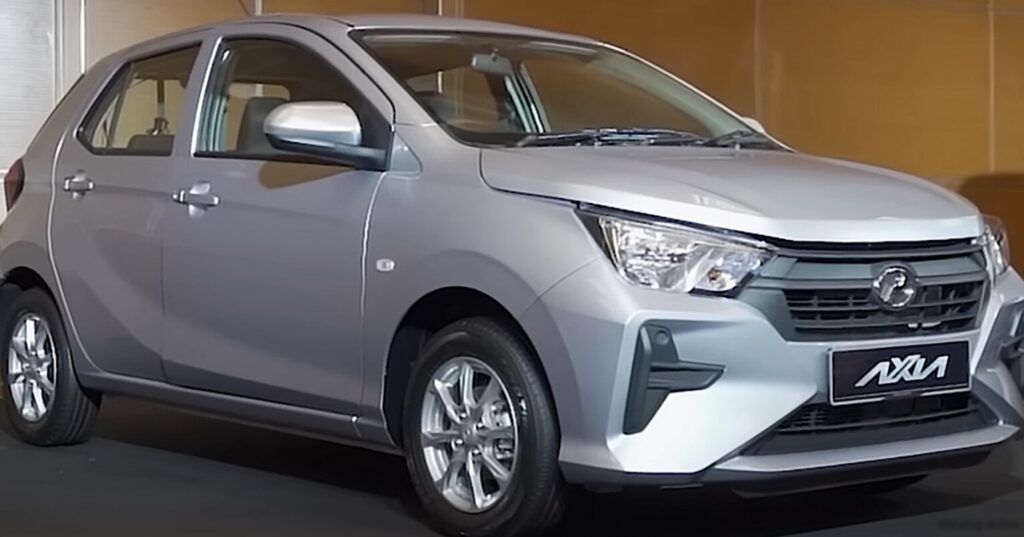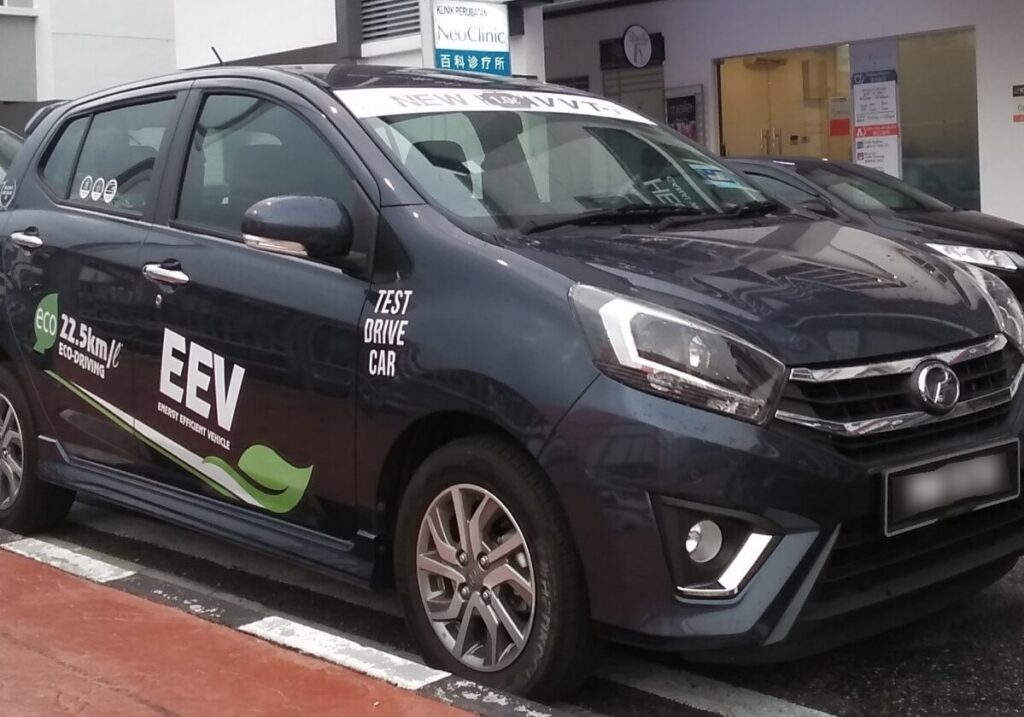
The Perodua Axia I (B200, facelifted in 2017) 1.0 VVT-i represents an important entry point into the Malaysian automotive market. Introduced in January 2017 and continuing through September 2019, this variant occupied the base trim level of the first-generation Axia, a five-door hatchback designed to provide affordable and fuel-efficient transportation. The facelift brought subtle cosmetic updates and refinements to the original model launched in 2014, solidifying its position as a popular choice for first-time car buyers and those seeking a practical city vehicle. The Axia, as a whole, was Perodua’s response to the growing demand for compact, economical cars in Malaysia, competing directly with models like the Proton Agya and other subcompact offerings.
Technical Specifications
| Brand | Perodua |
| Model | Axia |
| Generation | Axia I (B200, facelift 2017) |
| Type (Engine) | 1.0 VVT-i (68 Hp) |
| Start of production | January, 2017 |
| End of production | September, 2019 |
| Powertrain Architecture | Internal Combustion engine |
| Body type | Hatchback |
| Seats | 5 |
| Doors | 5 |
| Fuel consumption (combined) | 4.4 l/100 km (53.5 US mpg, 64.2 UK mpg, 22.7 km/l) |
| Fuel Type | Petrol (Gasoline) |
| Weight-to-power ratio | 12.1 kg/Hp, 82.9 Hp/tonne |
| Weight-to-torque ratio | 9 kg/Nm, 111 Nm/tonne |
| Power | 68 Hp @ 6000 rpm |
| Power per litre | 68.1 Hp/l |
| Torque | 91 Nm @ 4400 rpm (67.12 lb.-ft. @ 4400 rpm) |
| Engine layout | Front, Transverse |
| Engine Model/Code | 1KR-VE |
| Engine displacement | 998 cm3 (60.9 cu. in.) |
| Number of cylinders | 3 |
| Engine configuration | Inline |
| Number of valves per cylinder | 4 |
| Engine aspiration | Naturally aspirated engine |
| Valvetrain | DOHC |
| Engine oil capacity | 2.7 l (2.85 US qt | 2.38 UK qt) |
| Coolant | 2.6 l (2.75 US qt | 2.29 UK qt) |
| Kerb Weight | 820-830 kg (1807.79 – 1829.84 lbs.) |
| Fuel tank capacity | 33 l (8.72 US gal | 7.26 UK gal) |
| Length | 3640 mm (143.31 in.) |
| Width | 1620 mm (63.78 in.) |
| Height | 1510 mm (59.45 in.) |
| Wheelbase | 2455 mm (96.65 in.) |
| Front track | 1410 mm (55.51 in.) |
| Rear track | 1405 mm (55.31 in.) |
| Minimum turning circle | 9.0 m (29.53 ft.) |
| Drivetrain Architecture | The Internal combustion engine (ICE) drives the front wheels of the vehicle. |
| Drive wheel | Front wheel drive |
| Number of gears and type of gearbox | 5 gears, manual transmission |
| Assisting systems | ABS (Anti-lock braking system) |
| Steering type | Steering rack and pinion |
| Power steering | Electric Steering |
| Tires size | 175/65 R14 |
| Wheel rims size | 14 |
Powertrain & Engine Architecture
The heart of the Axia 1.0 VVT-i is the 1KR-VE engine, a 998cc inline-three cylinder petrol engine. This engine is a staple in many of Perodua’s and Daihatsu’s smaller offerings, known for its simplicity and fuel efficiency. The ‘VVT-i’ designation stands for Variable Valve Timing-intelligent, a Toyota/Daihatsu technology that optimizes valve timing for improved performance and economy across a wider range of engine speeds. The 1KR-VE utilizes a dual overhead camshaft (DOHC) configuration with four valves per cylinder. Fuel delivery is managed by a port fuel injection system. The engine is transversely mounted at the front of the vehicle, driving the front wheels. Paired with this engine is a five-speed manual transmission, chosen for its cost-effectiveness and contribution to the vehicle’s overall fuel economy. The engine’s relatively small displacement and three-cylinder configuration result in a characteristic engine note, which some drivers may find noticeable, particularly at higher RPMs.
Driving Characteristics
The 1.0 VVT-i engine, producing 68 horsepower, delivers modest performance. Acceleration is best described as adequate for city driving, with a 0-60 mph time estimated to be around 14-16 seconds. The five-speed manual transmission allows drivers to maximize the available power, but requires frequent shifting to maintain momentum, especially when overtaking or climbing hills. Compared to higher-spec Axia variants equipped with a four-speed automatic transmission, the manual version offers a more engaging driving experience and slightly better fuel economy. The gear ratios are tuned for efficiency rather than outright speed, prioritizing fuel savings over brisk acceleration. The lightweight nature of the Axia (around 820-830 kg) helps to mitigate the effects of the engine’s limited power output.
Equipment & Trim Levels
The base-model Axia 1.0 VVT-i was purposefully equipped to keep the price point low. Standard features typically included manual windows, manual side mirrors, a basic audio system (often with radio and USB connectivity), and black plastic trim. Air conditioning was often an optional extra, and higher trim levels added features like power windows, central locking, and alloy wheels. The interior upholstery was typically a simple cloth material. Safety features included dual airbags and ABS (Anti-lock Braking System), which were becoming increasingly standard in this segment. The overall interior design was functional and utilitarian, focusing on practicality rather than luxury.
Chassis & Braking
The Axia utilizes a relatively simple chassis design, featuring a MacPherson strut suspension at the front and a torsion beam suspension at the rear. This setup provides a comfortable ride quality for everyday driving, although it’s not particularly sporty. The braking system consists of disc brakes at the front and drum brakes at the rear. The relatively light weight of the vehicle helps to compensate for the less sophisticated rear drum brakes. Steering is rack and pinion with electric power assistance, providing light and easy steering feel, ideal for maneuvering in urban environments.
Market Reception & Comparison
The Perodua Axia 1.0 VVT-i was well-received in the Malaysian market due to its affordability and fuel efficiency. Critics praised its practicality and low running costs, making it an attractive option for budget-conscious buyers. Compared to the automatic variants, the manual transmission version was favored by those prioritizing fuel economy and a more engaging driving experience. However, some reviewers noted the engine’s lack of power, particularly when fully loaded or driving on highways. The Axia consistently outsold its main competitor, the Proton Agya, due to Perodua’s established reputation for reliability and after-sales service.
Legacy
The Perodua Axia I (B200) 1.0 VVT-i remains a common sight on Malaysian roads today. The 1KR-VE engine has proven to be relatively reliable, with proper maintenance. Used examples are readily available at very affordable prices, making them a popular choice for first-time car owners or those seeking a cheap and economical runabout. While not known for its performance or luxury, the Axia 1.0 VVT-i successfully fulfilled its intended purpose: providing affordable, reliable, and fuel-efficient transportation for the masses. Its simplicity and low running costs continue to make it a viable option in the used car market, particularly for those seeking a basic and practical vehicle.