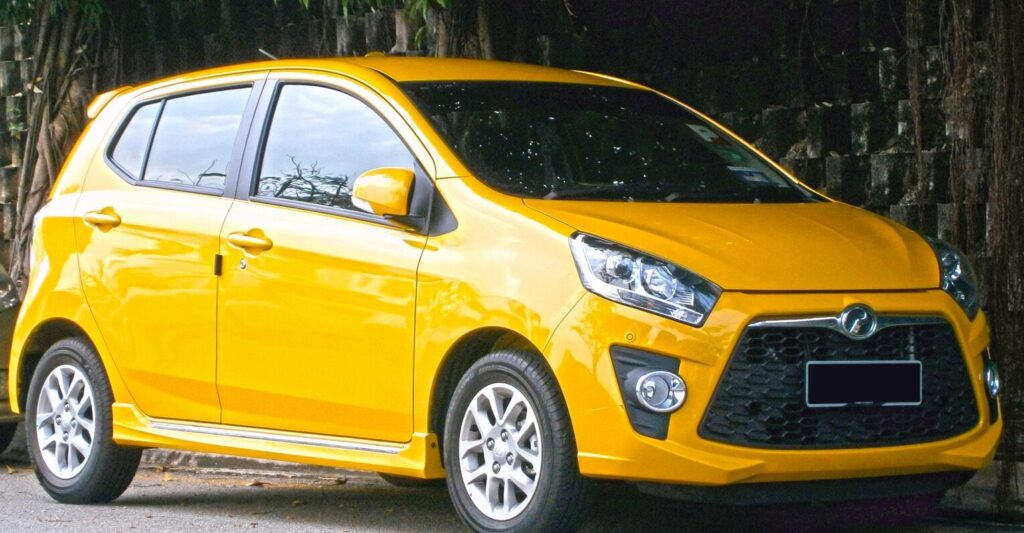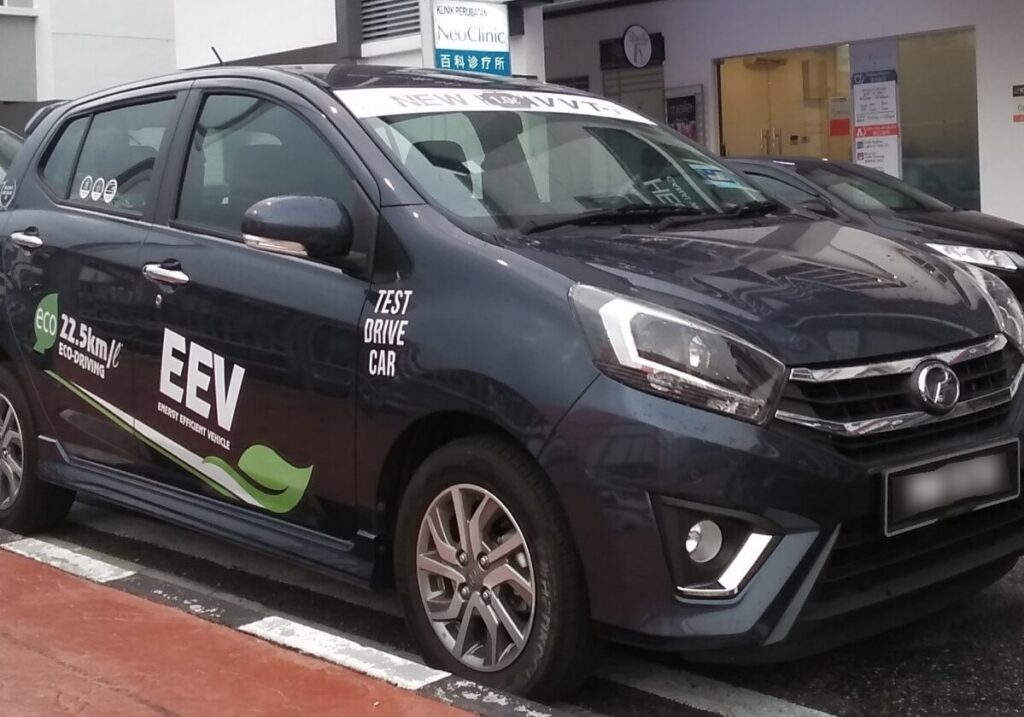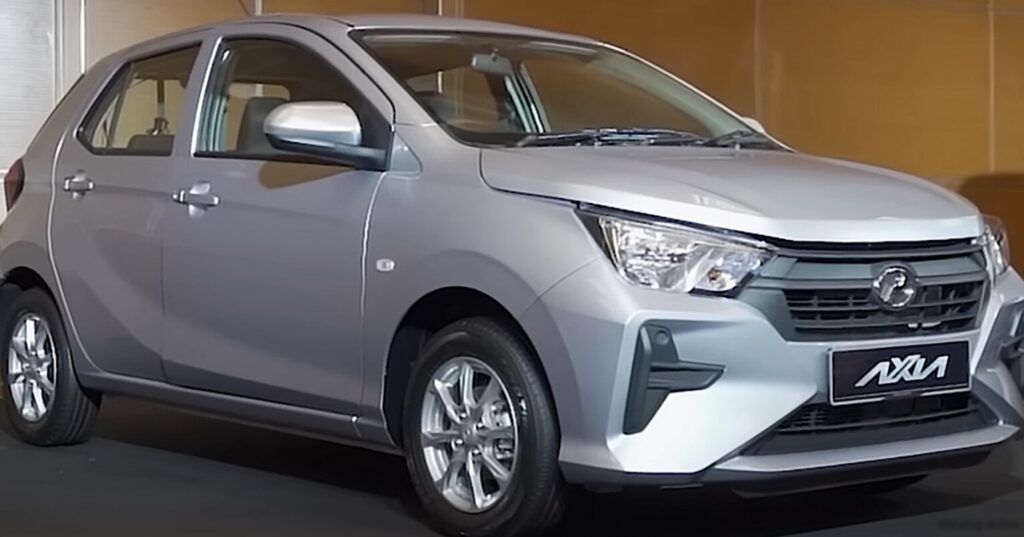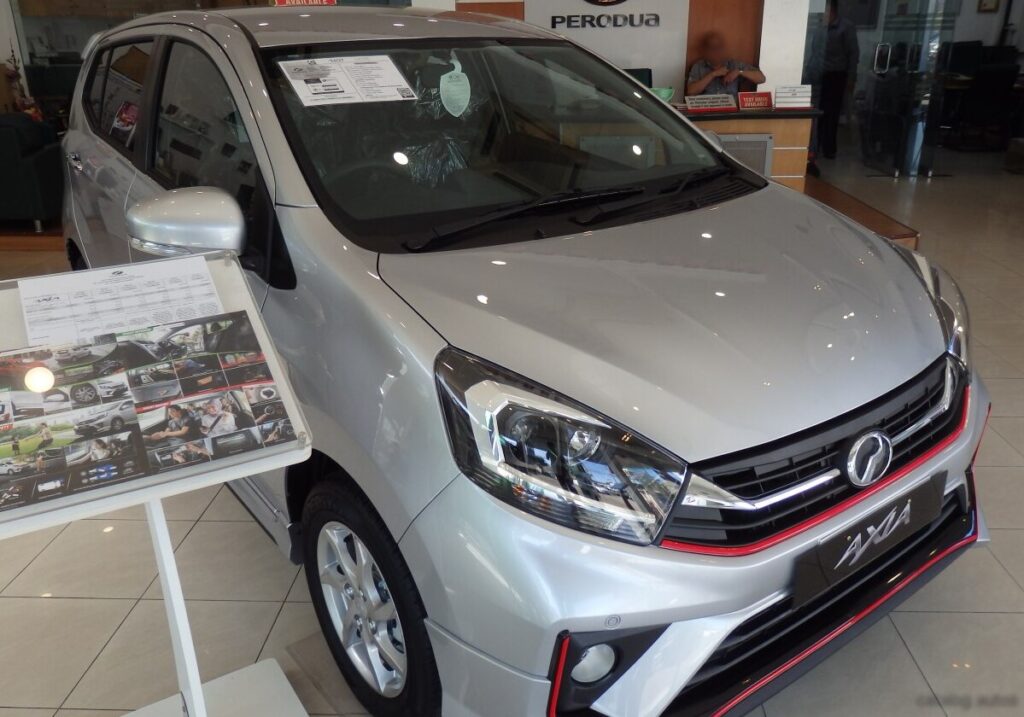
The Perodua Axia I (B200, facelifted in 2019) Style 1.0 VVT-i with an automatic transmission represents a significant entry point into the Malaysian automotive market. Produced from September 2019 to February 2023, this variant occupied the base trim level within the Axia I range, designed for affordability and fuel efficiency. The Axia itself is a supermini, a five-door hatchback intended to provide practical transportation for urban commuters and first-time car buyers. It’s built upon Perodua’s internal B200 platform, a cost-effective architecture shared with other models in their lineup, and the 2019 facelift brought updated styling and minor mechanical refinements.
Technical Specifications
| Brand | Perodua |
| Model | Axia |
| Generation | Axia I (B200, facelift 2019) |
| Type | Style 1.0 VVT-i (68 Hp) Automatic |
| Start of production | September, 2019 |
| End of production | February, 2023 |
| Powertrain Architecture | Internal Combustion engine |
| Body type | Hatchback |
| Seats | 5 |
| Doors | 5 |
| Fuel consumption (combined) | 4.8 l/100 km (49 US mpg, 58.9 UK mpg, 20.8 km/l) |
| Fuel Type | Petrol (Gasoline) |
| Weight-to-power ratio | 12.6 kg/Hp, 79.1 Hp/tonne |
| Weight-to-torque ratio | 9.5 kg/Nm, 105.8 Nm/tonne |
| Power | 68 Hp @ 6000 rpm |
| Power per litre | 68.1 Hp/l |
| Torque | 91 Nm @ 4400 rpm (67.12 lb.-ft. @ 4400 rpm) |
| Engine layout | Front, Transverse |
| Engine Model/Code | 1KR-VE |
| Engine displacement | 998 cm3 (60.9 cu. in.) |
| Number of cylinders | 3 |
| Engine configuration | Inline |
| Cylinder Bore | 71 mm (2.8 in.) |
| Piston Stroke | 84 mm (3.31 in.) |
| Number of valves per cylinder | 4 |
| Engine aspiration | Naturally aspirated engine |
| Valvetrain | DOHC |
| Engine oil capacity | 2.7 l (2.85 US qt | 2.38 UK qt) |
| Coolant | 2.9 l (3.06 US qt | 2.55 UK qt) |
| Kerb Weight | 860 kg (1895.98 lbs.) |
| Max. weight | 1260 kg (2777.82 lbs.) |
| Max load | 400 kg (881.85 lbs.) |
| Fuel tank capacity | 33 l (8.72 US gal | 7.26 UK gal) |
| Length | 3650 mm (143.7 in.) |
| Width | 1625 mm (63.98 in.) |
| Height | 1525 mm (60.04 in.) |
| Wheelbase | 2455 mm (96.65 in.) |
| Front track | 1405 mm (55.31 in.) |
| Rear track | 1400 mm (55.12 in.) |
| Minimum turning circle | 9.0 m (29.53 ft.) |
| Drivetrain Architecture | Front wheel drive, Internal Combustion engine (ICE) |
| Number of gears | 4 |
| Gearbox type | Automatic transmission |
| Assisting systems | ABS (Anti-lock braking system) |
| Steering type | Steering rack and pinion |
| Power steering | Electric Steering |
| Tires size | 175/60 R15 |
| Wheel rims size | 5J x 15 |
Powertrain & Engine Architecture
The heart of the Axia Style 1.0 is the 1KR-VE engine, a 998cc inline-three cylinder petrol engine. This engine is a staple in Perodua’s and Daihatsu’s (Perodua’s technical partner) small car offerings. It features a dual overhead camshaft (DOHC) valvetrain and utilizes variable valve timing (VVT-i) on the intake side to optimize efficiency and power delivery. The 1KR-VE is known for its simplicity and reliability, prioritizing fuel economy over outright performance. Fuel is delivered via multi-point fuel injection. The engine is transversely mounted at the front of the vehicle. The automatic transmission is a conventional four-speed unit, chosen for its cost-effectiveness and ease of maintenance. It’s not a particularly sophisticated transmission, but it provides smooth enough shifts for everyday driving.
Driving Characteristics
With only 68 horsepower and 67 lb-ft of torque, the Axia 1.0 Automatic isn’t designed for spirited driving. Acceleration is modest, and overtaking requires careful planning. The four-speed automatic transmission contributes to this, with relatively wide gear ratios. The engine feels strained at higher RPMs, and the transmission doesn’t offer much in the way of sporty responsiveness. However, within the urban environment, the Axia is perfectly adequate. The light steering and compact dimensions make it easy to maneuver in tight spaces, and the automatic transmission simplifies the driving experience. Fuel economy is a major strength, making it an attractive option for budget-conscious drivers.
Equipment & Trim Levels
The Style 1.0 Automatic trim, being the base model, came with a fairly basic level of equipment. Standard features typically included air conditioning, power windows, and central locking. Safety features included dual airbags and ABS (Anti-lock Braking System). Interior upholstery was typically a simple cloth material. Optional extras, depending on the year and specific package, could include a touchscreen infotainment system with Bluetooth connectivity, parking sensors, and upgraded interior trim. The dashboard layout is functional and straightforward, prioritizing usability over aesthetics.
Chassis & Braking
The Axia I utilizes a relatively simple chassis design. The front suspension consists of MacPherson struts, while the rear suspension employs a torsion beam setup. This configuration is cost-effective and provides a reasonable level of ride comfort for everyday use. Braking is handled by disc brakes at the front and drum brakes at the rear. The braking system is adequate for the vehicle’s weight and performance, but it’s not particularly powerful. The steering is a rack and pinion system with electric power assistance, providing light and easy steering feel.
Market Reception & Comparison
The Perodua Axia, and specifically the 1.0 Automatic variant, was well-received in the Malaysian market due to its affordability and fuel efficiency. Critics generally praised its practicality and ease of use, but noted its lack of performance and basic interior. Compared to other trims in the Axia lineup, such as the 1.0 manual or the slightly more powerful 1.3 variants, the 1.0 Automatic offered the lowest price point but also the least engaging driving experience. Its main competitors included other entry-level superminis like the Proton Saga and the Kia Picanto.
Legacy
The Perodua Axia I (B200) Style 1.0 VVT-i Automatic has proven to be a reliable and durable vehicle in the used car market. The 1KR-VE engine is known for its longevity, and the four-speed automatic transmission is relatively trouble-free. Maintenance costs are generally low, thanks to the readily available parts and simple mechanical design. While it may not be a particularly exciting car to drive, its affordability, fuel efficiency, and reliability have made it a popular choice for budget-conscious buyers and a common sight on Malaysian roads. As of today, well-maintained examples continue to hold their value reasonably well, making them a practical and economical option for those seeking basic transportation.