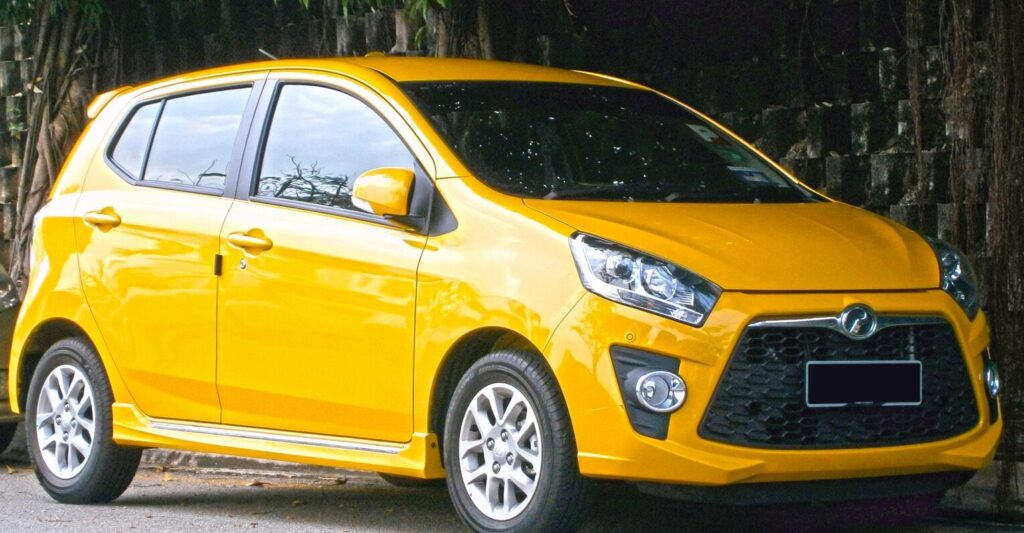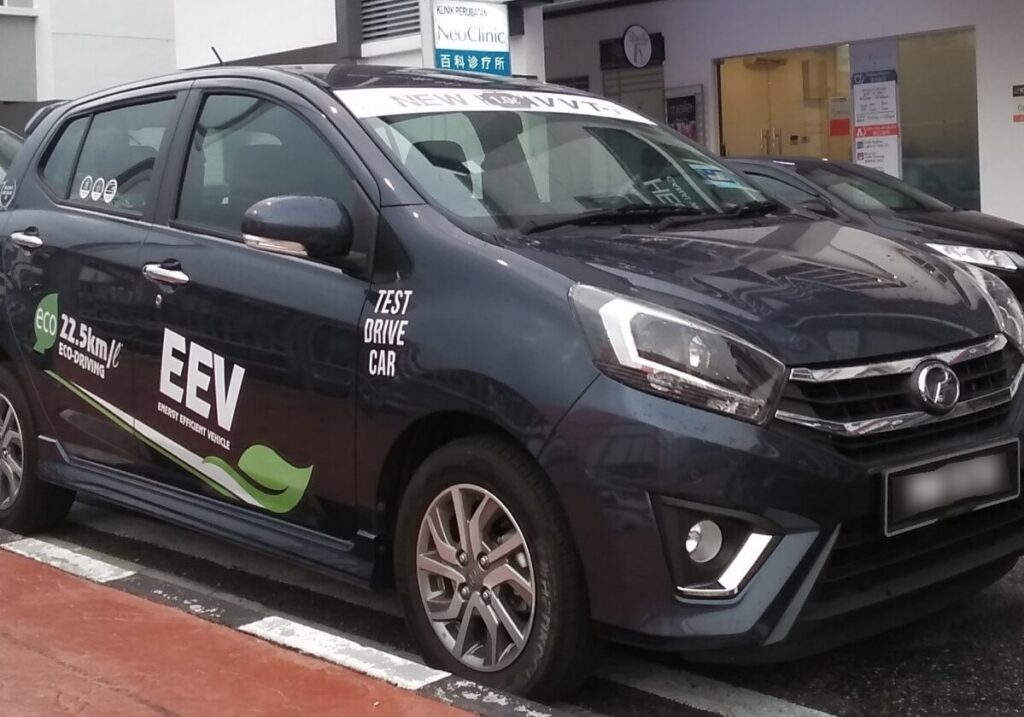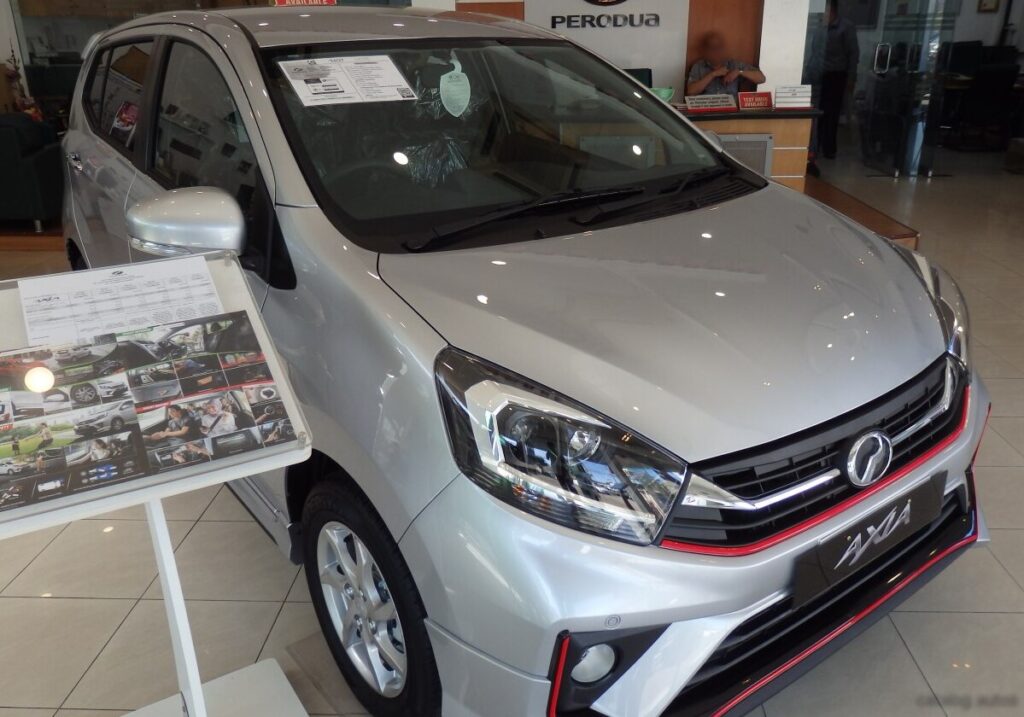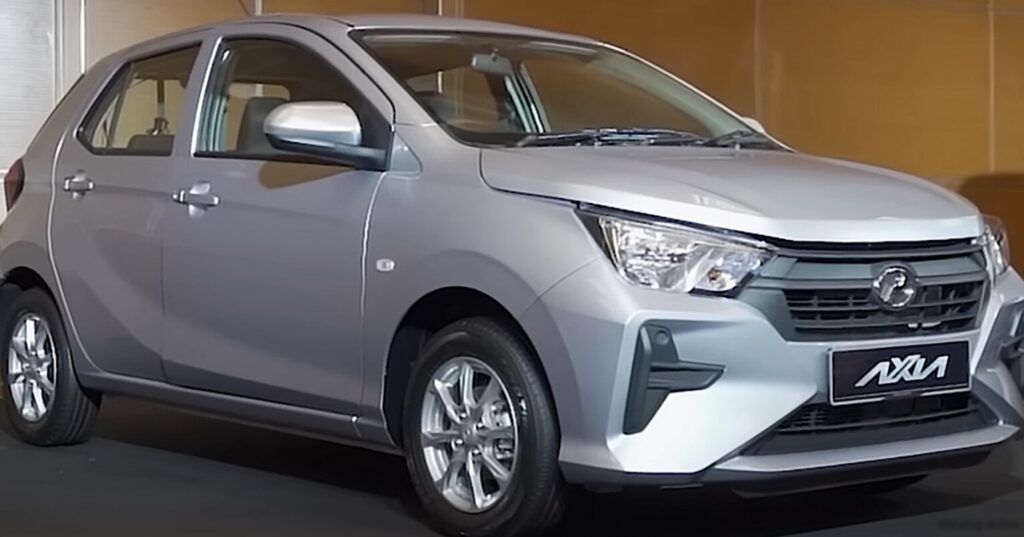
The Perodua Axia II (A300) 1.0L D-CVT, launched in February 2023, represents the second generation of Perodua’s popular city car. Positioned as the entry-level variant within the A300 range, it’s designed to offer affordable and fuel-efficient transportation for the Malaysian market and select export regions. The Axia, since its introduction, has consistently been a top-selling model for Perodua, catering to first-time car buyers, families seeking a practical second vehicle, and those prioritizing economy. The A300 generation builds upon the success of the first Axia, offering improved safety features, a more refined interior, and updated technology, while maintaining the core values of affordability and reliability.
Technical Specifications
| Brand | Perodua |
| Model | Axia |
| Generation | Axia II (A300) |
| Type (Engine) | 1.0L (68 Hp) D-CVT |
| Start of production | February, 2023 |
| Powertrain Architecture | Internal Combustion engine |
| Body type | Hatchback |
| Seats | 5 |
| Doors | 5 |
| Fuel consumption (combined) | 3.6-4 l/100 km (65.3 – 58.8 US mpg, 78.5 – 70.6 UK mpg, 27.8 – 25 km/l) |
| Fuel Type | Petrol (Gasoline) |
| Weight-to-power ratio | 12.7 kg/Hp, 78.6 Hp/tonne |
| Weight-to-torque ratio | 9.5 kg/Nm, 105.2 Nm/tonne |
| Power | 68 Hp @ 6000 rpm |
| Power per litre | 68.1 Hp/l |
| Torque | 91 Nm @ 4400 rpm (67.12 lb.-ft. @ 4400 rpm) |
| Engine layout | Front, Transverse |
| Engine Model/Code | 1KR-VE |
| Engine displacement | 998 cm3 (60.9 cu. in.) |
| Number of cylinders | 3 |
| Engine configuration | Inline |
| Number of valves per cylinder | 4 |
| Fuel injection system | Multi-port manifold injection |
| Engine aspiration | Naturally aspirated engine |
| Valvetrain | DOHC, VVT-i |
| Engine oil capacity | 2.7 l (2.85 US qt | 2.38 UK qt) |
| Kerb Weight | 865-890 kg (1907 – 1962.11 lbs.) |
| Trunk (boot) space – minimum | 265 l (9.36 cu. ft.) |
| Fuel tank capacity | 36 l (9.51 US gal | 7.92 UK gal) |
| Length | 3760 mm (148.03 in.) |
| Width | 1665 mm (65.55 in.) |
| Height | 1505 mm (59.25 in.) |
| Wheelbase | 2525 mm (99.41 in.) |
| Minimum turning circle | 9 m (29.53 ft.) |
| Drivetrain Architecture | Front wheel drive, Internal Combustion engine (ICE) |
| Number of gears and type of gearbox | automatic transmission D-CVT |
| Assisting systems | ABS (Anti-lock braking system) |
| Steering type | Steering rack and pinion |
| Power steering | Electric Steering |
| Tires size | 175/65 R14 |
| Wheel rims size | 14 |
Powertrain & Engine Architecture
The heart of the Axia II 1.0L D-CVT is the 1KR-VE engine, a 998cc inline-three cylinder petrol engine. This engine is a staple in Perodua’s lineup, known for its simplicity, reliability, and fuel efficiency. It utilizes a multi-point fuel injection system and a double overhead camshaft (DOHC) valvetrain with Variable Valve Timing-intelligence (VVT-i) to optimize performance and economy. The 1KR-VE produces 68 horsepower at 6000 rpm and 91 Nm (67.12 lb-ft) of torque at 4400 rpm. The engine is paired with Perodua’s D-CVT (Dual-mode Continuously Variable Transmission), a locally developed CVT designed to provide smooth acceleration and maximize fuel efficiency. The D-CVT features a unique torque converter design that mimics traditional automatic gear changes at lower speeds for a more familiar driving experience, while seamlessly transitioning to a true CVT operation at higher speeds.
Driving Characteristics
The 1.0L D-CVT Axia prioritizes fuel economy over outright performance. Acceleration is adequate for city driving, but it can feel strained when fully loaded or attempting to overtake on the highway. The D-CVT transmission contributes to smooth and linear acceleration, but it lacks the responsiveness of a traditional automatic or manual gearbox. The gear ratios are optimized for low-speed efficiency, resulting in a relatively high engine speed during highway cruising. Compared to the manual transmission variants of the Axia, the D-CVT offers greater convenience but sacrifices some performance and fuel economy. The suspension is tuned for comfort, providing a reasonably smooth ride over typical urban road surfaces. However, it can exhibit some body roll during cornering.
Equipment & Trim Levels
The 1.0L D-CVT Axia typically comes standard with basic amenities such as air conditioning, power windows, and a basic audio system. Safety features include dual airbags, ABS (Anti-lock Braking System), and ISOFIX child seat anchors. Higher trim levels, available as optional upgrades, may include features like a touchscreen infotainment system with Bluetooth connectivity, keyless entry, and alloy wheels. Interior upholstery is typically fabric, with a simple and functional dashboard layout. The focus is on practicality and durability rather than luxury.
Chassis & Braking
The Axia II utilizes a front-engine, front-wheel-drive layout. The suspension consists of MacPherson struts at the front and a torsion beam axle at the rear. Braking is typically handled by disc brakes at the front and drum brakes at the rear, a cost-saving measure common in this segment. Electric power steering provides light and easy steering feel, making it maneuverable in tight urban environments. The chassis is designed to be lightweight to maximize fuel efficiency, but this also impacts its handling capabilities.
Market Reception & Comparison
The Perodua Axia II 1.0L D-CVT has been well-received in the Malaysian market due to its affordability, fuel efficiency, and practicality. Critics have praised its improved safety features and updated interior compared to the previous generation. However, some have noted its lack of performance and relatively basic equipment levels. Compared to other entry-level hatchbacks in the region, such as the Proton Saga, the Axia offers a more refined driving experience and a reputation for reliability. Its fuel economy is a key selling point, consistently ranking among the best in its class.
Legacy
The 1KR-VE engine has proven to be a durable and reliable powerplant, and the D-CVT transmission, while not without its critics, has generally performed well in real-world conditions. The Axia II 1.0L D-CVT is expected to maintain a strong presence in the used car market due to its affordability and low running costs. Its simplicity and readily available parts contribute to relatively low maintenance costs. As Perodua continues to innovate, the Axia II 1.0L D-CVT will likely be remembered as a key model in the company’s success story, providing accessible and efficient transportation to a wide range of customers.