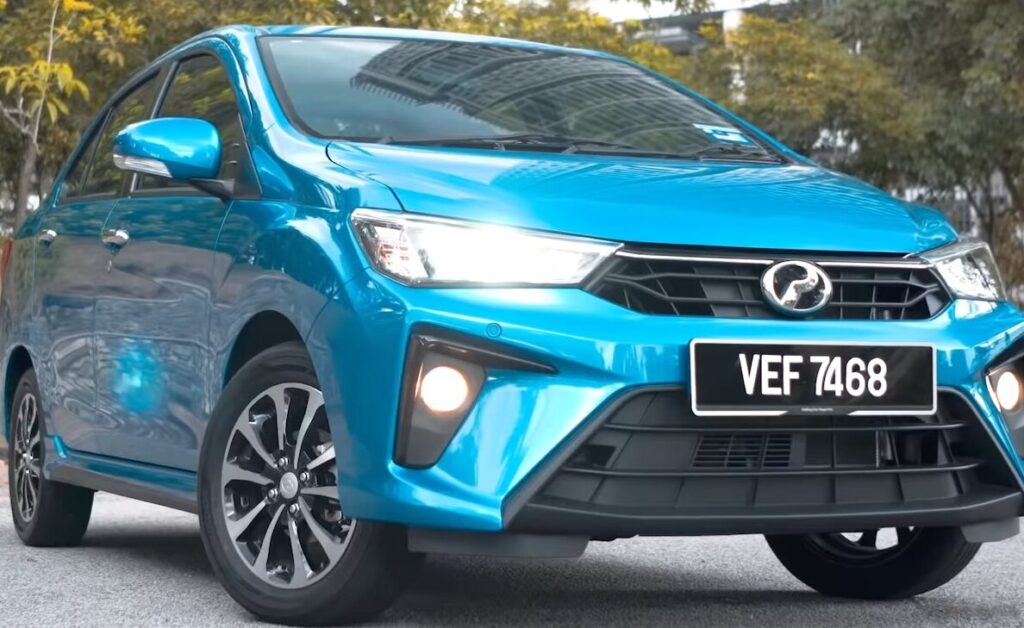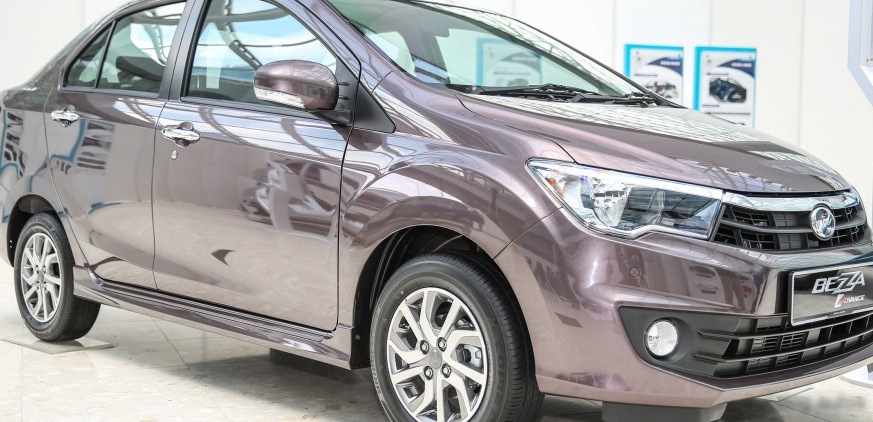
The Perodua Bezza 1.3, producing 95 horsepower, was a significant model for the Malaysian automaker Perodua, launched in July 2016 and continuing in production through 2019. Positioned as an entry-level sedan, the Bezza aimed to provide affordable and practical transportation for families and first-time car buyers in the Southeast Asian market. It represented Perodua’s expansion into the sedan segment, building upon their established reputation for compact and fuel-efficient hatchbacks. The Bezza was based on an entirely new platform developed by Perodua, marking a step forward in their independent design and engineering capabilities. This variant, with its 1.3-liter engine and typically paired with a 5-speed manual transmission (though an automatic was also available), served as the foundation of the Bezza lineup.
Technical Specifications
| Brand | Perodua |
| Model | Bezza |
| Generation | Bezza |
| Type (Engine) | 1.3 (95 Hp) |
| Start of production | 2016 |
| End of production | 2019 |
| Powertrain Architecture | Internal Combustion engine |
| Body type | Sedan |
| Seats | 5 |
| Doors | 4 |
| Fuel consumption (combined) | 4.6 l/100 km (51.1 US mpg, 61.4 UK mpg, 21.7 km/l) |
| Fuel Type | Petrol (Gasoline) |
| Weight-to-power ratio | 9.5 kg/Hp, 105.6 Hp/tonne |
| Weight-to-torque ratio | 7.4 kg/Nm, 134.4 Nm/tonne |
| Power | 95 Hp @ 6000 rpm |
| Power per litre | 71.5 Hp/l |
| Torque | 121 Nm @ 4000 rpm (89.25 lb.-ft. @ 4000 rpm) |
| Engine layout | Front, Transverse |
| Engine Model/Code | 1NR-VE |
| Engine displacement | 1329 cm3 (81.1 cu. in.) |
| Number of cylinders | 4 |
| Engine configuration | Inline |
| Cylinder Bore | 72.5 mm (2.85 in.) |
| Piston Stroke | 80.5 mm (3.17 in.) |
| Compression ratio | 11.5:1 |
| Number of valves per cylinder | 4 |
| Fuel injection system | Multi-port manifold injection |
| Engine aspiration | Naturally aspirated engine |
| Engine oil capacity | 3.5 l (3.7 US qt | 3.08 UK qt) |
| Coolant | 3 l (3.17 US qt | 2.64 UK qt) |
| Kerb Weight | 900 kg (1984.16 lbs.) |
| Trunk (boot) space – minimum | 508 l (17.94 cu. ft.) |
| Fuel tank capacity | 36 l (9.51 US gal | 7.92 UK gal) |
| Length | 4150 mm (163.39 in.) |
| Width | 1620 mm (63.78 in.) |
| Height | 1510 mm (59.45 in.) |
| Wheelbase | 2455 mm (96.65 in.) |
| Front track | 1410 mm (55.51 in.) |
| Rear (Back) track | 1405 mm (55.31 in.) |
| Minimum turning circle | 9.0 m (29.53 ft.) |
| Drivetrain Architecture | Front wheel drive, Internal Combustion engine |
| Number of gears and type of gearbox | 5 gears, manual transmission |
| Assisting systems | ABS (Anti-lock braking system) |
| Steering type | Steering rack and pinion |
| Power steering | Electric Steering |
| Tires size | 175/65 R14 |
| Wheel rims size | 14 |
Powertrain & Engine Architecture
The Perodua Bezza 1.3 was powered by the 1NR-VE engine, a 1.3-liter inline-four cylinder gasoline engine. This engine is part of Toyota’s NR engine family, known for its reliability and fuel efficiency. The 1NR-VE utilizes a dual VVT-i (Variable Valve Timing-intelligent) system, optimizing valve timing for both intake and exhaust to improve performance and fuel economy across the rev range. Fuel delivery is managed by a multi-port fuel injection system. The engine’s relatively simple design, with a single overhead camshaft and four valves per cylinder, contributes to its ease of maintenance and durability. The 5-speed manual transmission was the standard offering, providing a direct and engaging driving experience. A 4-speed automatic transmission was also available as an option, catering to drivers prioritizing convenience.
Driving Characteristics
The 95 horsepower and 89.25 lb-ft of torque produced by the 1.3-liter engine resulted in adequate, though not exhilarating, performance. Acceleration was best described as steady, suitable for urban commuting and highway cruising at moderate speeds. The manual transmission allowed for greater control and responsiveness, while the automatic offered smoother shifts but at the expense of some performance. The gear ratios were tuned for fuel efficiency, meaning the engine needed to be revved somewhat to achieve brisk acceleration. Compared to potential higher-spec variants (had Perodua offered them), the 1.3L felt less powerful, but it excelled in providing a comfortable and economical driving experience. The lightweight nature of the Bezza (900 kg) helped to mitigate the engine’s modest output.
Equipment & Trim Levels
The base-level Bezza 1.3 typically came equipped with basic amenities such as air conditioning, power windows, and central locking. Safety features included dual airbags and ABS (Anti-lock Braking System). Interior upholstery was typically cloth, with a simple and functional dashboard layout. Higher trim levels, such as the 1.3X, added features like alloy wheels, a more sophisticated audio system, and additional chrome accents. Optional extras included a reverse parking sensor, a touchscreen infotainment system, and body kits.
Chassis & Braking
The Perodua Bezza utilized a MacPherson strut suspension system at the front and a torsion beam suspension at the rear. This setup provided a comfortable ride quality, absorbing bumps and imperfections in the road surface effectively. The braking system consisted of ventilated discs at the front and drum brakes at the rear. Electric power steering was standard, offering light and easy steering feel, particularly useful in congested urban environments. The relatively narrow tires (175/65 R14) contributed to fuel efficiency but offered limited grip during spirited driving.
Market Reception & Comparison
The Perodua Bezza 1.3 was well-received in the Malaysian market, largely due to its affordability, fuel efficiency, and practicality. Critics praised its comfortable ride and spacious interior for its size. Compared to other entry-level sedans available at the time, such as the Proton Saga, the Bezza offered a more refined driving experience and a slightly more modern interior. Fuel economy was a key selling point, with the Bezza consistently achieving impressive mileage figures. Reliability was also a strong suit, as Perodua vehicles are generally known for their durability.
Legacy
The Perodua Bezza established Perodua as a serious contender in the sedan segment. The 1.3-liter variant, in particular, remains a popular choice in the used car market due to its affordability and low running costs. The 1NR-VE engine has proven to be a reliable and durable powerplant, with many examples still in service today. While not a performance-oriented vehicle, the Bezza 1.3 fulfilled its intended purpose of providing affordable, practical, and fuel-efficient transportation for a wide range of Malaysian drivers. Its success paved the way for future Perodua models and solidified the brand’s position as a market leader in the country.