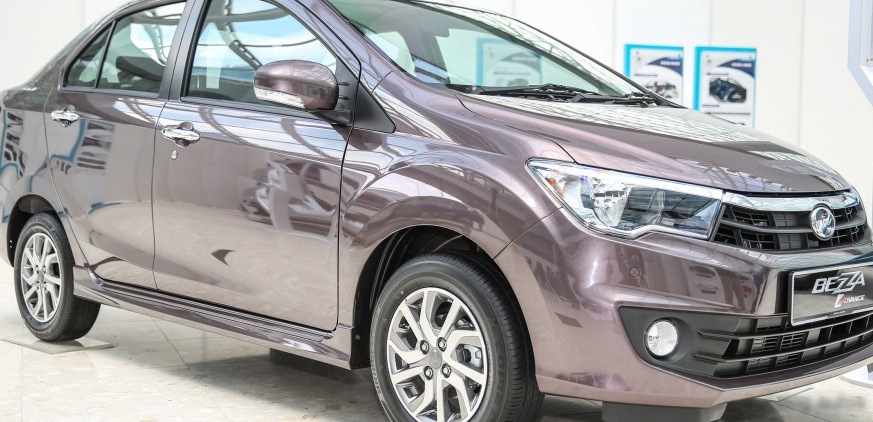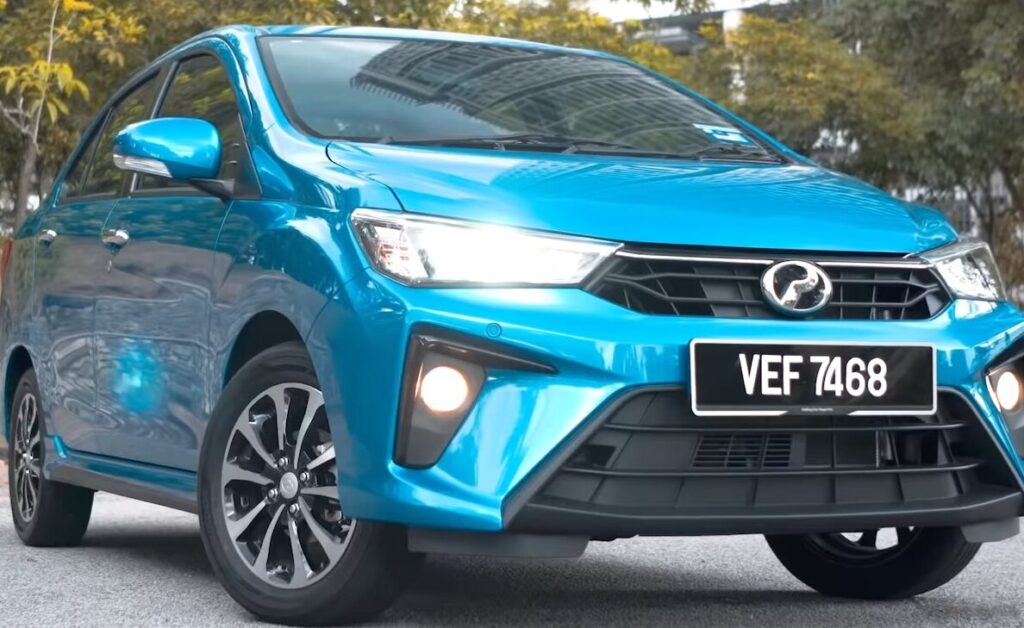
The Perodua Bezza 1.0, specifically the facelifted model introduced in 2020, represents an entry-level subcompact sedan designed primarily for the Malaysian market. Positioned as the most affordable variant within the Bezza range, it aimed to provide economical and practical transportation for first-time car buyers and those seeking a fuel-efficient daily driver. The 2020 facelift brought cosmetic updates and minor equipment revisions to the original Bezza, which debuted in 2016, solidifying its position as a popular choice in its segment. It’s built on Perodua’s proprietary platform, tailored for the specific needs and preferences of Southeast Asian consumers.
Technical Specifications
| Brand | Perodua |
| Model | Bezza |
| Generation | Bezza (facelift 2020) |
| Type (Engine) | 1.0 (68 Hp) |
| Start of production | 2020 |
| Powertrain Architecture | Internal Combustion engine |
| Body type | Sedan |
| Seats | 5 |
| Doors | 4 |
| Fuel consumption (combined) | 4.4 l/100 km (53.5 US mpg, 64.2 UK mpg, 22.7 km/l) |
| Fuel Type | Petrol (Gasoline) |
| Emission standard | Euro 4 |
| Weight-to-power ratio | 12.7 kg/Hp, 78.6 Hp/tonne |
| Weight-to-torque ratio | 9.5 kg/Nm, 105.2 Nm/tonne |
| Power | 68 Hp @ 6000 rpm |
| Power per litre | 68.1 Hp/l |
| Torque | 91 Nm @ 4400 rpm (67.12 lb.-ft. @ 4400 rpm) |
| Engine layout | Front, Transverse |
| Engine Model/Code | 1KR-VE |
| Engine displacement | 998 cm3 (60.9 cu. in.) |
| Number of cylinders | 3 |
| Engine configuration | Inline |
| Cylinder Bore | 71 mm (2.8 in.) |
| Piston Stroke | 84 mm (3.31 in.) |
| Compression ratio | 11.5:1 |
| Fuel injection system | Multi-port manifold injection |
| Engine aspiration | Naturally aspirated engine |
| Valvetrain | DOHC, VVT-i |
| Engine oil capacity | 2.7 l (2.85 US qt | 2.38 UK qt) |
| Coolant | 2.6 l (2.75 US qt | 2.29 UK qt) |
| Kerb Weight | 865 kg (1907 lbs.) |
| Trunk (boot) space – minimum | 508 l (17.94 cu. ft.) |
| Fuel tank capacity | 36 l (9.51 US gal | 7.92 UK gal) |
| Length | 4170 mm (164.17 in.) |
| Width | 1620 mm (63.78 in.) |
| Height | 1525 mm (60.04 in.) |
| Wheelbase | 2455 mm (96.65 in.) |
| Front track | 1410 mm (55.51 in.) |
| Rear (Back) track | 1405 mm (55.31 in.) |
| Minimum turning circle | 9 m (29.53 ft.) |
| Drivetrain Architecture | Front wheel drive, Internal Combustion engine |
| Number of gears and type of gearbox | 5 gears, manual transmission |
| Assisting systems | ABS (Anti-lock braking system) |
| Tires size | 175/65 R14 |
| Wheel rims size | 14 |
Powertrain & Engine Architecture
The heart of the Bezza 1.0 is the 1KR-VE, a 998cc inline-3 cylinder petrol engine. This engine is a staple in Perodua’s lineup, known for its simplicity and fuel efficiency. It utilizes a multi-point fuel injection system and a Double Overhead Camshaft (DOHC) valvetrain with Variable Valve Timing-intelligence (VVT-i) to optimize performance and economy. The 1KR-VE produces 68 horsepower at 6000 rpm and 91 Nm (67.12 lb-ft) of torque at 4400 rpm. This power is delivered to the front wheels through a 5-speed manual transmission, the only transmission option available for this base model. The engine’s design prioritizes low-end torque for ease of driving in urban conditions, rather than outright power.
Driving Characteristics
The Bezza 1.0 with the 5-speed manual offers a basic, but functional driving experience. Acceleration is modest, with a focus on fuel economy rather than spirited performance. The gear ratios are tuned for maximizing efficiency, meaning the engine needs to be revved to achieve brisk acceleration. Compared to higher-spec Bezza models with a 1.3-liter engine, the 1.0 feels noticeably less powerful, especially when carrying passengers or cargo. However, the light weight of the vehicle (865 kg) helps to mitigate the lack of power. The manual transmission provides a direct connection to the engine, allowing for precise control, but requires more driver involvement than an automatic.
Equipment & Trim Levels
The 1.0L Bezza, being the entry-level trim, is equipped with basic necessities. Standard features typically include manual air conditioning, power windows, and central locking. Safety features include dual airbags and ABS (Anti-lock Braking System). Interior upholstery is typically a simple cloth material. Optional extras were limited on this trim level, often consisting of aftermarket accessories like upgraded audio systems or body kits. The dashboard layout is functional and straightforward, prioritizing ease of use over aesthetic appeal.
Chassis & Braking
The Bezza utilizes a relatively simple chassis design, featuring a MacPherson strut suspension in the front and a torsion beam suspension in the rear. The braking system consists of disc brakes on the front wheels and drum brakes on the rear. This configuration is typical for vehicles in this price segment. The suspension is tuned for comfort, providing a reasonably smooth ride on typical Malaysian road surfaces. Stabilizer bars are present, but are relatively thin, contributing to a slight degree of body roll during cornering.
Market Reception & Comparison
The Perodua Bezza 1.0 was well-received in the Malaysian market due to its affordability and fuel efficiency. Critics generally praised its practicality and low running costs, but noted its lack of power and basic interior. Compared to other entry-level sedans in Malaysia, such as the Proton Saga, the Bezza offered a more refined driving experience and better fuel economy. However, the Saga often provided more features for a similar price. The Bezza’s main advantage lay in Perodua’s reputation for reliability and its extensive service network.
Legacy
The Perodua Bezza 1.0 has proven to be a reliable and durable vehicle, with many examples still on the road today. The 1KR-VE engine is known for its longevity, provided it receives regular maintenance. In the used car market, the Bezza 1.0 remains a popular choice for budget-conscious buyers seeking a dependable and economical mode of transportation. While it may not offer the performance or features of more expensive vehicles, its simplicity and fuel efficiency continue to make it a relevant option in the Malaysian automotive landscape. Its success helped solidify Perodua’s position as a leading automotive manufacturer in Malaysia.