
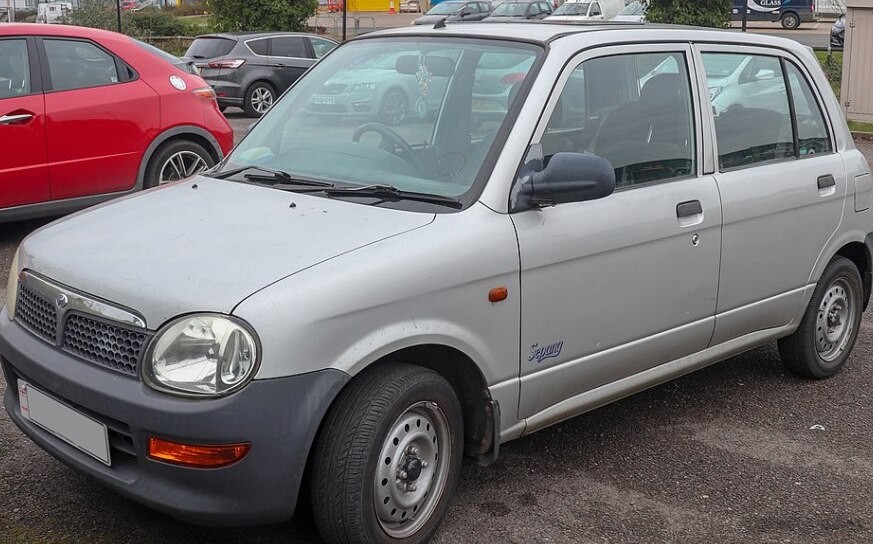
The Perodua Kelisa 1.0i 12V, produced between 2002 and 2007, was a city car manufactured by Perodua, the Malaysian national car manufacturer. Based on the Daihatsu Copen platform – though significantly altered in body style – the Kelisa was designed to provide affordable and practical transportation for the growing Malaysian middle class. This particular 1.0i 12V variant represented the entry point into the Kelisa range, prioritizing fuel efficiency and low running costs over outright performance. It played a crucial role in Perodua’s dominance of the Malaysian automotive market during its production run, competing directly with Proton’s offerings and imported models.
Technical Specifications
| Brand | Perodua |
| Model | Kelisa |
| Generation | Kelisa |
| Type (Engine) | 1.0i 12V (56 Hp) |
| Start of production | 2002 |
| End of production | 2007 |
| Powertrain Architecture | Internal Combustion engine |
| Body type | Hatchback |
| Seats | 5 |
| Doors | 5 |
| Fuel consumption (urban) | 5.3 l/100 km (44.4 US mpg, 53.3 UK mpg, 18.9 km/l) |
| Fuel consumption (extra urban) | 3.6 l/100 km (65.3 US mpg, 78.5 UK mpg, 27.8 km/l) |
| Fuel consumption (combined) | 4.2 l/100 km (56 US mpg, 67.3 UK mpg, 23.8 km/l) |
| Fuel Type | Petrol (Gasoline) |
| Acceleration 0 – 100 km/h | 14.8 sec |
| Acceleration 0 – 62 mph | 14.8 sec |
| Acceleration 0 – 60 mph | 14.1 sec |
| Maximum speed | 140 km/h (86.99 mph) |
| Weight-to-power ratio | 13.8 kg/Hp, 72.3 Hp/tonne |
| Weight-to-torque ratio | 8.8 kg/Nm, 113.5 Nm/tonne |
| Power | 56 Hp @ 5200 rpm |
| Power per litre | 56.6 Hp/l |
| Torque | 88 Nm @ 3600 rpm (64.91 lb.-ft. @ 3600 rpm) |
| Engine layout | Front, Transverse |
| Engine Model/Code | EJ-DE |
| Engine displacement | 989 cm3 (60.35 cu. in.) |
| Number of cylinders | 3 |
| Engine configuration | Inline |
| Cylinder Bore | 72 mm (2.83 in.) |
| Piston Stroke | 81 mm (3.19 in.) |
| Compression ratio | 10:1 |
| Number of valves per cylinder | 4 |
| Fuel injection system | Multi-port manifold injection |
| Engine aspiration | Naturally aspirated |
| Engine oil capacity | 2.3 l (2.43 US qt | 2.02 UK qt) |
| Coolant capacity | 3 l (3.17 US qt | 2.64 UK qt) |
| Kerb Weight | 775 kg (1708.58 lbs.) |
| Max. weight | 1270 kg (2799.87 lbs.) |
| Max load | 495 kg (1091.29 lbs.) |
| Trunk (boot) space – minimum | 235 l (8.3 cu. ft.) |
| Trunk (boot) space – maximum | 505 l (17.83 cu. ft.) |
| Fuel tank capacity | 40 l (10.57 US gal | 8.8 UK gal) |
| Length | 3480 mm (137.01 in.) |
| Width | 1490 mm (58.66 in.) |
| Height | 1425 mm (56.1 in.) |
| Wheelbase | 2600 mm (102.36 in.) |
| Front track | 1300 mm (51.18 in.) |
| Rear track | 1260 mm (49.61 in.) |
| Minimum turning circle | 9.3 m (30.51 ft.) |
| Drivetrain Architecture | Front wheel drive |
| Number of gears | 5 |
| Gearbox type | Manual transmission |
| Front suspension | Coil spring |
| Rear suspension | Coil spring |
| Front brakes | Disc |
| Rear brakes | Drum |
| Assisting systems | ABS (Anti-lock braking system) |
| Steering type | Steering rack and pinion |
| Tires size | 155/70 R12 |
| Wheel rims size | 12 |
Powertrain & Engine Architecture
The Kelisa 1.0i 12V was powered by the Daihatsu EJ-DE engine, a 989cc inline-three cylinder petrol engine. This engine featured a single overhead camshaft (SOHC) and four valves per cylinder, utilizing multi-point fuel injection. The EJ-DE was known for its simplicity and reliability, rather than its performance. Its 12-valve configuration (four valves per cylinder) helped to improve breathing compared to older two-valve designs. The engine produced 56 horsepower at 5200 rpm and 88 Nm (65 lb-ft) of torque at 3600 rpm. The engine was transversely mounted, driving the front wheels. The standard transmission was a five-speed manual gearbox, optimized for fuel economy and smooth, if unhurried, acceleration. The engine’s relatively small displacement and modest output meant it was designed for urban driving conditions, prioritizing fuel efficiency over high-speed performance.
Driving Characteristics
The Kelisa 1.0i 12V offered a predictable and undemanding driving experience. Acceleration was leisurely, taking approximately 14.8 seconds to reach 100 km/h (62 mph). The five-speed manual transmission allowed drivers to keep the engine in its optimal power band, but the limited torque meant frequent gear changes were necessary, especially when climbing hills or overtaking. Compared to potential upgrades like a 1.3L engine, the 1.0L felt noticeably slower. The steering was light and easy, making it maneuverable in tight city streets. The suspension, while basic, provided a reasonably comfortable ride on smooth surfaces, though it could become unsettled on rough roads. The overall driving experience was geared towards practicality and ease of use, rather than driving enjoyment.
Equipment & Trim Levels
The Kelisa 1.0i 12V was typically equipped with basic, but functional, features. Standard equipment included power steering, central locking, and an AM/FM radio. Interior trim was typically cloth upholstery in a simple design. Air conditioning was often an optional extra, as were power windows. The dashboard layout was straightforward and functional, with clearly labeled controls. The Kelisa was designed to be an affordable car, so luxury features were kept to a minimum. Higher trim levels, if available, might have included features like alloy wheels, a more sophisticated audio system, and upgraded interior trim.
Chassis & Braking
The Kelisa utilized a relatively simple chassis design. Front suspension consisted of coil springs and a stabilizer bar, while the rear suspension employed a coil spring setup. Braking was provided by disc brakes on the front wheels and drum brakes on the rear. An Anti-lock Braking System (ABS) was included as a standard safety feature. The relatively lightweight construction of the Kelisa (775 kg / 1708.58 lbs) helped to offset the modest engine power, contributing to acceptable braking performance and handling. The suspension tuning prioritized ride comfort over sporty handling.
Market Reception & Comparison
The Perodua Kelisa 1.0i 12V was well-received in the Malaysian market due to its affordability, fuel efficiency, and practicality. Critics praised its ease of driving and low running costs. However, the engine’s lack of power was a common criticism. Compared to other variants in the Kelisa lineup, the 1.0i 12V was the most economical option, but it lacked the performance of the higher-specification models. It competed directly with Proton’s Savvy and imported city cars, offering a compelling value proposition for budget-conscious buyers. Fuel economy figures of around 56 US mpg combined made it a particularly attractive option in a market where fuel prices were a concern.
Legacy
The Perodua Kelisa 1.0i 12V has proven to be a relatively reliable vehicle, with the EJ-DE engine known for its durability. In the used car market, the Kelisa remains a popular choice for first-time car buyers and those seeking an affordable and economical city car. While parts availability may become more challenging over time, the Kelisa’s simple mechanical design makes it relatively easy to maintain. The Kelisa represents a significant chapter in Perodua’s history, demonstrating the company’s ability to produce affordable and practical vehicles for the Malaysian market. It remains a common sight on Malaysian roads today, a testament to its enduring appeal.
