
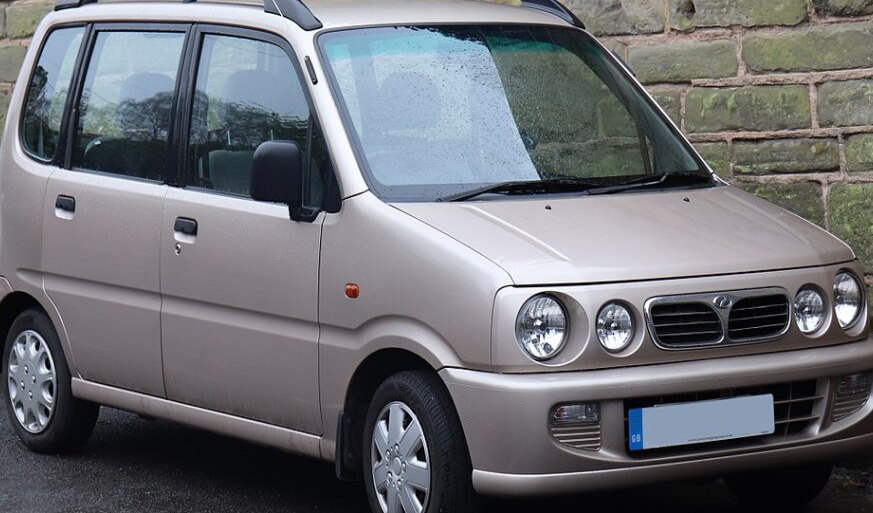
The Perodua Kenari 1.0i 12V, produced from 2000 to 2009, was a popular city car in Malaysia, designed to provide affordable and practical transportation. Positioned as an entry-level vehicle within Perodua’s lineup, the Kenari was a rebadged and slightly modified version of the Daihatsu Mira, leveraging Japanese engineering for the Southeast Asian market. It served as a crucial model for Perodua, contributing significantly to the company’s dominance in the Malaysian automotive sector during its production run. The Kenari was a five-door hatchback, offering a relatively spacious interior for its diminutive size, and was primarily aimed at young drivers, small families, and those seeking an economical runabout.
Technical Specifications
| Brand | Perodua |
| Model | Kenari |
| Generation | Kenari |
| Type (Engine) | 1.0i 12V (56 Hp) |
| Start of production | 2000 year |
| End of production | 2009 year |
| Powertrain Architecture | Internal Combustion engine |
| Body type | Minivan |
| Seats | 5 |
| Doors | 5 |
| Fuel consumption (economy) – urban | 5.6 l/100 km (42 US mpg, 50.4 UK mpg, 17.9 km/l) |
| Fuel consumption (economy) – extra urban | 4.2 l/100 km (56 US mpg, 67.3 UK mpg, 23.8 km/l) |
| Fuel consumption (economy) – combined | 4.7 l/100 km (50 US mpg, 60.1 UK mpg, 21.3 km/l) |
| Fuel Type | Petrol (Gasoline) |
| Acceleration 0 – 100 km/h | 15 sec |
| Acceleration 0 – 62 mph | 15 sec |
| Acceleration 0 – 60 mph | 14.3 sec |
| Maximum speed | 140 km/h (86.99 mph) |
| Weight-to-power ratio | 15.1 kg/Hp, 66.3 Hp/tonne |
| Weight-to-torque ratio | 9.6 kg/Nm, 104.1 Nm/tonne |
| Power | 56 Hp @ 5200 rpm |
| Power per litre | 56.6 Hp/l |
| Torque | 88 Nm @ 3600 rpm (64.91 lb.-ft. @ 3600 rpm) |
| Engine layout | Front, Transverse |
| Engine Model/Code | EJ-DE |
| Engine displacement | 989 cm3 (60.35 cu. in.) |
| Number of cylinders | 3 |
| Engine configuration | Inline |
| Cylinder Bore | 72 mm (2.83 in.) |
| Piston Stroke | 81 mm (3.19 in.) |
| Compression ratio | 10:1 |
| Number of valves per cylinder | 4 |
| Fuel injection system | Multi-port manifold injection |
| Engine aspiration | Naturally aspirated engine |
| Engine oil capacity | 2.3 l (2.43 US qt | 2.02 UK qt) |
| Coolant | 3 l (3.17 US qt | 2.64 UK qt) |
| Kerb Weight | 845 kg (1862.91 lbs.) |
| Max. weight | 1270 kg (2799.87 lbs.) |
| Max load | 425 kg (936.96 lbs.) |
| Trunk (boot) space – minimum | 155 l (5.47 cu. ft.) |
| Trunk (boot) space – maximum | 505 l (17.83 cu. ft.) |
| Fuel tank capacity | 40 l (10.57 US gal | 8.8 UK gal) |
| Length | 3460 mm (136.22 in.) |
| Width | 1475 mm (58.07 in.) |
| Height | 1665 mm (65.55 in.) |
| Wheelbase | 2600 mm (102.36 in.) |
| Front track | 1300 mm (51.18 in.) |
| Rear (Back) track | 1260 mm (49.61 in.) |
| Minimum turning circle | 9.3 m (30.51 ft.) |
| Drivetrain Architecture | The Internal combustion engine (ICE) drives the front wheels of the vehicle. |
| Drive wheel | Front wheel drive |
| Number of gears and type of gearbox | 5 gears, manual transmission |
| Front suspension | Coil spring |
| Rear suspension | Coil spring |
| Front brakes | Disc |
| Rear brakes | Drum |
| Assisting systems | ABS (Anti-lock braking system) |
| Steering type | Steering rack and pinion |
| Tires size | 155/65 R13 |
| Wheel rims size | 13 |
Powertrain & Engine Architecture
The Perodua Kenari 1.0i 12V was powered by the Daihatsu EJ-DE engine, a 989cc inline-three cylinder petrol engine. This engine featured a single overhead camshaft (SOHC) and four valves per cylinder, utilizing a multi-point fuel injection system. The EJ-DE was known for its simplicity and reliability, prioritizing fuel efficiency over outright performance. The engine produced 56 horsepower at 5200 rpm and 88 Nm (64.91 lb-ft) of torque at 3600 rpm. The engine’s relatively low output was paired with a five-speed manual transmission, which was the standard offering. The engine block was constructed from cast iron, contributing to its durability, while the cylinder head was made of aluminum to reduce weight. The 10:1 compression ratio was a typical value for naturally aspirated engines of this era, balancing efficiency and performance.
Driving Characteristics
The Kenari 1.0i with the five-speed manual transmission offered adequate, though not exhilarating, performance. Acceleration from 0 to 100 km/h (0-62 mph) took approximately 15 seconds, and the top speed was around 140 km/h (87 mph). The engine felt strained at higher speeds, and overtaking required careful planning. The five-speed gearbox was well-matched to the engine’s characteristics, allowing drivers to keep the engine in its optimal power band. The gear ratios were relatively tall, further emphasizing fuel economy. Compared to potential higher-spec variants (which weren’t offered in the US market), the 1.0i prioritized fuel efficiency and ease of driving over sporty performance. The light weight of the vehicle (845 kg or 1863 lbs) helped to mitigate the effects of the low horsepower output, making it feel reasonably nimble in urban environments.
Equipment & Trim Levels
The Perodua Kenari 1.0i 12V was generally sparsely equipped, reflecting its position as an entry-level vehicle. Standard features typically included power steering, air conditioning, and basic instrumentation. Interior upholstery was typically cloth, and the dashboard was constructed from durable plastics. Optional extras included a radio/cassette player (later upgraded to CD players), power windows, and central locking. Higher trim levels, if available, might have added features like alloy wheels and upgraded interior trim. The focus was on providing essential features at an affordable price point.
Chassis & Braking
The Kenari utilized a simple chassis design with coil spring suspension at both the front and rear. The front suspension employed MacPherson struts, while the rear suspension used a torsion beam setup. This configuration provided a comfortable ride, although handling was not particularly sporty. The braking system consisted of disc brakes at the front and drum brakes at the rear. An Anti-lock Braking System (ABS) was included as a standard safety feature. The steering was rack and pinion, providing reasonably precise control. The relatively narrow tires (155/65 R13) contributed to fuel efficiency but limited grip.
Market Reception & Comparison
The Perodua Kenari 1.0i 12V was well-received in the Malaysian market due to its affordability, fuel efficiency, and practicality. Critics praised its compact size, making it easy to maneuver in congested urban areas. However, the engine’s lack of power was a common criticism. Compared to other vehicles in its class, the Kenari offered a competitive price point and a reputation for reliability. Its fuel economy of around 50 US mpg combined was a significant selling point. The Kenari directly competed with other small hatchbacks available in Malaysia, such as the Proton Savvy and various imported models.
Legacy
The Perodua Kenari 1.0i 12V remains a common sight on Malaysian roads today, testament to its durability and reliability. The EJ-DE engine is known for its longevity, and with proper maintenance, it can provide many years of service. In the used car market, the Kenari is valued for its affordability and low running costs. While it may not offer the performance or features of more modern vehicles, it remains a practical and economical choice for those seeking a basic and reliable city car. The Kenari played a significant role in establishing Perodua as a major player in the Malaysian automotive industry, paving the way for future models and innovations.
