
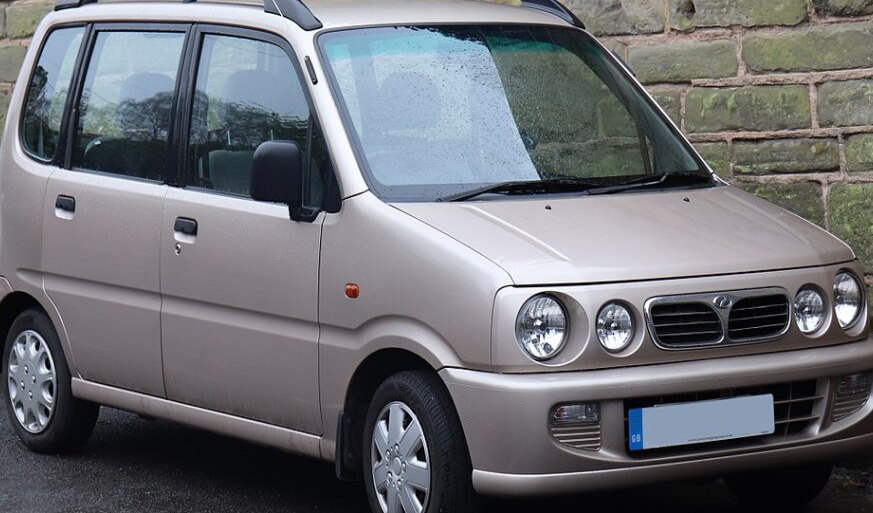
The Perodua Kenari 1.0i 12V Automatic, produced from 2000 to 2009, was a popular city car in Malaysia, designed to provide affordable and practical transportation. Positioned as the entry-level variant within the Kenari range, it catered to buyers prioritizing fuel efficiency and ease of use over outright performance. The Kenari itself was a rebadged version of the Daihatsu Mira, reflecting Perodua’s long-standing partnership with the Japanese manufacturer. It falls into the supermini or microvan category, offering a surprisingly spacious interior for its diminutive size. The Kenari played a significant role in Perodua’s success, solidifying their position as a leading automotive manufacturer in Malaysia.
Technical Specifications
| Brand | Perodua |
| Model | Kenari |
| Generation | Kenari |
| Type (Engine) | 1.0i 12V (56 Hp) Automatic |
| Start of production | 2000 year |
| End of production | 2009 year |
| Powertrain Architecture | Internal Combustion engine |
| Body type | Minivan |
| Seats | 5 |
| Doors | 5 |
| Fuel consumption (urban) | 5.6 l/100 km (42 US mpg, 50.4 UK mpg, 17.9 km/l) |
| Fuel consumption (extra urban) | 4.2 l/100 km (56 US mpg, 67.3 UK mpg, 23.8 km/l) |
| Fuel consumption (combined) | 4.7 l/100 km (50 US mpg, 60.1 UK mpg, 21.3 km/l) |
| Fuel Type | Petrol (Gasoline) |
| Acceleration 0 – 100 km/h | 17.7 sec |
| Acceleration 0 – 62 mph | 17.7 sec |
| Acceleration 0 – 60 mph | 16.8 sec |
| Maximum speed | 140 km/h (86.99 mph) |
| Weight-to-power ratio | 15.1 kg/Hp, 66.3 Hp/tonne |
| Weight-to-torque ratio | 9.6 kg/Nm, 104.1 Nm/tonne |
| Power | 56 Hp @ 5200 rpm |
| Power per litre | 56.6 Hp/l |
| Torque | 88 Nm @ 3600 rpm (64.91 lb.-ft. @ 3600 rpm) |
| Engine layout | Front, Transverse |
| Engine Model/Code | EJ-DE |
| Engine displacement | 989 cm3 (60.35 cu. in.) |
| Number of cylinders | 3 |
| Engine configuration | Inline |
| Cylinder Bore | 72 mm (2.83 in.) |
| Piston Stroke | 81 mm (3.19 in.) |
| Compression ratio | 10:1 |
| Number of valves per cylinder | 4 |
| Fuel injection system | Multi-port manifold injection |
| Engine aspiration | Naturally aspirated engine |
| Engine oil capacity | 2.3 l (2.43 US qt | 2.02 UK qt) |
| Coolant capacity | 2.9 l (3.06 US qt | 2.55 UK qt) |
| Kerb Weight | 845 kg (1862.91 lbs.) |
| Max. weight | 1270 kg (2799.87 lbs.) |
| Max load | 425 kg (936.96 lbs.) |
| Trunk (boot) space – minimum | 155 l (5.47 cu. ft.) |
| Trunk (boot) space – maximum | 505 l (17.83 cu. ft.) |
| Fuel tank capacity | 40 l (10.57 US gal | 8.8 UK gal) |
| Length | 3460 mm (136.22 in.) |
| Width | 1475 mm (58.07 in.) |
| Height | 1665 mm (65.55 in.) |
| Wheelbase | 2600 mm (102.36 in.) |
| Front track | 1300 mm (51.18 in.) |
| Rear (Back) track | 1260 mm (49.61 in.) |
| Minimum turning circle | 9.3 m (30.51 ft.) |
| Drivetrain Architecture | Front wheel drive |
| Number of gears and type of gearbox | 3 gears, automatic transmission |
| Front suspension | Coil spring |
| Rear suspension | Coil spring |
| Front brakes | Disc |
| Rear brakes | Drum |
| Assisting systems | ABS (Anti-lock braking system) |
| Steering type | Steering rack and pinion |
| Tires size | 155/65 R13 |
| Wheel rims size | 13 |
Powertrain & Engine Architecture
The Kenari 1.0i Automatic is powered by the Daihatsu EJ-DE engine, a 989cc inline-three cylinder petrol engine. This engine utilizes a multi-point fuel injection system and a 10:1 compression ratio. The 12-valve configuration (four valves per cylinder) helps optimize breathing for its small displacement. The EJ-DE is known for its simplicity and relative reliability, though it’s not a powerhouse. The engine is transversely mounted, driving the front wheels. Paired with the engine is a 3-speed automatic transmission. This transmission was chosen for its affordability and ease of use, prioritizing smooth operation over sporty performance. The three-speed design, while adequate for city driving, meant relatively high engine speeds at highway cruising speeds.
Driving Characteristics
The driving experience in the Kenari 1.0i Automatic is best described as utilitarian. With only 56 horsepower, acceleration is leisurely, taking approximately 17.7 seconds to reach 62 mph. The automatic transmission contributes to a relaxed driving style, but the limited number of gears means the engine often feels strained during overtaking maneuvers or when climbing hills. The gear ratios are optimized for fuel economy rather than performance. The steering is light and easy, making it maneuverable in tight urban environments. The suspension, while basic, provides a reasonably comfortable ride on smooth roads, but can feel somewhat unsettled on rough surfaces. Compared to a manual transmission version, the automatic sacrifices some responsiveness and fuel efficiency, but gains significantly in driver convenience.
Equipment & Trim Levels
The Kenari 1.0i Automatic typically came with a fairly basic level of equipment, reflecting its position as an entry-level model. Standard features generally included power steering, air conditioning, and a basic audio system. Interior upholstery was typically cloth, and the dashboard featured a simple, functional design. Optional extras, depending on the year and specific package, could include power windows, central locking, and upgraded audio systems. The interior space, despite the car’s small exterior dimensions, was surprisingly practical, offering adequate room for five passengers and a usable cargo area, especially with the rear seats folded down.
Chassis & Braking
The Kenari utilizes a relatively simple chassis design, featuring coil spring suspension at both the front and rear. The front brakes are discs, providing adequate stopping power for the vehicle’s weight and performance, while the rear brakes are drums, a cost-saving measure common in this class of vehicle. An Anti-lock Braking System (ABS) was often included as standard equipment, enhancing safety. The steering system employs a rack and pinion setup, providing light and responsive steering. The relatively narrow tires (155/65 R13) contribute to fuel efficiency but offer limited grip.
Market Reception & Comparison
The Perodua Kenari 1.0i Automatic was generally well-received in the Malaysian market as an affordable and practical city car. Critics praised its fuel efficiency and spacious interior, but noted its lack of performance. Compared to other trims in the Kenari lineup, such as those with manual transmissions, the automatic version offered less spirited driving experience but greater convenience. It competed with other small city cars like the Proton Savvy and various imported models, often winning out on price and practicality. Its fuel economy was a key selling point, consistently achieving around 50 US mpg in combined driving conditions.
Legacy
The Perodua Kenari, and specifically the 1.0i Automatic variant, has proven to be a relatively reliable vehicle over the long term. The EJ-DE engine is known for its durability, and the automatic transmission, while not particularly sophisticated, is generally robust. In the used car market, the Kenari remains a popular choice for budget-conscious buyers seeking a practical and fuel-efficient vehicle. Parts availability is generally good, and maintenance costs are relatively low. While it may not offer the performance or features of more modern vehicles, the Kenari 1.0i Automatic continues to provide dependable transportation for many drivers in Malaysia.
