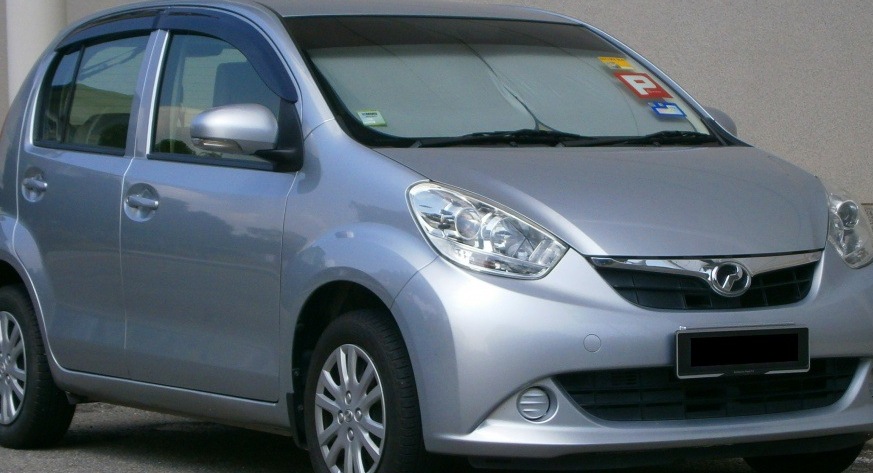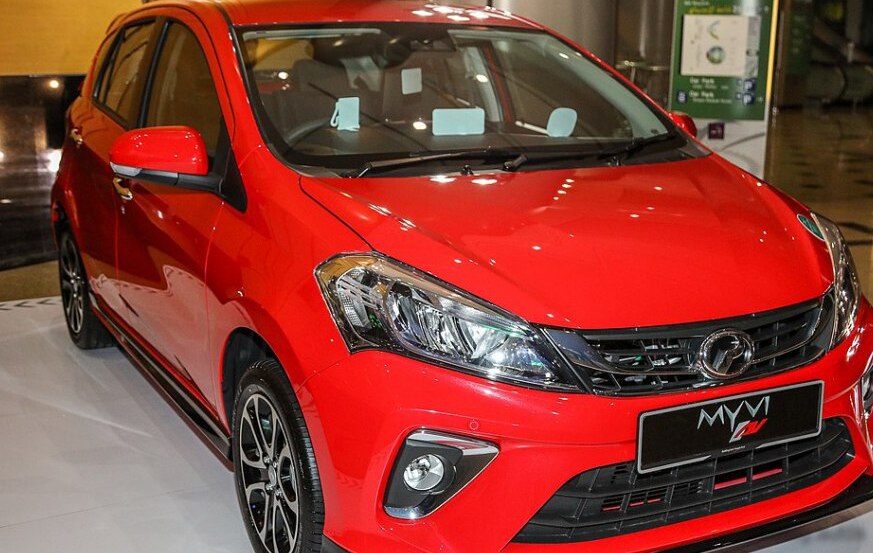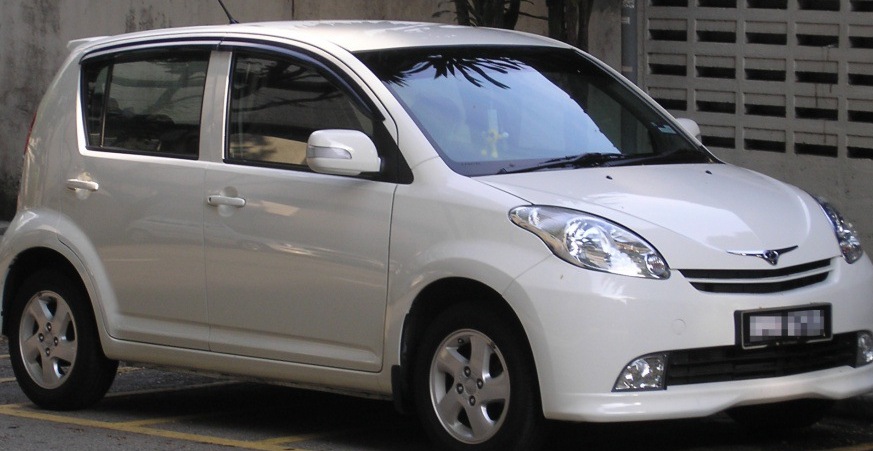
The Perodua Myvi first generation, launched in 2005, represented a pivotal moment for the Malaysian automotive industry. Designed as an affordable and practical city car, the Myvi quickly became a dominant force in its segment, catering to a growing middle class and the demand for efficient personal transportation. Produced from 2005 to 2011, the Myvi I was based on the Daihatsu Boon (also known as the Daihatsu Sirion in some markets), and played a crucial role in establishing Perodua as a leading automotive manufacturer in Malaysia. The 1.3-liter variant, producing 87 horsepower, served as the entry point to the Myvi range, offering a balance of economy and usability. It was positioned as the most accessible option, aimed at first-time car buyers and those prioritizing fuel efficiency.
Technical Specifications
| Brand | Perodua |
| Model | Myvi |
| Generation | Myvi I |
| Type (Engine) | 1.3 (87 Hp) |
| Start of production | 2005 |
| End of production | 2011 |
| Powertrain Architecture | Internal Combustion engine |
| Body type | Hatchback |
| Seats | 5 |
| Doors | 5 |
| Fuel consumption (urban) | 7.5 l/100 km (31.4 US mpg) |
| Fuel consumption (extra urban) | 4.8 l/100 km (49 US mpg) |
| Fuel Type | Petrol (Gasoline) |
| Acceleration 0 – 100 km/h | 10.9 sec |
| Acceleration 0 – 62 mph | 10.9 sec |
| Acceleration 0 – 60 mph | 10.4 sec |
| Maximum speed | 170 km/h (105.63 mph) |
| Weight-to-power ratio | 10.8 kg/Hp |
| Weight-to-torque ratio | 7.8 kg/Nm |
| Power | 87 Hp @ 6000 rpm |
| Power per litre | 67 Hp/l |
| Torque | 120 Nm @ 3200 rpm (88.51 lb.-ft. @ 3200 rpm) |
| Engine layout | Front, Transverse |
| Engine Model/Code | K3-VE |
| Engine displacement | 1298 cm3 (79.21 cu. in.) |
| Number of cylinders | 4 |
| Engine configuration | Inline |
| Cylinder Bore | 72 mm (2.83 in.) |
| Piston Stroke | 79.7 mm (3.14 in.) |
| Compression ratio | 10:1 |
| Number of valves per cylinder | 4 |
| Fuel injection system | Multi-port manifold injection |
| Engine aspiration | Naturally aspirated engine |
| Valvetrain | DOHC, D-VVT-i |
| Engine oil capacity | 3.6 l (3.8 US qt | 3.17 UK qt) |
| Coolant | 5.7 l (6.02 US qt | 5.02 UK qt) |
| Kerb Weight | 940 kg (2072.35 lbs.) |
| Max. weight | 1450 kg (3196.7 lbs.) |
| Max load | 510 kg (1124.36 lbs.) |
| Trunk (boot) space – minimum | 225 l (7.95 cu. ft.) |
| Trunk (boot) space – maximum | 630 l (22.25 cu. ft.) |
| Fuel tank capacity | 40 l (10.57 US gal | 8.8 UK gal) |
| Length | 3600 mm (141.73 in.) |
| Width | 1655 mm (65.16 in.) |
| Height | 1550 mm (61.02 in.) |
| Wheelbase | 2430 mm (95.67 in.) |
| Front track | 1470 mm (57.87 in.) |
| Rear (Back) track | 1475 mm (58.07 in.) |
| Ride height (ground clearance) | 160 mm (6.3 in.) |
| Drivetrain Architecture | Front wheel drive |
| Drive wheel | Front wheel drive |
| Number of gears and type of gearbox | 5 gears, manual transmission |
| Front brakes | Disc |
| Rear brakes | Drum |
| Assisting systems | ABS (Anti-lock braking system) |
| Steering type | Steering rack and pinion |
| Power steering | Electric Steering |
| Tires size | 175/65 R14 |
| Wheel rims size | 14 |
Powertrain & Engine Architecture
The heart of the Myvi 1.3 was the K3-VE engine, a 1.3-liter inline-four cylinder petrol engine. This engine, sourced from Daihatsu, featured a multi-point fuel injection system and a double overhead camshaft (DOHC) valvetrain with variable valve timing (D-VVT-i). The D-VVT-i system optimized engine performance and fuel efficiency by adjusting the timing of both intake and exhaust valves based on engine speed and load. The engine produced 87 horsepower at 6000 rpm and 120 Nm of torque at 3200 rpm. The engine’s relatively simple design contributed to its reliability and ease of maintenance. The standard transmission for this variant was a five-speed manual, although a four-speed automatic transmission was also offered as an option, albeit at a higher price point. The automatic transmission, while providing convenience, did slightly impact fuel economy and acceleration compared to the manual version.
Driving Characteristics
The Myvi 1.3, particularly with the manual transmission, offered a surprisingly nimble driving experience for a small hatchback. While not particularly powerful, the engine provided adequate acceleration for urban driving and highway cruising. The 0-100 km/h time of 10.9 seconds was respectable for its class. The manual gearbox allowed for precise control and maximized fuel efficiency. The automatic transmission, while smoother, resulted in a noticeable decrease in responsiveness. The suspension was tuned for comfort, absorbing bumps and imperfections in the road well, making it a pleasant vehicle for daily commutes. Steering was light and easy, making maneuvering in tight spaces effortless.
Equipment & Trim Levels
The base-level Myvi 1.3 typically came equipped with basic amenities such as air conditioning, power steering, and a basic audio system. Safety features included dual airbags and an Anti-lock Braking System (ABS). Higher trim levels, such as the EZ and SE variants, added features like alloy wheels, power windows, central locking, and upgraded interior trim. The interior was functional and designed for practicality, with durable plastics and comfortable seating. Optional extras included a CD player, upgraded speakers, and body-colored door handles and mirrors.
Chassis & Braking
The Myvi I utilized a front-engine, front-wheel-drive layout. The suspension consisted of MacPherson struts at the front and a torsion beam axle at the rear. The braking system featured disc brakes on the front wheels and drum brakes on the rear. The relatively lightweight construction of the Myvi (940 kg) contributed to its agility and fuel efficiency. The electric power steering provided a light and responsive feel, enhancing maneuverability.
Market Reception & Comparison
The Perodua Myvi 1.3 was widely praised for its affordability, fuel efficiency, and practicality. It quickly became a popular choice among first-time car buyers and families seeking a reliable and economical city car. Critics noted that the 1.3-liter engine could feel underpowered when fully loaded or tackling steep hills. Compared to the higher-spec 1.5-liter Myvi variants, the 1.3 offered a more economical option but lacked the extra power and refinement. However, its lower price point and excellent fuel economy made it a compelling choice for budget-conscious buyers. The Myvi consistently outperformed its direct competitors, such as the Proton Savvy, in terms of sales and reliability.
Legacy
The Perodua Myvi I 1.3 remains a common sight on Malaysian roads today, a testament to its durability and reliability. While older models may require more frequent maintenance, the K3-VE engine is generally considered robust and relatively easy to repair. The Myvi established Perodua as a major player in the Malaysian automotive market and paved the way for subsequent generations of the Myvi, which continue to be bestsellers. In the used car market, the Myvi I 1.3 offers excellent value for money, making it an attractive option for those seeking an affordable and dependable city car.