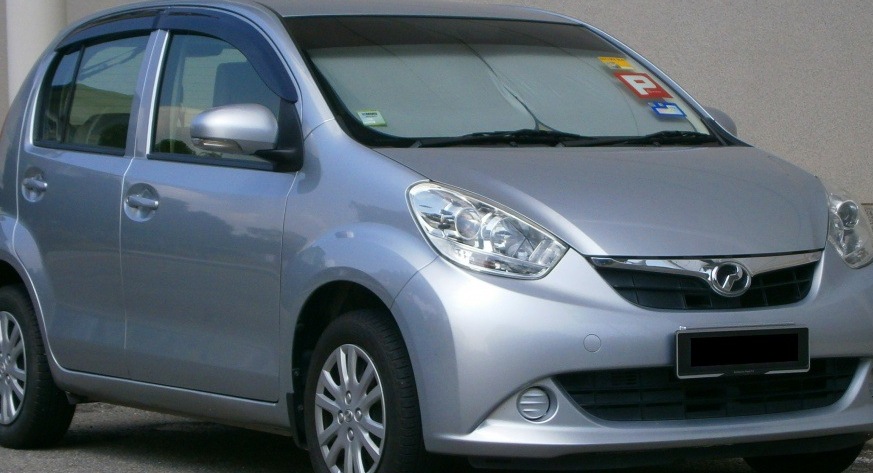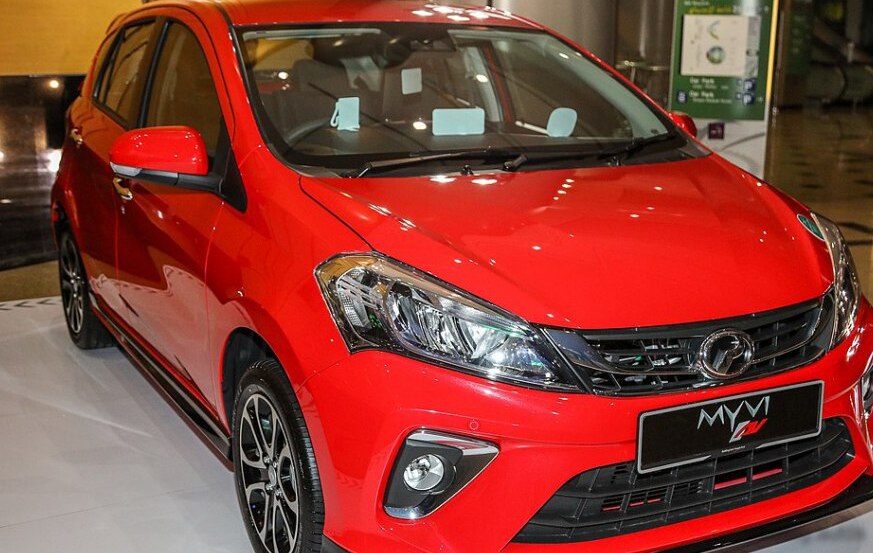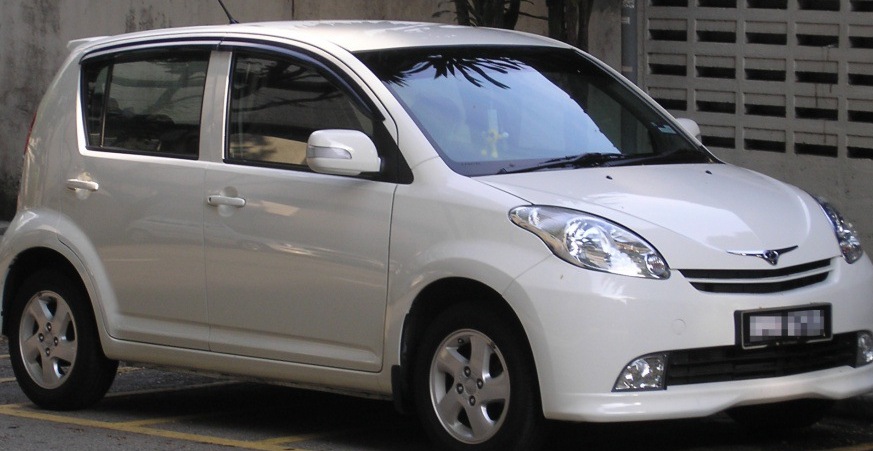
The Perodua Myvi first generation, produced from 2005 to 2011, represented a significant step forward for Malaysia’s national car project. Designed as an affordable and practical city car, the Myvi quickly became a popular choice in the Malaysian market, offering a blend of fuel efficiency, compact dimensions, and reasonable equipment levels. The 1.3-liter variant, producing 87 horsepower, with an all-wheel drive (AWD) configuration, occupied a unique position within the Myvi lineup, aiming to provide enhanced traction and stability for Malaysian road conditions. This model was positioned as a step up from the base 1.0-liter model, offering more performance and capability, while remaining accessible to a broad range of buyers.
Technical Specifications
| Brand | Perodua |
| Model | Myvi |
| Generation | Myvi I |
| Type (Engine) | 1.3 (87 Hp) AWD |
| Start of production | 2005 |
| End of production | 2011 |
| Powertrain Architecture | Internal Combustion engine |
| Body type | Hatchback |
| Seats | 5 |
| Doors | 5 |
| Fuel consumption (urban) | 8 l/100 km (29.4 US mpg) |
| Fuel consumption (extra urban) | 5.3 l/100 km (44.4 US mpg) |
| Fuel Type | Petrol (Gasoline) |
| Acceleration 0 – 100 km/h | 12 sec |
| Acceleration 0 – 62 mph | 12 sec |
| Acceleration 0 – 60 mph | 11.4 sec |
| Maximum speed | 165 km/h (102.53 mph) |
| Weight-to-power ratio | 11.3 kg/Hp |
| Weight-to-torque ratio | 8.2 kg/Nm |
| Power | 87 Hp @ 6000 rpm |
| Power per litre | 67 Hp/l |
| Torque | 120 Nm @ 3200 rpm (88.51 lb.-ft. @ 3200 rpm) |
| Engine layout | Front, Transverse |
| Engine Model/Code | K3-VE |
| Engine displacement | 1298 cm3 (79.21 cu. in.) |
| Number of cylinders | 4 |
| Engine configuration | Inline |
| Cylinder Bore | 72 mm (2.83 in.) |
| Piston Stroke | 79.7 mm (3.14 in.) |
| Compression ratio | 10:1 |
| Number of valves per cylinder | 4 |
| Fuel injection system | Multi-port manifold injection |
| Engine aspiration | Naturally aspirated engine |
| Valvetrain | DOHC, D-VVT-i |
| Engine oil capacity | 3.6 l (3.8 US qt | 3.17 UK qt) |
| Coolant | 5.7 l (6.02 US qt | 5.02 UK qt) |
| Kerb Weight | 980 kg (2160.53 lbs.) |
| Max. weight | 1470 kg (3240.8 lbs.) |
| Max load | 490 kg (1080.27 lbs.) |
| Trunk (boot) space – minimum | 225 l (7.95 cu. ft.) |
| Trunk (boot) space – maximum | 630 l (22.25 cu. ft.) |
| Fuel tank capacity | 40 l (10.57 US gal | 8.8 UK gal) |
| Length | 3600 mm (141.73 in.) |
| Width | 1655 mm (65.16 in.) |
| Height | 1550 mm (61.02 in.) |
| Wheelbase | 2430 mm (95.67 in.) |
| Front track | 1470 mm (57.87 in.) |
| Rear (Back) track | 1475 mm (58.07 in.) |
| Ride height (ground clearance) | 160 mm (6.3 in.) |
| Drive wheel | All wheel drive (4×4) |
| Number of gears and type of gearbox | 5 gears, manual transmission |
| Front brakes | Disc |
| Rear brakes | Drum |
| Assisting systems | ABS (Anti-lock braking system) |
| Steering type | Steering rack and pinion |
| Power steering | Electric Steering |
| Tires size | 175/65 R14 |
| Wheel rims size | 14 |
INTRODUCTION
The Perodua Myvi 1.3 AWD, launched in 2005, was a key model in Perodua’s strategy to cater to the growing demand for compact, fuel-efficient vehicles in Malaysia. Built upon the Daihatsu Sirion/Story platform (internally known as the 1HX0/A3), the Myvi aimed to provide a modern and practical alternative to existing offerings in the segment. The addition of all-wheel drive to the 1.3-liter engine option was a notable feature, designed to improve handling and stability on Malaysia’s often-challenging road surfaces, particularly during the monsoon season. This variant was positioned as a mid-range option, offering a balance between affordability and functionality.
Powertrain & Engine Architecture
The heart of the Myvi 1.3 AWD is the K3-VE engine, a 1.3-liter inline-four cylinder gasoline engine. This engine utilizes a multi-point fuel injection system and a double overhead camshaft (DOHC) valvetrain with variable valve timing (D-VVT-i) on both intake and exhaust camshafts. The D-VVT-i system optimizes engine performance and fuel efficiency by adjusting valve timing based on engine speed and load. The engine produces 87 horsepower at 6000 rpm and 120 Nm of torque at 3200 rpm. The engine’s relatively simple design contributed to its reliability and ease of maintenance. The Myvi 1.3 AWD was exclusively offered with a five-speed manual transmission. This transmission was chosen to maximize fuel efficiency and provide a more engaging driving experience compared to an automatic option.
Driving Characteristics
The Myvi 1.3 AWD’s driving experience is characterized by its nimble handling and adequate, though not exhilarating, performance. The all-wheel drive system provides improved traction, particularly on loose or wet surfaces, enhancing stability during cornering and acceleration. However, the 87 horsepower output means that acceleration is modest, with a 0-100 km/h time of around 12 seconds. The five-speed manual transmission allows drivers to effectively utilize the engine’s powerband, but the gear ratios are tuned for fuel economy rather than outright speed. Compared to the base 1.0-liter model, the 1.3 AWD offers noticeably more power and responsiveness, making it better suited for highway driving and carrying a full load of passengers. Compared to potential future higher-spec variants, the 1.3 AWD lacks the punch and refinement of larger engines.
Equipment & Trim Levels
The Myvi 1.3 AWD typically came equipped with features such as power windows, power steering, and air conditioning as standard. The interior upholstery was typically cloth, with a functional and durable design. Optional extras included an upgraded audio system, alloy wheels, and body-colored door handles and mirrors. The dashboard layout was straightforward and user-friendly, prioritizing practicality over luxury. Safety features included ABS (Anti-lock Braking System), which was a significant addition for the time, enhancing braking performance and control.
Chassis & Braking
The Myvi 1.3 AWD utilizes a MacPherson strut suspension system at the front and a torsion beam suspension at the rear. This setup provides a comfortable ride quality, absorbing bumps and irregularities in the road surface effectively. The front brakes are disc brakes, while the rear brakes are drum brakes. The combination of disc and drum brakes provides adequate stopping power for the vehicle’s weight and performance. The all-wheel drive system adds to the vehicle’s weight, but also contributes to its improved handling and stability. The steering is rack and pinion, providing precise and responsive steering feel.
Market Reception & Comparison
The Perodua Myvi 1.3 AWD was generally well-received by Malaysian consumers, praised for its practicality, fuel efficiency, and improved handling compared to the base model. Critics noted that the engine’s performance was adequate but not exceptional, and that the interior was functional but lacked refinement. However, the Myvi’s affordability and reliability made it a popular choice among first-time car buyers and families. Compared to other vehicles in the segment, such as the Proton Savvy, the Myvi offered a more modern design, better fuel economy, and a more refined driving experience. The AWD system was a unique selling point, setting it apart from many of its competitors.
Legacy
The Perodua Myvi 1.3 AWD has proven to be a reliable and durable vehicle, with many examples still on the road today. The K3-VE engine is known for its longevity and relatively low maintenance costs. While parts availability may become more challenging as the vehicle ages, the Myvi’s simple design and widespread popularity mean that parts are still relatively easy to find. In the used car market, the Myvi 1.3 AWD remains a popular choice for budget-conscious buyers seeking a practical and reliable city car. Its all-wheel drive system adds a degree of desirability, particularly in regions prone to inclement weather. The first-generation Myvi established the model as a cornerstone of Perodua’s lineup and paved the way for subsequent generations that continue to dominate the Malaysian automotive landscape.