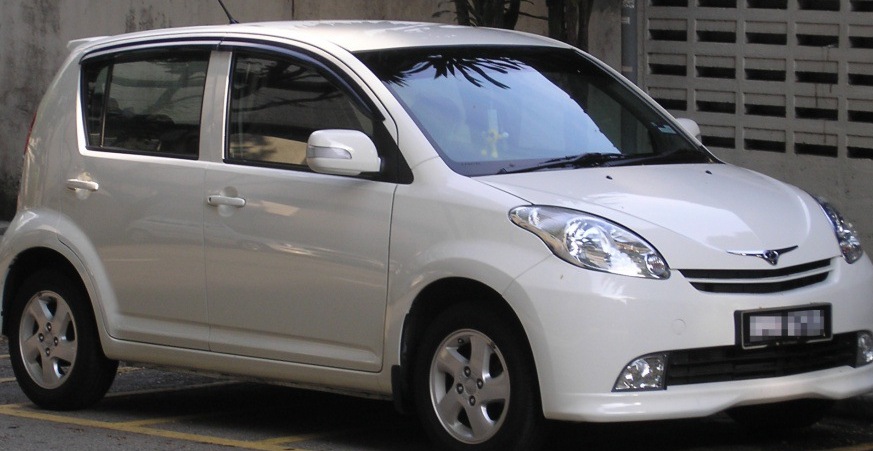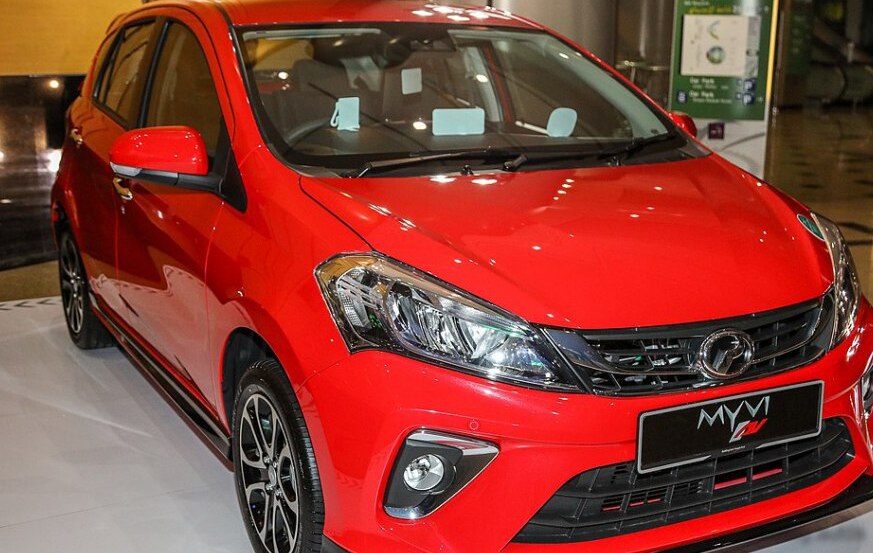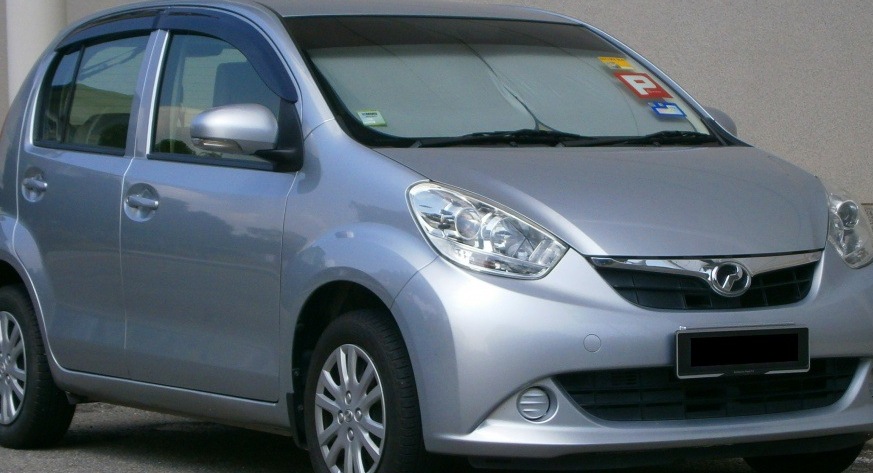
The Perodua Myvi II 1.3 (91 hp) Automatic, produced between 2011 and 2014, represents a significant iteration of Perodua’s popular city car. Positioned as an entry-level variant within the Myvi II range, it aimed to provide affordable and practical transportation for the Malaysian market. The Myvi II, built on the updated 1HX0 platform (a derivative of the Daihatsu Boon/Sirion), was designed to appeal to first-time car buyers, young families, and those seeking a fuel-efficient and easy-to-maneuver vehicle for urban environments. This specific 1.3L automatic configuration was a mainstay of the lineup, offering a balance between cost and convenience.
Technical Specifications
| Brand | Perodua |
| Model | Myvi |
| Generation | Myvi II |
| Type (Engine) | 1.3 (91 Hp) Automatic |
| Start of production | 2011 |
| End of production | 2014 |
| Powertrain Architecture | Internal Combustion engine |
| Body type | Hatchback |
| Seats | 5 |
| Doors | 5 |
| Fuel consumption (combined) | 6 l/100 km (39.2 US mpg, 47.1 UK mpg, 16.7 km/l) |
| Fuel Type | Petrol (Gasoline) |
| Weight-to-power ratio | 10.5 kg/Hp, 94.8 Hp/tonne |
| Weight-to-torque ratio | 8.2 kg/Nm, 121.9 Nm/tonne |
| Power | 91 Hp @ 6000 rpm |
| Power per litre | 70.1 Hp/l |
| Torque | 117 Nm @ 4400 rpm (86.29 lb.-ft. @ 4400 rpm) |
| Engine layout | Front, Transverse |
| Engine Model/Code | K3-VE |
| Engine displacement | 1298 cm3 (79.21 cu. in.) |
| Number of cylinders | 4 |
| Engine configuration | Inline |
| Cylinder Bore | 72 mm (2.83 in.) |
| Piston Stroke | 79.7 mm (3.14 in.) |
| Compression ratio | 10:1 |
| Number of valves per cylinder | 4 |
| Fuel injection system | Multi-port manifold injection |
| Engine aspiration | Naturally aspirated engine |
| Valvetrain | DOHC |
| Engine oil capacity | 3.1 l (3.28 US qt | 2.73 UK qt) |
| Coolant | 5.3 l (5.6 US qt | 4.66 UK qt) |
| Kerb Weight | 960 kg (2116.44 lbs.) |
| Fuel tank capacity | 40 l (10.57 US gal | 8.8 UK gal) |
| Length | 3695 mm (145.47 in.) |
| Width | 1665 mm (65.55 in.) |
| Height | 1570 mm (61.81 in.) |
| Wheelbase | 2440 mm (96.06 in.) |
| Front track | 1455 mm (57.28 in.) |
| Rear track | 1465 mm (57.68 in.) |
| Ride height (ground clearance) | 160 mm (6.3 in.) |
| Drivetrain Architecture | Front wheel drive, Internal Combustion engine |
| Drive wheel | Front wheel drive |
| Number of gears and type of gearbox | 4 gears, automatic transmission |
| Front suspension | Independent, type McPherson with coil spring and anti-roll bar |
| Rear suspension | Independent coil spring |
| Front brakes | Disc |
| Rear brakes | Drum |
| Assisting systems | ABS (Anti-lock braking system) |
| Steering type | Steering rack and pinion |
| Power steering | Electric Steering |
| Tires size | 175/65 R14 |
| Wheel rims size | 14 |
Powertrain & Engine Architecture
The heart of the Myvi II 1.3 Automatic is the K3-VE engine, a 1.3-liter, inline-four cylinder petrol engine. This engine is a product of Daihatsu’s engineering, reflecting Perodua’s close partnership with the Japanese manufacturer. The K3-VE utilizes a multi-point fuel injection system, delivering fuel directly to each intake port for improved combustion efficiency. It features a double overhead camshaft (DOHC) valvetrain, optimizing airflow into and out of the cylinders. The engine’s 10:1 compression ratio strikes a balance between power output and fuel economy. Paired with the engine is a four-speed automatic transmission, chosen for its ease of use and suitability for urban driving conditions. While not offering the sporty responsiveness of a manual gearbox, the automatic transmission provided a smoother and more convenient driving experience for the target demographic.
Driving Characteristics
The 91 hp output of the K3-VE engine, combined with the four-speed automatic transmission, resulted in a driving experience geared towards practicality rather than performance. Acceleration was adequate for city driving, but overtaking maneuvers on highways required careful planning. The automatic transmission’s gear ratios were tuned for fuel efficiency, meaning the engine often operated at higher RPMs during acceleration. Compared to the available 1.5-liter variants, the 1.3L automatic felt noticeably less powerful, particularly when fully loaded with passengers and cargo. However, the lighter weight of the 1.3L model partially compensated for the power deficit, contributing to reasonable fuel economy.
Equipment & Trim Levels
The Myvi II 1.3 Automatic typically came equipped with basic but essential features. Standard equipment included power windows, power steering, air conditioning, and a basic audio system. Interior upholstery was typically cloth, with a simple and functional dashboard layout. Optional extras, depending on the specific package, could include alloy wheels, a more advanced audio system with CD player, and body-colored door handles and mirrors. Safety features were relatively basic for the time, typically including dual airbags and an Anti-lock Braking System (ABS). The trim level was generally considered the base model, offering a cost-effective entry point into the Myvi II range.
Chassis & Braking
The Myvi II utilized a McPherson strut suspension setup at the front, providing a comfortable ride quality on typical urban roads. The rear suspension employed a coil spring arrangement. The front brakes were disc brakes, offering better stopping power than the drum brakes used on the rear wheels. The electric power steering system provided light and easy steering, making maneuvering in tight spaces effortless. The relatively small 14-inch wheels and tires contributed to ride comfort but didn’t prioritize handling performance. A stabilizer bar was included at the front to reduce body roll during cornering.
Market Reception & Comparison
The Perodua Myvi II 1.3 Automatic was well-received in the Malaysian market due to its affordability, fuel efficiency, and practicality. Critics generally praised its ease of use and suitability for urban commuting. However, the 1.3L engine was often criticized for its lack of power, particularly when compared to the 1.5L variants. Fuel economy was a strong point, consistently achieving around 6 liters per 100 kilometers in real-world driving conditions. Compared to competitors like the Proton Saga and Nissan Almera, the Myvi II offered a more modern design and a more refined driving experience, albeit at a slightly higher price point.
Legacy
The K3-VE engine, while not known for being particularly groundbreaking, proved to be a reliable and durable powertrain. The four-speed automatic transmission also demonstrated reasonable longevity. In the used car market, the Myvi II 1.3 Automatic remains a popular choice for budget-conscious buyers seeking a dependable and fuel-efficient city car. Maintenance costs are relatively low, and spare parts are readily available. While newer models have surpassed it in terms of technology and features, the Myvi II 1.3 Automatic continues to hold its own as a practical and affordable transportation option.