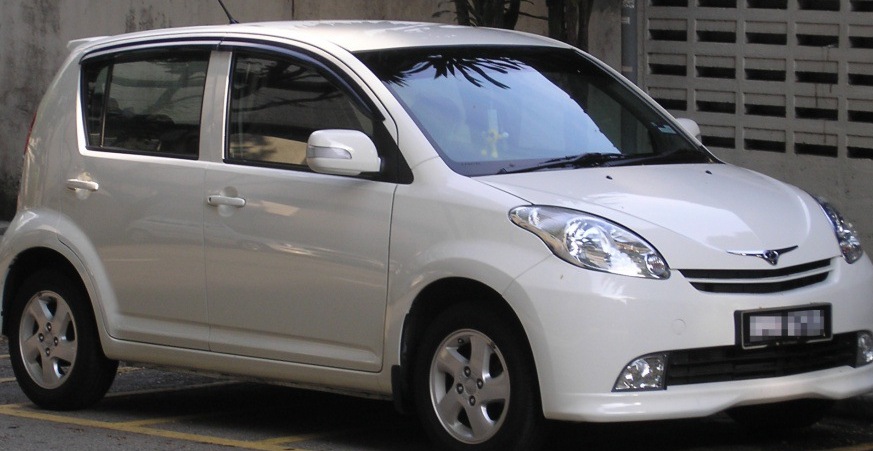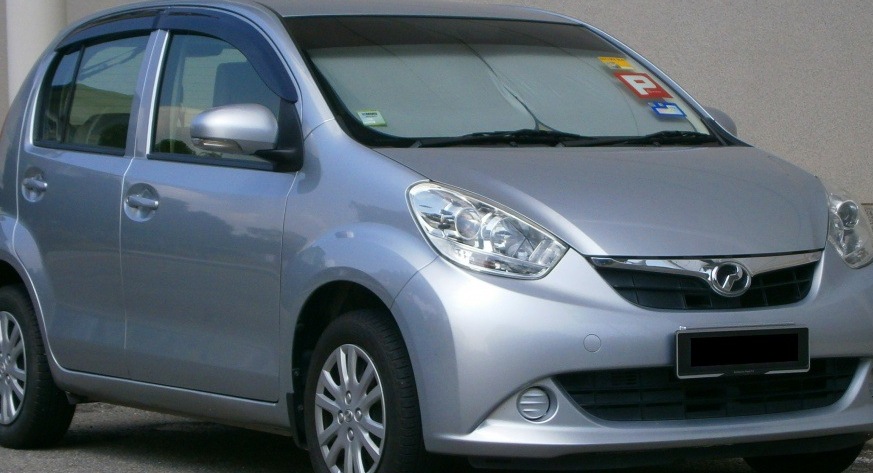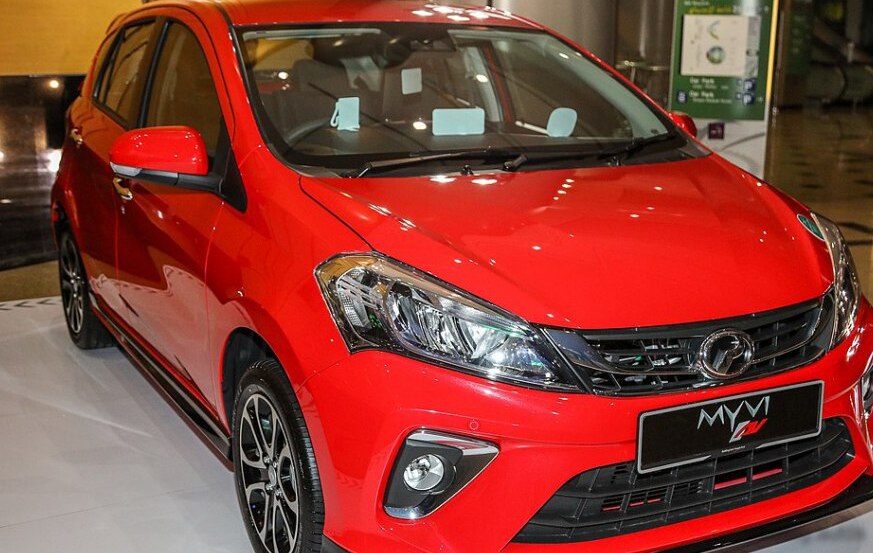
The Perodua Myvi III 1.5 Automatic, produced between November 2017 and November 2021, represents a significant iteration in the popular Malaysian city car’s lineage. Positioned as a mainstream offering within the Myvi III range (internally designated as the third generation), this variant aimed to balance affordability with practicality and a degree of modern convenience. It served as a core model for Perodua, catering to a broad demographic seeking a reliable and fuel-efficient hatchback for urban commuting and family use. The Myvi, since its introduction in 2005, has consistently been one of Malaysia’s best-selling vehicles, and the III generation continued this trend, offering improved safety features and a more refined driving experience compared to its predecessors.
Technical Specifications
| Brand | Perodua |
| Model | Myvi |
| Generation | Myvi III |
| Type (Engine) | 1.5 (103 Hp) Automatic |
| Start of production | November, 2017 |
| End of production | November, 2021 |
| Powertrain Architecture | Internal Combustion engine |
| Body type | Hatchback |
| Seats | 5 |
| Doors | 5 |
| Fuel consumption (combined) | 5 l/100 km (47 US mpg, 56.5 UK mpg, 20 km/l) |
| Fuel Type | Petrol (Gasoline) |
| Weight-to-power ratio | 9.8 kg/Hp, 102 Hp/tonne |
| Weight-to-torque ratio | 7.4 kg/Nm, 134.7 Nm/tonne |
| Power | 103 Hp @ 6000 rpm |
| Power per litre | 68.9 Hp/l |
| Torque | 136 Nm @ 4200 rpm (100.31 lb.-ft. @ 4200 rpm) |
| Engine layout | Front, Transverse |
| Engine Model/Code | 2NR-VE |
| Engine displacement | 1496 cm3 (91.29 cu. in.) |
| Number of cylinders | 4 |
| Engine configuration | Inline |
| Number of valves per cylinder | 4 |
| Fuel injection system | Multi-port manifold injection |
| Engine aspiration | Naturally aspirated engine |
| Valvetrain | DOHC |
| Engine oil capacity | 3.5 l (3.7 US qt | 3.08 UK qt) |
| Kerb Weight | 1010 kg (2226.67 lbs.) |
| Trunk (boot) space – minimum | 277 l (9.78 cu. ft.) |
| Fuel tank capacity | 36 l (9.51 US gal | 7.92 UK gal) |
| Length | 3895 mm (153.35 in.) |
| Width | 1735 mm (68.31 in.) |
| Height | 1515 mm (59.65 in.) |
| Wheelbase | 2500 mm (98.43 in.) |
| Front track | 1475 mm (58.07 in.) |
| Rear (Back) track | 1465 mm (57.68 in.) |
| Minimum turning circle | 10.2 m (33.46 ft.) |
| Drivetrain Architecture | The Internal combustion engine (ICE) drives the front wheels of the vehicle. |
| Drive wheel | Front wheel drive |
| Number of gears and type of gearbox | 4 gears, automatic transmission |
| Assisting systems | ABS (Anti-lock braking system) |
| Steering type | Steering rack and pinion |
| Power steering | Electric Steering |
| Tires size | 185/55 R15 |
| Wheel rims size | 15 |
Powertrain & Engine Architecture
The heart of the Myvi III 1.5 Automatic is the 2NR-VE 1.5-liter inline-four cylinder engine. This engine is part of Toyota’s NR engine family, known for its reliability and fuel efficiency. The 2NR-VE utilizes a dual overhead camshaft (DOHC) valvetrain with four valves per cylinder, contributing to its relatively efficient breathing. Fuel delivery is managed by a multi-port fuel injection system, a common setup for this class of vehicle. The engine produces 103 horsepower at 6000 rpm and 136 Nm (100.31 lb-ft) of torque at 4200 rpm. Paired with this engine is a four-speed automatic transmission. While not the most modern transmission available, it was chosen for its cost-effectiveness and suitability for the intended driving conditions – primarily urban and suburban environments. The transmission’s gear ratios are tuned for maximizing fuel economy and providing adequate acceleration for everyday driving.
Driving Characteristics
The 1.5L Automatic Myvi offers a comfortable, if not particularly sporty, driving experience. The four-speed automatic transmission, while smooth in operation, lacks the responsiveness of more modern continuously variable transmissions (CVTs) or transmissions with more gears. Acceleration is adequate for merging onto highways and navigating city traffic, but it’s not a vehicle designed for rapid acceleration. The power delivery is linear, with the engine feeling most responsive in the mid-range. The relatively light weight of the vehicle (1010 kg / 2226.67 lbs) helps to offset the modest power output. Compared to a manual transmission version of the same engine, the automatic sacrifices some responsiveness and fuel economy, but gains in ease of use, particularly in congested traffic.
Equipment & Trim Levels
The Myvi III 1.5 Automatic typically came equipped with standard features such as air conditioning, power windows, power door locks, and a basic audio system. Safety features included dual airbags, ABS (Anti-lock Braking System), and ISOFIX child seat anchors. Higher trim levels within the Myvi III range offered additional features like alloy wheels, a touchscreen infotainment system, reverse parking sensors, and keyless entry. The 1.5 Automatic trim generally represented a mid-range offering, providing a good balance of features for the price. Optional extras often included body kits, upgraded audio systems, and paint choices.
Chassis & Braking
The Myvi III utilizes a front-wheel-drive layout with a MacPherson strut suspension in the front and a torsion beam suspension in the rear. This suspension setup is typical for vehicles in this segment, prioritizing cost-effectiveness and space efficiency. The braking system consists of ventilated discs in the front and drum brakes in the rear. Electric power steering provides light and easy steering feel, making it well-suited for maneuvering in tight urban spaces. The chassis is designed to provide a comfortable ride, absorbing bumps and imperfections in the road surface reasonably well.
Market Reception & Comparison
The Perodua Myvi III 1.5 Automatic was generally well-received by Malaysian consumers. Critics praised its fuel efficiency, practicality, and affordability. However, some reviewers noted the lack of refinement compared to more expensive competitors and the somewhat dated four-speed automatic transmission. Compared to other trims in the Myvi III lineup, the 1.5 Automatic offered a good compromise between performance and fuel economy. The 1.3L variant was more fuel-efficient but lacked power, while the 1.5L manual offered better performance but required more driver involvement. The Myvi consistently outperformed competitors like the Proton Iriz in sales figures, largely due to Perodua’s reputation for reliability and its extensive service network.
Legacy
The Perodua Myvi III 1.5 Automatic has proven to be a reliable and durable vehicle, with many examples still on the road today. The 2NR-VE engine is known for its longevity, and the four-speed automatic transmission, while not cutting-edge, is generally robust. In the used car market, these Myvis are popular choices for first-time car buyers and those seeking an affordable and dependable city car. Maintenance costs are relatively low, and spare parts are readily available. The Myvi III 1.5 Automatic cemented the Myvi’s position as a dominant force in the Malaysian automotive landscape, and its success paved the way for subsequent generations of the popular hatchback.