
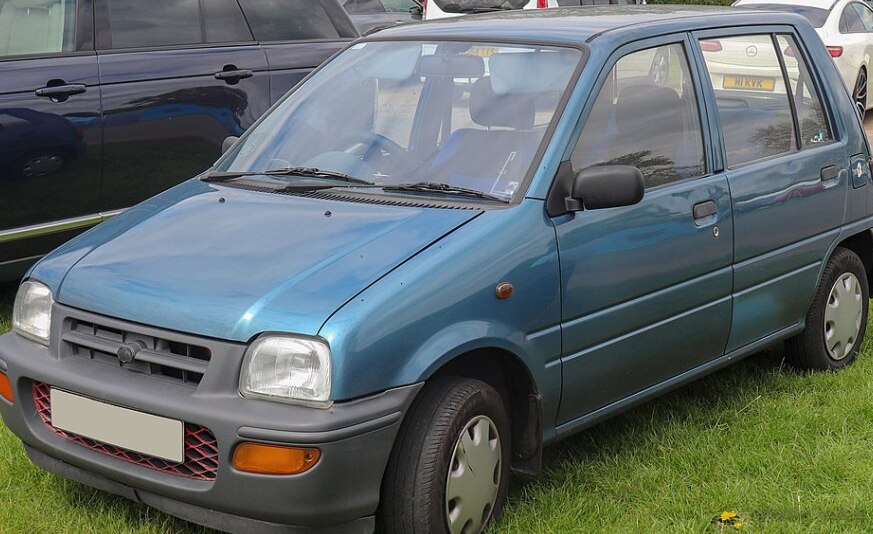
The Perodua Nippa 0.9, producing 58 horsepower, was a significant entry-level vehicle in the Malaysian automotive market from 1994 to 2009. Positioned as an affordable and practical city car, the Nippa played a crucial role in Perodua’s early success and the broader democratization of car ownership in Malaysia. It was based on the Daihatsu Mira, a relationship that formed the foundation of Perodua’s initial model lineup. The 0.9-liter engine and five-speed manual transmission configuration represented the base model, offering a balance of economy and accessibility for first-time car buyers and those seeking a simple, reliable mode of transportation.
Technical Specifications
| Brand | Perodua |
| Model | Nippa |
| Generation | Nippa |
| Type (Engine) | 0.9 (58 Hp) |
| Start of production | 1994 |
| End of production | 2009 |
| Powertrain Architecture | Internal Combustion engine |
| Body type | Hatchback |
| Seats | 5 |
| Doors | 5 |
| Fuel consumption (urban) | 5.6 l/100 km (42 US mpg, 50.4 UK mpg, 17.9 km/l) |
| Fuel consumption (extra urban) | 3.7 l/100 km (63.6 US mpg, 76.3 UK mpg, 27 km/l) |
| Fuel consumption (combined) | 4.4 l/100 km (53.5 US mpg, 64.2 UK mpg, 22.7 km/l) |
| Fuel Type | Petrol (Gasoline) |
| Acceleration 0 – 100 km/h | 16 sec |
| Acceleration 0 – 62 mph | 16 sec |
| Acceleration 0 – 60 mph | 15.2 sec |
| Maximum speed | 135 km/h (83.89 mph) |
| Weight-to-power ratio | 11.2 kg/Hp |
| Weight-to-torque ratio | 10.3 kg/Nm |
| Power | 58 Hp @ 7600 rpm |
| Power per litre | 68.5 Hp/l |
| Torque | 63 Nm @ 4000 rpm (46.47 lb.-ft. @ 4000 rpm) |
| Engine layout | Front, Transverse |
| Engine displacement | 847 cm3 (51.69 cu. in.) |
| Number of cylinders | 3 |
| Engine configuration | Inline |
| Cylinder Bore | 66.6 mm (2.62 in.) |
| Piston Stroke | 81 mm (3.19 in.) |
| Compression ratio | 9.5:1 |
| Number of valves per cylinder | 2 |
| Fuel injection system | Carburettor |
| Engine aspiration | Naturally aspirated |
| Engine oil capacity | 2.48 l (2.62 US qt, 2.18 UK qt) |
| Coolant capacity | 3.4 l (3.59 US qt, 2.99 UK qt) |
| Kerb Weight | 650 kg (1433 lbs.) |
| Trunk (boot) space | 190 l (6.71 cu. ft.) |
| Fuel tank capacity | 32 l (8.45 US gal, 7.04 UK gal) |
| Length | 3395 mm (133.66 in.) |
| Width | 1395 mm (54.92 in.) |
| Height | 1410 mm (55.51 in.) |
| Wheelbase | 2280 mm (89.76 in.) |
| Front track | 1215 mm (47.83 in.) |
| Rear track | 1205 mm (47.44 in.) |
| Minimum turning circle | 8.8 m (28.87 ft.) |
| Drivetrain | Front wheel drive |
| Number of gears | 5 gears, manual transmission |
| Front suspension | Independent, McPherson with coil spring and anti-roll bar |
| Rear suspension | Independent coil spring |
| Front brakes | Disc |
| Rear brakes | Drum |
| Assisting systems | ABS (Anti-lock braking system) |
| Steering type | Steering rack and pinion |
| Tires size | 145/70 R12 |
| Wheel rims size | 12 |
Powertrain & Engine Architecture
The Nippa 0.9 was powered by a 847cc (51.69 cubic inches) inline three-cylinder engine, designated as a derivative of the Daihatsu EB series. This engine, while simple in design, was known for its durability and fuel efficiency. It utilized a single carburetor for fuel delivery, a common feature for vehicles of this era and price point. The engine featured a single overhead camshaft (SOHC) valvetrain with two valves per cylinder. The 58 horsepower peak was achieved at a relatively high 7600 rpm, indicating a need to rev the engine to access its full potential. Torque output was 63 Nm (46.47 lb-ft) at 4000 rpm. The engine was transversely mounted, driving the front wheels through a five-speed manual transmission. This configuration maximized interior space within the small footprint of the Nippa.
Driving Characteristics
The Nippa 0.9 with the manual transmission offered a basic but functional driving experience. Acceleration was modest, taking approximately 16 seconds to reach 100 km/h (62 mph). The engine required frequent shifting to maintain momentum, particularly when climbing hills or overtaking. The gear ratios were tuned for economy rather than performance. Compared to potential future variants with larger engines, the 0.9-liter version prioritized fuel efficiency and affordability over outright speed. The light weight of the vehicle (650 kg or 1433 lbs) helped to mitigate the lack of power, making it relatively nimble in city traffic. The steering was light and easy to use, further enhancing its suitability for urban environments.
Equipment & Trim Levels
The base-model Nippa 0.9 was sparsely equipped, reflecting its position as an entry-level vehicle. Standard features typically included basic steel wheels, vinyl or cloth upholstery, and a simple dashboard layout. Power steering was not standard, and air conditioning was often an optional extra. The interior was functional and durable, designed for practicality rather than luxury. Higher trim levels, if available, might have included features such as upgraded upholstery, a radio/cassette player, and color-coded bumpers. However, the core appeal of the Nippa 0.9 remained its affordability and basic transportation capabilities.
Chassis & Braking
The Nippa 0.9 utilized a relatively simple chassis design. The front suspension consisted of independent McPherson struts with coil springs and an anti-roll bar, providing a reasonable level of ride comfort and handling. The rear suspension employed a non-independent coil spring setup. Braking was provided by disc brakes on the front wheels and drum brakes on the rear. An Anti-lock Braking System (ABS) was included as a safety feature. The relatively light weight of the vehicle contributed to acceptable braking performance, despite the use of drum brakes on the rear axle.
Market Reception & Comparison
The Perodua Nippa 0.9 was well-received in the Malaysian market as an affordable and reliable city car. Critics praised its fuel efficiency and ease of driving, making it a popular choice for first-time car buyers and urban commuters. Compared to other vehicles in its class, the Nippa offered a compelling value proposition. While it lacked the performance of larger-engined rivals, its low running costs and simple mechanicals made it an attractive option for budget-conscious buyers. The Nippa competed primarily with other small hatchbacks available in Malaysia at the time, including the Proton Saga and various imported models.
Legacy
The Perodua Nippa 0.9 holds a significant place in Malaysian automotive history as one of the first locally assembled cars to achieve widespread popularity. The powertrain, while basic, proved to be remarkably durable and reliable. Today, well-maintained examples of the Nippa 0.9 are sought after by collectors and enthusiasts. Parts availability can be a challenge, but the simplicity of the engine and chassis makes it relatively easy to repair and maintain. The Nippa’s legacy lies in its contribution to the growth of the Malaysian automotive industry and its role in making car ownership accessible to a wider segment of the population.
