
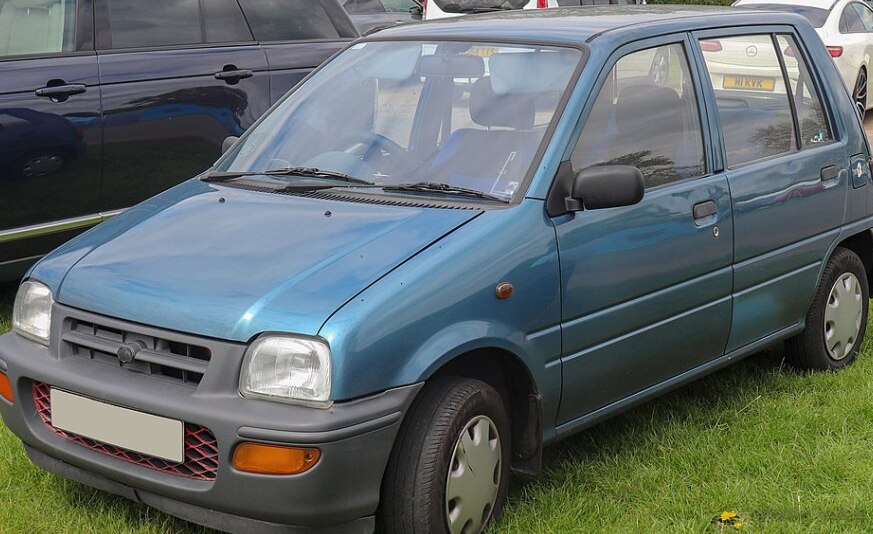
The Perodua Nippa 0.9, equipped with a 58 horsepower engine and an automatic transmission, was a significant entry-level offering from the Malaysian manufacturer Perodua. Produced from 1994 to 2009, the Nippa represented a crucial step in Perodua’s development as a national car brand, aimed at providing affordable and practical transportation to the Malaysian public. It was based on the Daihatsu Mira, reflecting Perodua’s early reliance on Japanese technology and licensing agreements. This particular 0.9-liter automatic variant occupied the base trim level within the Nippa lineup, prioritizing fuel efficiency and ease of use over outright performance.
Technical Specifications
| Brand | Perodua |
| Model | Nippa |
| Generation | Nippa |
| Type (Engine) | 0.9 (58 Hp) Automatic |
| Start of production | 1994 |
| End of production | 2009 |
| Powertrain Architecture | Internal Combustion engine |
| Body type | Hatchback |
| Seats | 5 |
| Doors | 5 |
| Fuel consumption (urban) | 5.6 l/100 km (42 US mpg, 50.4 UK mpg, 17.9 km/l) |
| Fuel consumption (extra urban) | 3.7 l/100 km (63.6 US mpg, 76.3 UK mpg, 27 km/l) |
| Fuel consumption (combined) | 4.4 l/100 km (53.5 US mpg, 64.2 UK mpg, 22.7 km/l) |
| Fuel Type | Petrol (Gasoline) |
| Acceleration 0 – 100 km/h | 16 sec |
| Acceleration 0 – 62 mph | 16 sec |
| Acceleration 0 – 60 mph | 15.2 sec |
| Maximum speed | 135 km/h (83.89 mph) |
| Weight-to-power ratio | 11.2 kg/Hp |
| Weight-to-torque ratio | 10.3 kg/Nm |
| Power | 58 Hp @ 7600 rpm |
| Power per litre | 68.5 Hp/l |
| Torque | 63 Nm @ 4000 rpm (46.47 lb.-ft. @ 4000 rpm) |
| Engine layout | Front, Transverse |
| Engine displacement | 847 cm3 (51.69 cu. in.) |
| Number of cylinders | 3 |
| Engine configuration | Inline |
| Cylinder Bore | 66.6 mm (2.62 in.) |
| Piston Stroke | 81 mm (3.19 in.) |
| Compression ratio | 9.5:1 |
| Number of valves per cylinder | 2 |
| Fuel injection system | Carburettor |
| Engine aspiration | Naturally aspirated |
| Engine oil capacity | 2.48 l (2.62 US qt, 2.18 UK qt) |
| Coolant capacity | 3.3 l (3.49 US qt, 2.9 UK qt) |
| Kerb Weight | 650 kg (1433 lbs.) |
| Trunk (boot) space | 190 l (6.71 cu. ft.) |
| Fuel tank capacity | 32 l (8.45 US gal, 7.04 UK gal) |
| Length | 3395 mm (133.66 in.) |
| Width | 1395 mm (54.92 in.) |
| Height | 1410 mm (55.51 in.) |
| Wheelbase | 2280 mm (89.76 in.) |
| Front track | 1215 mm (47.83 in.) |
| Rear track | 1205 mm (47.44 in.) |
| Minimum turning circle | 8.8 m (28.87 ft.) |
| Drivetrain | Front wheel drive |
| Number of gears | 3 |
| Gearbox type | Automatic transmission |
| Front suspension | Independent, McPherson with coil spring and anti-roll bar |
| Rear suspension | Independent coil spring |
| Front brakes | Disc |
| Rear brakes | Drum |
| Assisting systems | ABS (Anti-lock braking system) |
| Steering type | Steering rack and pinion |
| Tires size | 145/70 R12 |
| Wheel rims size | 12 |
Powertrain & Engine Architecture
The Nippa 0.9 Automatic was powered by a 847cc (51.69 cubic inches) inline three-cylinder engine, designated as a derivative of the Daihatsu EB series. This engine, while small, was designed for efficiency and reliability. It utilized a carburetor fuel injection system, a common feature for vehicles of this era and price point, rather than more advanced multi-point fuel injection. The engine featured a single overhead camshaft (SOHC) valvetrain with two valves per cylinder. The three-speed automatic transmission was a crucial component of this variant, aimed at providing a comfortable and convenient driving experience, particularly in congested urban environments. The transmission was designed to maximize fuel economy, with relatively tall gear ratios prioritizing efficiency over rapid acceleration.
Driving Characteristics
The driving experience in the Nippa 0.9 Automatic was characterized by its modest performance. With only 58 horsepower, acceleration was slow, taking approximately 16 seconds to reach 100 km/h (62 mph). The automatic transmission, while convenient, further reduced responsiveness. Compared to the available manual transmission versions, the automatic Nippa felt noticeably less lively. However, the engine proved to be surprisingly durable and the automatic transmission, while simple, was generally reliable. The focus was clearly on providing a smooth and economical ride, making it well-suited for city driving and short commutes. The gear ratios were optimized for low-speed operation, making it easy to navigate traffic, but limiting its capabilities on highways or when overtaking.
Equipment & Trim Levels
The Nippa 0.9 Automatic, as the base trim, offered a fairly basic level of equipment. Standard features typically included cloth upholstery, a simple dashboard layout with analog gauges, and manual windows and door locks. Air conditioning was often an optional extra, as were features like a radio/cassette player. The interior was designed for practicality and durability, with hard-wearing materials used throughout. The exterior styling was functional rather than flamboyant, with a focus on maximizing interior space within a compact footprint. Optional extras could include upgraded seat covers and a basic sound system.
Chassis & Braking
The Nippa 0.9 Automatic featured a relatively simple chassis design. The front suspension utilized an independent McPherson strut setup with a coil spring and anti-roll bar, while the rear suspension employed an independent coil spring arrangement. This setup provided a reasonable level of ride comfort, considering the vehicle’s price point. The braking system consisted of disc brakes on the front wheels and drum brakes on the rear. An Anti-lock Braking System (ABS) was included as a safety feature. The relatively lightweight construction of the Nippa (650 kg or 1433 lbs) helped to offset the limited braking power.
Market Reception & Comparison
The Perodua Nippa 0.9 Automatic was generally well-received in the Malaysian market as an affordable and practical city car. Critics praised its fuel efficiency and ease of use, but noted its lack of performance. Compared to other trims in the Nippa lineup, such as those with manual transmissions or slightly larger engines, the 0.9 Automatic was the least powerful and slowest. However, it offered a compelling value proposition for buyers prioritizing convenience and economy. Its fuel economy figures of around 4.4 l/100 km (53.5 US mpg) were particularly attractive to budget-conscious consumers.
Legacy
The Perodua Nippa 0.9 Automatic holds a significant place in the history of the Malaysian automotive industry. It was one of the first mass-produced cars from Perodua, helping to establish the brand as a major player in the domestic market. While the powertrain isn’t known for high performance or advanced technology, it proved to be remarkably durable and reliable. Today, the Nippa 0.9 Automatic is a relatively common sight on Malaysian roads, often cherished by owners for its simplicity and affordability. Parts availability remains reasonable, and the car continues to provide reliable transportation for many. Its legacy lies in its role as an accessible and economical vehicle that helped to mobilize a generation of Malaysian drivers.
