
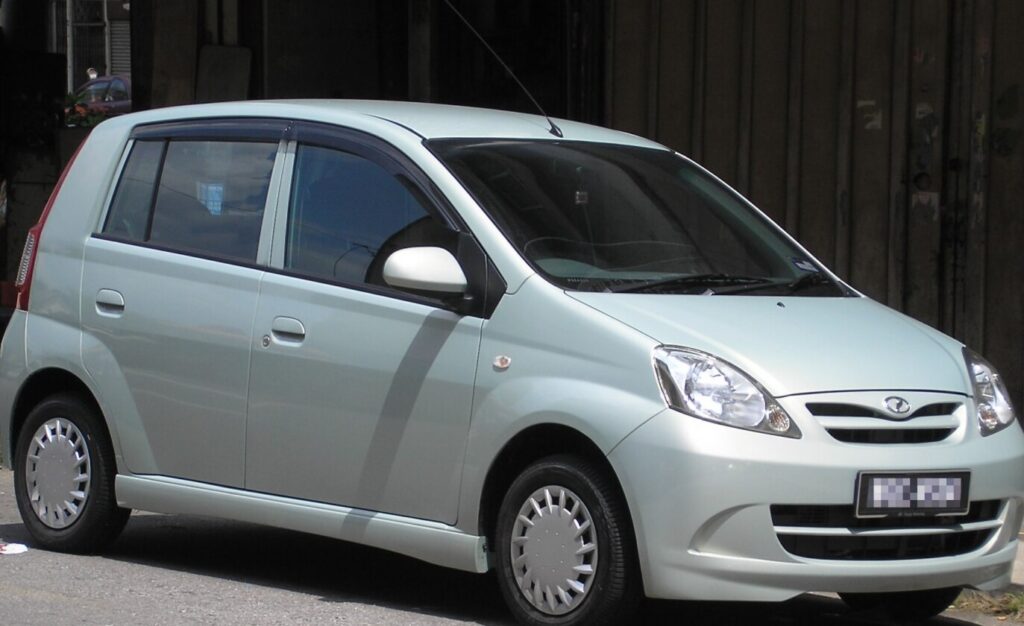
The Perodua Viva 0.8L R3 12V, producing 53 horsepower, was a key model in Perodua’s lineup from 2007 to 2014. Positioned as the entry-level offering within the Viva range, it represented an affordable and practical city car option for the Malaysian market. The Viva, as a whole, was Perodua’s attempt to create a modern, compact hatchback aimed at first-time car buyers and those seeking economical transportation. This particular 0.8L variant was the mainstay of the range, offering a balance between price and usability. It was built on Perodua’s in-house developed platform, reflecting the company’s growing independence in automotive engineering.
The Viva 0.8L R3 12V is powered by the ED-VE engine, a 0.8-liter, three-cylinder, inline gasoline engine. This engine utilizes a multi-port fuel injection system to deliver fuel to the cylinders. The ‘R3’ designation refers to the engine family, while ‘12V’ indicates the four valves per cylinder configuration. The engine’s architecture is a relatively simple design, prioritizing fuel efficiency and ease of maintenance over outright performance. The engine’s small displacement and three-cylinder layout contribute to its characteristic sound and vibration profile. The engine is transversely mounted at the front of the vehicle, driving the front wheels. The engine’s oil capacity is 2.3 liters (2.43 US quarts / 2.02 UK quarts) and requires a specific oil specification, while the cooling system holds 3 liters (3.17 US quarts / 2.64 UK quarts).
In real-world driving conditions, the 53 hp and 76 Nm (56.05 lb-ft) of torque produced by the 0.8L engine translate to modest, but adequate, performance for urban environments. Acceleration is not brisk, and the Viva 0.8L is best suited for city driving at lower speeds. The five-speed manual transmission is the only gearbox option available for this variant. The gear ratios are tuned for fuel economy, meaning the engine needs to be revved to access its limited power band. Compared to potential future variants with larger engines, the 0.8L prioritizes fuel efficiency and affordability over sporty driving dynamics. The power-to-weight ratio is relatively low, resulting in a car that feels light and nimble, but lacks strong acceleration.
The Viva 0.8L R3 12V typically came with a basic, yet functional, equipment level. Standard features included manual windows, manual door locks, and a basic audio system. Interior upholstery was typically cloth, and the dashboard design was straightforward and utilitarian. Optional extras, depending on the year and specific package, could include power windows, central locking, and an upgraded audio system. Air conditioning was a common, and often essential, addition for the Malaysian climate. The interior space is optimized for four occupants, with a focus on maximizing space within the small footprint of the vehicle.
The Viva 0.8L utilizes a front-wheel-drive layout with a MacPherson strut suspension in the front and a torsion beam suspension in the rear. The braking system consists of disc brakes on the front wheels and drum brakes on the rear wheels. The suspension setup is tuned for comfort and ride quality, prioritizing a smooth ride over sporty handling. The torsion beam rear suspension is a cost-effective solution that contributes to the vehicle’s affordability. The ABS (Anti-lock Braking System) was included as a safety feature, enhancing braking performance and control, particularly in emergency situations.
The Perodua Viva 0.8L R3 12V was generally well-received as an affordable and practical city car. Critics praised its fuel efficiency and ease of driving, but noted its limited performance. Compared to other trims within the Viva range, the 0.8L offered the most accessible price point, making it attractive to budget-conscious buyers. Its fuel economy was a significant selling point, particularly in a market where gasoline prices can be relatively high. Reliability was generally considered good, with the simple engine design contributing to its durability. However, the basic interior and limited features were often cited as drawbacks.
| Brand | Perodua |
| Model | Viva |
| Type (Engine) | 0.8L R3 12V (53 Hp) |
| Start of production | 2007 |
| End of production | 2014 |
| Powertrain Architecture | Internal Combustion engine |
| Body type | Hatchback |
| Seats | 4 |
| Doors | 5 |
| Fuel Type | Petrol (Gasoline) |
| Power | 53 Hp @ 5700 rpm |
| Torque | 76 Nm @ 3800 rpm / 56.05 lb.-ft. @ 3800 rpm |
| Engine layout | Front, Transverse |
| Engine Model/Code | ED-VE |
| Engine displacement | 847 cm3 / 51.69 cu. in. |
| Number of cylinders | 3 |
| Engine configuration | Inline |
| Cylinder Bore | 66.6 mm / 2.62 in. |
| Piston Stroke | 81 mm / 3.19 in. |
| Compression ratio | 9.5:1 |
| Number of valves per cylinder | 4 |
| Fuel injection system | Multi-port manifold injection |
| Engine aspiration | Naturally aspirated engine |
| Engine oil capacity | 2.3 l / 2.43 US qt | 2.02 UK qt |
| Coolant | 3 l / 3.17 US qt | 2.64 UK qt |
| Length | 3575 mm / 140.75 in. |
| Width | 1475 mm / 58.07 in. |
| Height | 1530 mm / 60.24 in. |
| Wheelbase | 2390 mm / 94.09 in. |
| Drivetrain Architecture | Front wheel drive |
| Number of gears and type of gearbox | 5 gears, manual transmission |
| Assisting systems | ABS (Anti-lock braking system) |
Today, the Perodua Viva 0.8L R3 12V remains a common sight on Malaysian roads. Its simple engine and robust construction contribute to its continued reliability. In the used car market, it is valued for its affordability and low running costs. While not a performance car, it continues to serve as a practical and economical transportation option for many Malaysians. Parts availability is generally good, and maintenance costs are relatively low, making it a sensible choice for budget-conscious buyers seeking a reliable city car.
