
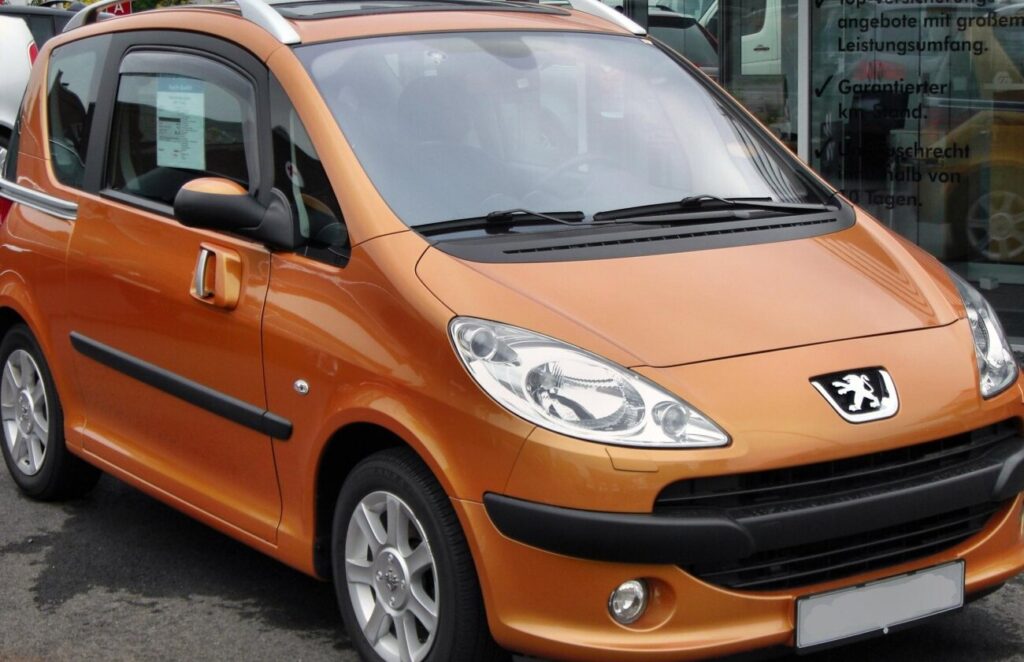
The Peugeot 1007 1.4 16V, producing 90 horsepower, was a front-wheel-drive, supermini MPV produced by the French manufacturer Peugeot between 2005 and 2007. It represented a unique offering in the European market, characterized by its distinctive, almost bubble-like design and innovative, fully robotic gearbox option (though this article focuses on the standard manual transmission variant). The 1007 was built on Peugeot’s 1HX0 platform, shared with the Citroën C2, and aimed to provide a practical and spacious interior within a compact footprint. The 1.4 16V engine represented the entry-level powertrain option for the model, positioned below the more powerful 1.6 16V.
The heart of the 1007 1.4 16V is the KFU (ET3J4) engine, a 1360cc inline-four cylinder gasoline engine. This engine utilizes multi-port fuel injection and a double overhead camshaft (DOHC) valvetrain, operating with four valves per cylinder. This configuration allowed for a reasonable balance between power output and fuel efficiency. The engine’s 75mm bore and 77mm stroke contribute to its overall displacement. The 1.4L engine produced 90 hp at 5250 rpm and 133 Nm (98.1 lb-ft) of torque at 3250 rpm. The engine’s power per liter was 66.2 hp/l. The engine required 2.75 liters (2.91 US quarts) of engine oil and 5.5 liters (5.81 US quarts) of coolant.
In real-world driving, the 1.4 16V engine in the 1007 provided adequate, though not exhilarating, performance. Acceleration from 0 to 100 km/h (0-62 mph) took approximately 13.6 seconds, while 0-60 mph was achieved in around 12.9 seconds. The top speed was rated at 173 km/h (107.5 mph). The engine’s torque delivery was relatively flat, making it suitable for everyday urban driving. Compared to the 1.6L variant, the 1.4L felt noticeably less responsive, particularly when fully loaded or tackling inclines. The five-speed manual transmission offered precise shifts, but the gear ratios were tuned for economy rather than outright performance. The 1.4L engine was generally considered more economical than the 1.6L, making it a popular choice for drivers prioritizing fuel costs.
The 1007 1.4 16V was typically equipped with a relatively basic, but functional, level of trim. Standard features included power steering, ABS brakes, front airbags, and a basic audio system. Interior upholstery was typically cloth, and the dashboard featured a straightforward layout. Optional extras included air conditioning, alloy wheels, and upgraded audio systems. The 1007’s interior was praised for its spaciousness relative to its exterior dimensions, offering comfortable seating for four adults. The rear seats could also be folded down to increase luggage capacity to 364 liters (12.85 cu. ft.).
The 1007 1.4 16V utilized an independent McPherson strut suspension at the front and a coil spring torsion beam suspension at the rear. This setup provided a comfortable ride quality, although it wasn’t particularly sporty. The front brakes were ventilated discs, while the rear brakes were drums. The electric power steering offered light and easy maneuverability, making it ideal for navigating tight urban streets. The kerb weight of the 1007 1.4 16V was 1163 kg (2563.98 lbs), with a maximum weight of 1600 kg (3527.4 lbs). Tire sizes typically ranged from 185/60 R15 to 195/50 R16, mounted on 6J x 15 or 6J x 16 wheels.
The Peugeot 1007 1.4 16V received mixed reviews from automotive critics. While the car was praised for its innovative design and spacious interior, the 1.4L engine was often criticized for its lack of power. Fuel economy was generally considered good, with combined fuel consumption figures of around 6.4 l/100 km (36.8 US mpg, 44.1 UK mpg). Reliability was generally average, with some reports of minor electrical issues. Compared to the 1.6L version, the 1.4L offered better fuel economy but significantly less performance. It appealed to buyers seeking a practical and affordable city car, prioritizing economy over driving excitement.
| Brand | Peugeot |
| Model | 1007 |
| Type | 1.4 16V (90 Hp) |
| Start of production | 2005 |
| End of production | 2007 |
| Fuel consumption (urban) | 8.4 l/100 km (28 US mpg) |
| Fuel consumption (extra urban) | 5.3 l/100 km (44.4 US mpg) |
| Fuel consumption (combined) | 6.4 l/100 km (36.8 US mpg) |
| CO2 emissions | 153 g/km |
| Fuel Type | Petrol (Gasoline) |
| Acceleration 0-100 km/h | 13.6 sec |
| Acceleration 0-62 mph | 13.6 sec |
| Maximum speed | 173 km/h (107.5 mph) |
| Engine Power | 90 Hp @ 5250 rpm |
| Engine Torque | 133 Nm @ 3250 rpm (98.1 lb.-ft.) |
| Engine Displacement | 1360 cm3 (82.99 cu. in.) |
| Number of Cylinders | 4 |
| Kerb Weight | 1163 kg (2563.98 lbs) |
| Fuel Tank Capacity | 40 l (10.57 US gal) |
| Trunk Space (minimum) | 364 l (12.85 cu. ft.) |
| Gears | 5, manual transmission |
Today, the Peugeot 1007 1.4 16V is a relatively rare sight on the roads. The KFU engine is generally considered reliable, although regular maintenance is essential. Parts availability can be a challenge, as the model is no longer in production. The 1007 1.4 16V represents a unique and quirky chapter in Peugeot’s history, appealing to enthusiasts seeking a distinctive and affordable city car. Its compact size and relatively simple mechanicals make it a potentially appealing project for DIY mechanics, but prospective buyers should be aware of the potential challenges associated with sourcing parts and finding qualified technicians familiar with the model.
