
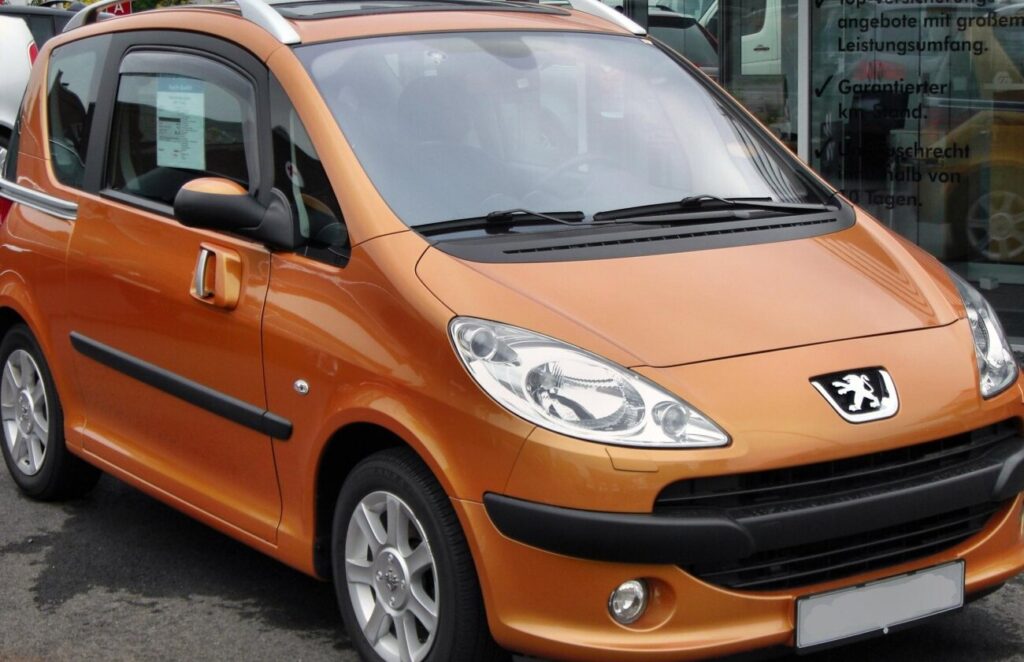
The Peugeot 1007 1.4 8V, producing 75 horsepower, was a front-wheel-drive, supermini MPV produced by the French manufacturer Peugeot between 2005 and 2009. It represented a unique offering in the European market, characterized by its distinctive, almost bubble-like design and innovative, fully robotic gearbox option (though this article focuses on the standard 5-speed manual). The 1007 was built on Peugeot’s platform, aiming to provide a practical and space-efficient vehicle in a compact package. Within the 1007 lineup, the 1.4 8V served as the entry-level engine option, targeting budget-conscious buyers and those prioritizing fuel economy over outright performance.
The heart of the 1007 1.4 8V is the KFV (also known as TU3A) inline-four cylinder gasoline engine, displacing 1360cc (82.99 cubic inches). This engine utilizes a single overhead camshaft (SOHC) valvetrain with two valves per cylinder. Fuel delivery is managed by a multi-port fuel injection system. The engine’s design prioritized simplicity and reliability, rather than high-end performance. The 1.4L engine produced 75 hp at 5400 rpm and 118 Nm (87.03 lb-ft) of torque at 3300 rpm. This engine was known for its relatively robust construction, though it lacked the sophistication of more modern engine designs. The engine’s transverse mounting within the front wheel drive configuration contributed to the vehicle’s compact footprint.
In real-world driving, the 1007 1.4 8V offered modest performance. Acceleration from 0 to 62 mph (0-100 km/h) took approximately 14.4 seconds, with a top speed of 102.53 mph (165 km/h). The 5-speed manual transmission was geared to maximize fuel efficiency, resulting in a somewhat leisurely driving experience. Compared to the more powerful 1.6L engine option available in some markets, the 1.4L felt noticeably slower, particularly when fully loaded or tackling inclines. However, the engine proved adequate for urban driving and shorter journeys. The gear ratios were fairly widely spaced, requiring frequent shifting to maintain optimal engine speed.
The 1.4 8V trim level of the Peugeot 1007 typically included standard features such as power steering, ABS (Anti-lock Braking System), front airbags, and a basic audio system. Interior upholstery was generally cloth, with a functional, if somewhat basic, dashboard layout. Optional extras included air conditioning, alloy wheels, and upgraded audio systems. The 1007’s interior was designed to maximize space within its small dimensions, offering reasonable headroom and legroom for passengers. The rear seats could be folded down to increase cargo capacity, though the overall trunk space was limited to 346 liters (12.22 cubic feet) with the seats up.
The 1007 1.4 8V utilized an independent McPherson strut suspension at the front and a coil spring torsion beam suspension at the rear. Front brakes were ventilated discs, while the rear brakes were drums. This suspension setup provided a comfortable ride quality, though it wasn’t particularly sporty. The electric power steering offered light and easy maneuverability, making it well-suited for city driving. The kerb weight of the vehicle ranged from 1140 to 1229 kg (2513.27 to 2709.48 lbs), depending on the specific equipment and options fitted.
Critics generally viewed the 1007 1.4 8V as a practical and affordable city car, but acknowledged its limited performance. Fuel economy was a strong point, with combined fuel consumption figures of around 6.5 l/100 km (36.2 US mpg, 43.5 UK mpg). Reliability was generally considered average for the period, with some reports of minor electrical issues. Compared to the higher-powered 1.6L version, the 1.4L offered better fuel economy but significantly less performance. The 1.4L appealed to buyers who prioritized economy and practicality over driving excitement.
| Engine Model/Code | KFV TU3A |
| Engine Displacement | 1360 cm3 (82.99 cu. in.) |
| Number of Cylinders | 4, Inline |
| Cylinder Bore | 75 mm (2.95 in.) |
| Piston Stroke | 77 mm (3.03 in.) |
| Compression Ratio | 9.3:1 |
| Number of Valves per Cylinder | 2 |
| Fuel Injection System | Multi-port manifold injection |
| Engine Aspiration | Naturally aspirated |
| Power | 75 Hp @ 5400 rpm |
| Torque | 118 Nm @ 3300 rpm (87.03 lb.-ft. @ 3300 rpm) |
| Fuel Consumption (Urban) | 8.6 l/100 km (27.4 US mpg, 32.8 UK mpg, 11.6 km/l) |
| Fuel Consumption (Extra Urban) | 5.3 l/100 km (44.4 US mpg, 53.3 UK mpg, 18.9 km/l) |
| Fuel Consumption (Combined) | 6.5 l/100 km (36.2 US mpg, 43.5 UK mpg, 15.4 km/l) |
| CO2 Emissions | 155 g/km |
| Acceleration 0-100 km/h | 14.4 sec |
| Acceleration 0-62 mph | 14.4 sec |
| Maximum Speed | 165 km/h (102.53 mph) |
| Kerb Weight | 1140-1229 kg (2513.27 – 2709.48 lbs.) |
| Fuel Tank Capacity | 40 l (10.57 US gal, 8.8 UK gal) |
| Trunk (Boot) Space (minimum) | 346 l (12.22 cu. ft.) |
Today, the Peugeot 1007 1.4 8V can be found on the used car market as an affordable and economical city car. The KFV engine, while not known for its longevity, is generally reliable if properly maintained. Parts availability can be a concern, as the 1007 is no longer in production. However, its unique design and practical interior continue to appeal to some buyers seeking a small, distinctive vehicle. The 1.4L engine’s simplicity makes it relatively easy to repair, and its fuel efficiency remains a strong selling point. While not a performance car, the 1007 1.4 8V offers a unique and affordable entry point into Peugeot ownership.
