
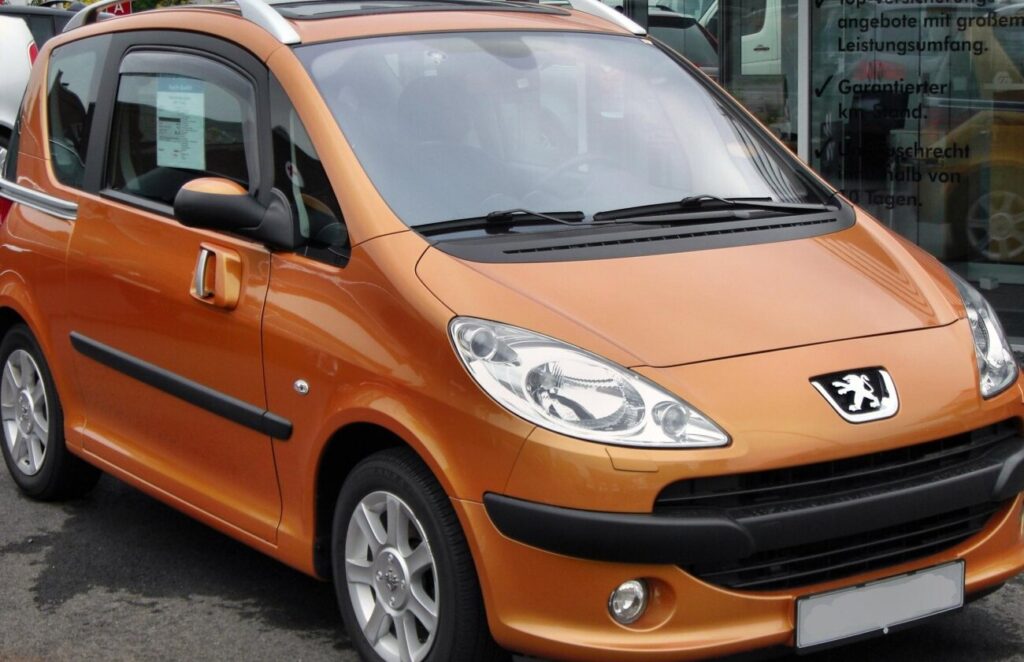
The Peugeot 1007 1.4 8V (75 hp) 2-Tronic is a front-wheel-drive, supermini MPV produced by the French manufacturer Peugeot between 2005 and 2009. This variant occupied the entry-level position within the 1007 range, offering a more affordable and fuel-efficient option compared to the higher-specification models. The 1007, notable for its distinctive panoramic glass roof and electronically controlled sliding rear doors, was built on Peugeot’s platform, aiming to provide a practical and space-efficient vehicle for urban environments. The 2-Tronic transmission was a key feature of this model, representing Peugeot’s attempt at an automated manual gearbox.
The 1007 1.4 8V is powered by Peugeot’s KFV (also known as TU3A) 1.4-liter inline-four cylinder gasoline engine. This engine, a naturally aspirated unit, features a single overhead camshaft (SOHC) valvetrain with two valves per cylinder. Fuel delivery is managed by a multi-port fuel injection system. The engine produces a maximum power output of 75 horsepower at 5400 rpm and 118 Nm (87.03 lb-ft) of torque at 3300 rpm. The 2-Tronic transmission is a five-speed automated manual gearbox. Unlike a traditional automatic transmission with a torque converter, the 2-Tronic uses a conventional manual gearbox with actuators to shift gears automatically. This system aimed to combine the fuel efficiency of a manual transmission with the convenience of an automatic.
In real-world driving conditions, the 1.4 8V 2-Tronic offered modest performance. Acceleration from 0 to 100 km/h (0-62 mph) took approximately 16.6 seconds, with a top speed of 165 km/h (102.53 mph). The 2-Tronic gearbox, while offering convenience, was often criticized for its somewhat jerky shifts and slower response compared to a traditional automatic or a skilled manual driver. The gear ratios were optimized for fuel economy rather than outright acceleration. The engine’s power delivery was relatively linear, but the limited horsepower meant that overtaking maneuvers required careful planning, especially when the vehicle was fully loaded. Compared to other 1007 variants, such as the 1.6 16V, the 1.4 8V offered significantly less power and performance.
The 1007 1.4 8V 2-Tronic typically came equipped with a basic level of standard features. Interior upholstery was generally cloth, and the dashboard featured a functional, if somewhat basic, design. Standard equipment included power steering, ABS (Anti-lock Braking System), and front airbags. Optional extras included air conditioning, alloy wheels, and a CD player. The unique selling point of the 1007, regardless of trim level, was its spacious interior for its size, facilitated by the panoramic glass roof and the clever packaging of the rear sliding doors. The interior was designed to be modular, with adjustable rear seats to maximize cargo space.
The 1007 1.4 8V utilized an independent McPherson strut suspension at the front and a coil spring torsion beam suspension at the rear. Front brakes were ventilated discs, while the rear brakes were drums. This configuration was typical for vehicles in this weight class and aimed to provide a balance between ride comfort and handling. The electric power steering offered light and easy steering, making it well-suited for urban driving. The relatively lightweight nature of the 1.4 8V variant helped to minimize body roll during cornering, but the suspension was not designed for particularly sporty handling.
The Peugeot 1007 1.4 8V 2-Tronic received mixed reviews from automotive critics. While the vehicle was praised for its innovative design and spacious interior, the 2-Tronic gearbox was a common point of criticism. Many reviewers found the shifts to be slow and imprecise. Fuel economy was generally considered to be good, with combined fuel consumption figures around 6.3 l/100 km (37.3 US mpg). Reliability was average, with some reports of issues with the 2-Tronic transmission. Compared to other supermini MPVs of the time, such as the Renault Modus or the Fiat Idea, the 1007 offered a more distinctive and stylish design, but its performance and transmission were often seen as drawbacks.
| Engine Model/Code | KFV TU3A |
| Engine Displacement | 1360 cm3 (82.99 cu. in.) |
| Number of Cylinders | 4, Inline |
| Cylinder Bore | 75 mm (2.95 in.) |
| Piston Stroke | 77 mm (3.03 in.) |
| Compression Ratio | 9.3:1 |
| Number of Valves per Cylinder | 2 |
| Fuel Injection System | Multi-port manifold injection |
| Engine Aspiration | Naturally aspirated |
| Maximum Power | 75 Hp @ 5400 rpm |
| Maximum Torque | 118 Nm @ 3300 rpm (87.03 lb.-ft. @ 3300 rpm) |
| Fuel Consumption (Urban) | 8 l/100 km (29.4 US mpg) |
| Fuel Consumption (Extra Urban) | 5.3 l/100 km (44.4 US mpg) |
| Fuel Consumption (Combined) | 6.3 l/100 km (37.3 US mpg) |
| CO2 Emissions | 149 g/km |
| Acceleration 0-100 km/h | 16.6 sec |
| Maximum Speed | 165 km/h (102.53 mph) |
| Kerb Weight | 1145-1234 kg (2524.29 – 2720.5 lbs.) |
| Fuel Tank Capacity | 40 l (10.57 US gal) |
| Transmission | 5-speed automatic (2-Tronic) |
Today, the Peugeot 1007 1.4 8V 2-Tronic is a relatively rare sight on the roads. The 2-Tronic transmission can be a potential source of maintenance issues, and parts availability may be limited. However, for buyers seeking an affordable and quirky city car, the 1007 can offer a unique proposition. Its spacious interior and distinctive design continue to appeal to some, but potential buyers should be aware of the potential drawbacks associated with the automated manual gearbox and the vehicle’s age. The engine itself is generally considered to be reliable, provided it has been properly maintained.
