
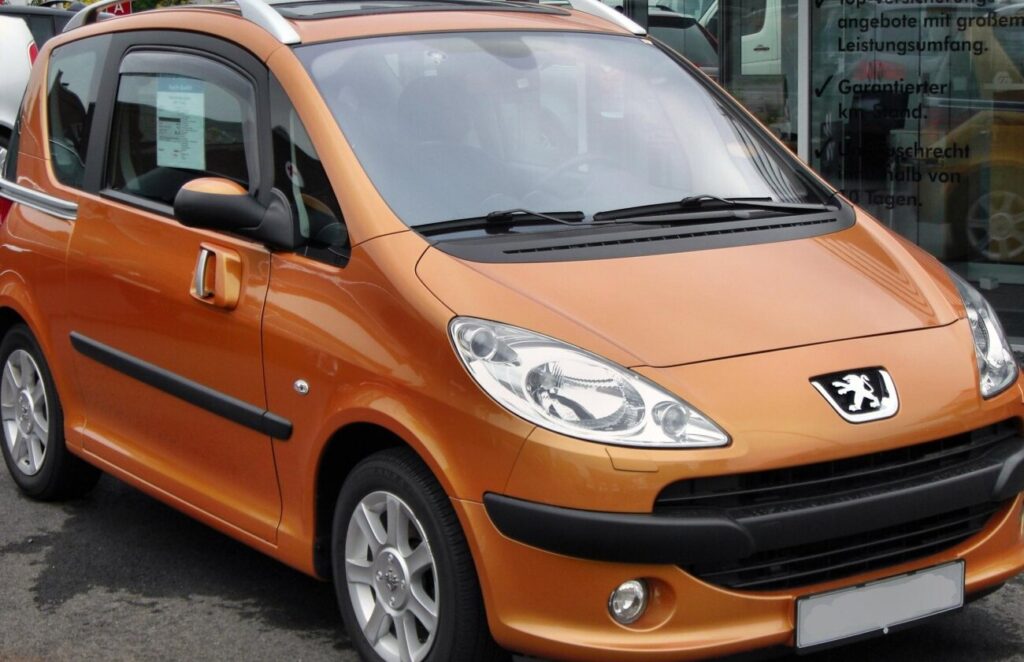
The Peugeot 1007 1.4 HDi, producing 70 horsepower, was a compact minivan produced by the French automaker Peugeot between 2005 and 2009. It represented a unique offering in the European microvan segment, characterized by its distinctive styling and innovative “Porte-à-Porte” (Door-to-Door) automatic sliding rear doors – a feature intended to ease access in tight parking spaces. This variant occupied the entry-level position within the 1007 range, appealing to buyers prioritizing fuel efficiency and low running costs over outright performance. It was part of the first generation of the 1007 (A8 series), built on Peugeot’s B1 platform.
Peugeot 1007 1.4 HDi: Powertrain & Engine Architecture
The heart of the 1007 1.4 HDi was the DV4TD engine family, specifically the 8HZ (and later 8HX) engine code. This 1.4-liter, inline-four cylinder diesel engine was a common sight in various PSA Group vehicles of the era (Peugeot, Citroën). It featured a turbocharger with an intercooler to boost power and efficiency. The engine employed a Diesel Commonrail direct fuel injection system, delivering fuel directly into the combustion chamber at extremely high pressure for improved combustion and reduced emissions. The engine utilized a Single Overhead Camshaft (SOHC) valvetrain with two valves per cylinder.
The 1.4 HDi engine produced 70 hp (52 kW) at 4000 rpm and 160 Nm (118 lb-ft) of torque at 2000 rpm. This torque figure, while modest, was delivered relatively low in the rev range, making the 1007 surprisingly tractable in urban driving. The engine’s displacement was 1398 cc (85.31 cubic inches) with a bore of 73.7 mm (2.9 inches) and a stroke of 82 mm (3.23 inches). The compression ratio was a high 18:1, typical for diesel engines. Engine oil capacity was 3.75 liters (3.96 US quarts), and the recommended oil specification varied depending on the market and year of manufacture.
Transmission
The 1007 1.4 HDi was primarily equipped with a five-speed manual transmission. While an automatic transmission was offered in some markets, it was not a common pairing with the 70 hp engine due to the significant performance impact. The manual gearbox was designed to maximize fuel efficiency and provide smooth shifts. The gear ratios were tailored to suit the engine’s torque characteristics, with a relatively long fifth gear for highway cruising.
Driving Characteristics
The 1007 1.4 HDi was not designed for spirited driving. Its 0-100 km/h (0-62 mph) acceleration time of 15.4 seconds and a top speed of 160 km/h (99 mph) reflected its focus on economy and practicality. The engine felt strained at higher speeds, and overtaking required careful planning. However, within urban environments, the 1.4 HDi proved to be a capable and comfortable performer. The low-end torque made it easy to navigate city streets, and the compact size of the vehicle made parking a breeze. Compared to the more powerful 1.6 HDi variants, the 1.4 HDi offered significantly less performance but a noticeable improvement in fuel economy. The manual transmission allowed drivers to maintain optimal engine speed for efficiency, while the automatic, when equipped, resulted in a sluggish driving experience.
Equipment & Trim Levels
The 1007 1.4 HDi typically came with a relatively basic level of equipment, reflecting its position as the entry-level model. Standard features generally included power steering, central locking, electric front windows, and an adjustable steering column. Safety features included ABS (Anti-lock Braking System) and driver and passenger airbags. Interior upholstery was typically cloth, and the dashboard featured a simple, functional design. Optional extras included air conditioning, alloy wheels, a CD player, and parking sensors. Higher trim levels, such as the “Sport” or “Envy” (depending on the market), added features like upgraded upholstery, alloy wheels, and additional comfort and convenience items.
Chassis & Braking
The 1007 featured an independent McPherson strut front suspension and a coil spring, torsion beam rear suspension. This setup provided a comfortable ride, although it wasn’t particularly sporty. The front brakes were ventilated discs, while the rear brakes were drums. This configuration was typical for vehicles in this weight class and price range. The electric power steering provided light and easy steering, making it ideal for city driving. Tire sizes typically ranged from 185/60 R15 to 195/60 R16, depending on the trim level and market.
Market Reception & Comparison
The Peugeot 1007 1.4 HDi was generally well-received by critics for its fuel efficiency, practicality, and innovative features like the sliding rear doors. However, it was also criticized for its lack of performance and somewhat cramped interior space. Compared to other microvans of the time, such as the Fiat Panda and Renault Twingo, the 1007 offered a more spacious interior and a more comfortable ride, but it was also more expensive. Fuel economy was a strong point, with combined fuel consumption figures around 4.7 l/100 km (50 US mpg). Reliability was generally considered average for a French car of the era, with some reports of issues with the electronic systems and the sliding door mechanism.
Technical Specifications
| Engine Type | 1.4 HDi Diesel |
| Engine Code | 8HZ / 8HX DV4TD |
| Displacement | 1398 cc (85.31 cu. in.) |
| Cylinders | 4, Inline |
| Power | 70 hp @ 4000 rpm |
| Torque | 160 Nm (118 lb-ft) @ 2000 rpm |
| Fuel Injection | Diesel Commonrail |
| Valvetrain | SOHC, 2 valves/cylinder |
| Compression Ratio | 18:1 |
| Transmission | 5-speed Manual (primarily) |
| Drive Wheels | Front Wheel Drive |
| Kerb Weight | 1168-1257 kg (2575 – 2771.21 lbs.) |
| Fuel Consumption (Combined) | 4.7 l/100 km (50 US mpg) |
| CO2 Emissions | 124 g/km |
| Top Speed | 160 km/h (99 mph) |
| 0-100 km/h | 15.4 sec |
| Fuel Tank Capacity | 40 l (10.57 US gal) |
Legacy
The Peugeot 1007 1.4 HDi, while not a sales success, remains a distinctive and interesting vehicle. The DV4TD engine proved to be relatively durable, and well-maintained examples can still be found on the road today. However, potential buyers should be aware of potential issues with the electronic systems and the sliding door mechanism. In the used car market, the 1007 1.4 HDi is typically priced affordably, making it an attractive option for buyers seeking a fuel-efficient and practical city car. Its unique styling and innovative features continue to appeal to enthusiasts, and it represents a bold and unconventional offering from Peugeot.
