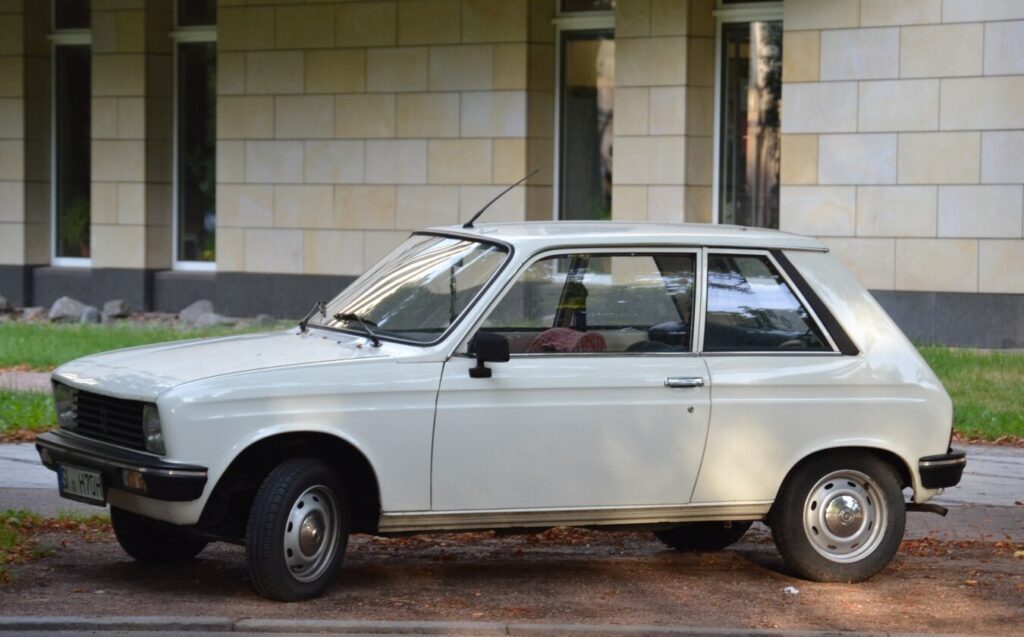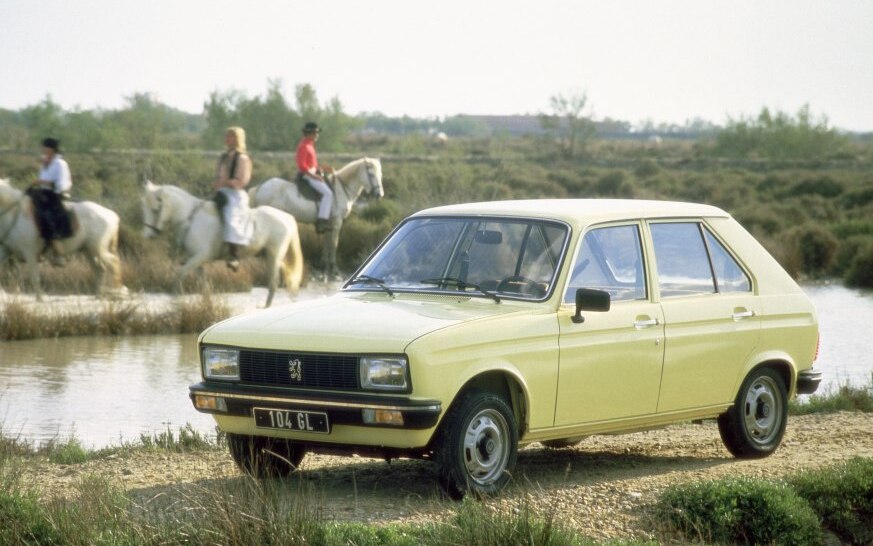
The Peugeot 104 0.9, producing 44 horsepower, was a mainstay of the Peugeot 104 range from 1983 to 1988. Representing the entry-level variant of the popular supermini, it played a crucial role in making the 104 accessible to a wider market. The 104 itself was a significant vehicle for Peugeot, being their first front-wheel-drive car, and the 0.9-liter engine option was designed to maximize fuel efficiency and affordability. This model occupied the base trim level, offering a no-frills transportation solution for budget-conscious buyers. It was positioned below the 1.1 and 1.6-liter versions in terms of performance and equipment.
Peugeot 104 0.9: An Overview
The Peugeot 104 was produced between 1972 and 1988, undergoing several revisions during its lifespan. The 0.9-liter variant, designated by engine code 108C XV8, was introduced in 1983 as a more economical alternative to the existing 1.1 and 1.6-liter engines. This engine was particularly popular in markets where fuel costs were high or where buyers prioritized affordability over outright performance. The 104, in general, was praised for its spacious interior for its size, good handling, and robust build quality. The 0.9-liter model, while lacking the punch of its larger-engined siblings, offered a practical and reliable mode of transport.
Powertrain & Engine Architecture
The heart of the Peugeot 104 0.9 is the 108C XV8 engine, a 954cc, inline-four cylinder, naturally aspirated gasoline engine. This engine is characterized by its simple, yet durable design. It features a single overhead camshaft (SOHC) operating two valves per cylinder. The engine utilizes a carburetor for fuel delivery, specifically a Solex 32 PHH, rather than fuel injection, contributing to its lower cost and relative simplicity. The compression ratio is 8.5:1. The engine’s bore and stroke are 71.0 mm x 78.0 mm. Lubrication is provided by a conventional wet sump system. The engine’s modest output of 44 hp (33 kW) at 6000 rpm and 59 lb-ft (80 Nm) of torque at 4000 rpm reflects its focus on fuel economy rather than performance.
The 104 0.9 was typically paired with a four-speed manual transmission, although a three-speed automatic transmission was available as an option, albeit less common. The automatic transmission, while offering convenience, further reduced the car’s acceleration and increased fuel consumption. The transmission is a conventional torque converter type. The final drive ratio varied slightly depending on the specific year and transmission configuration, but generally aimed to provide reasonable acceleration from low speeds while maintaining acceptable fuel economy on the highway.
Driving Characteristics
The driving experience in a Peugeot 104 0.9 is best described as utilitarian. Acceleration is leisurely, taking approximately 18-20 seconds to reach 60 mph. The engine feels strained at higher speeds, and overtaking requires careful planning. The four-speed manual transmission allows the driver to make the most of the available power, but even with precise gear changes, the 0.9-liter engine lacks the responsiveness of the larger-capacity models. The optional automatic transmission further diminishes performance, resulting in even slower acceleration and a less engaging driving experience. However, the 104’s light weight (around 1,680 lbs) and nimble handling make it enjoyable to drive around town. The steering is light and precise, and the suspension provides a comfortable ride, even on uneven surfaces. The car feels stable and predictable in corners, making it a confidence-inspiring vehicle for novice drivers.
Equipment & Trim Levels
The Peugeot 104 0.9 was offered with a relatively basic level of equipment, reflecting its position as the entry-level model. Standard features typically included cloth upholstery, vinyl floor covering, and basic instrumentation consisting of a speedometer, fuel gauge, and temperature gauge. The steering wheel was typically made of plastic. Heating and ventilation were standard, but air conditioning was not available on this trim level. The exterior featured steel wheels with hubcaps, black plastic bumpers, and minimal chrome trim. Optional extras included a radio, upgraded upholstery, and a sunroof. Later models may have included features like a rear window wiper and more comfortable seats. The interior was designed for practicality and durability, rather than luxury.
Chassis & Braking
The Peugeot 104 features a monocoque body construction. The front suspension utilizes independent MacPherson struts, while the rear suspension employs a trailing arm setup. This suspension configuration provides a good balance between ride comfort and handling. The steering is a rack and pinion system, offering precise and responsive control. The braking system consists of front disc brakes and rear drum brakes. The brakes are hydraulically operated and provide adequate stopping power for the car’s weight and performance. The 104 0.9 typically rode on 155/70 R13 tires. The chassis was designed to be lightweight and rigid, contributing to the car’s nimble handling characteristics. Stabilizer bars were not typically fitted to the base 0.9-liter model, further emphasizing its focus on affordability.
Market Reception & Comparison
The Peugeot 104 0.9 was generally well-received by critics as an affordable and economical city car. It was praised for its fuel efficiency, spacious interior, and robust build quality. However, it was also criticized for its lack of performance and basic equipment level. Compared to the 1.1 and 1.6-liter versions of the 104, the 0.9-liter model offered significantly less power and acceleration. The 1.1-liter engine provided a noticeable improvement in performance without a significant increase in fuel consumption, making it a popular alternative. The 1.6-liter engine, while more expensive, offered a more refined driving experience and was better suited for longer journeys. In terms of fuel economy, the 0.9-liter model typically achieved around 45-50 mpg, making it one of the most fuel-efficient cars in its class. Reliability was generally good, with the 108C XV8 engine proving to be durable and long-lasting.
Technical Specifications
| Engine Code | 108C XV8 |
| Engine Type | Inline-Four, Naturally Aspirated |
| Displacement | 954 cc (58.2 cu in) |
| Bore x Stroke | 71.0 mm x 78.0 mm (2.80 in x 3.07 in) |
| Compression Ratio | 8.5:1 |
| Fuel System | Solex 32 PHH Carburetor |
| Maximum Power | 44 hp (33 kW) @ 6000 rpm |
| Maximum Torque | 59 lb-ft (80 Nm) @ 4000 rpm |
| Transmission | 4-Speed Manual or 3-Speed Automatic |
| Drivetrain | Front-Wheel Drive |
| Weight | 1,680 lbs (762 kg) approximately |
| Top Speed | 87 mph (140 km/h) approximately |
| 0-60 mph | 18-20 seconds approximately |
Legacy
The Peugeot 104 0.9 remains a popular choice among classic car enthusiasts and collectors. Its simplicity, affordability, and reliability make it an attractive option for those seeking a classic French hatchback. Parts availability is generally good, although some components may be difficult to find. The 108C XV8 engine is known for its durability and can withstand years of use with proper maintenance. In the used car market, the 104 0.9 typically commands relatively low prices, making it an accessible entry point into classic car ownership. While not a performance car, the 104 0.9 offers a charming and practical driving experience that is reminiscent of a bygone era. Its enduring appeal lies in its simplicity, affordability, and the nostalgic connection it provides to Peugeot’s early foray into front-wheel-drive technology.