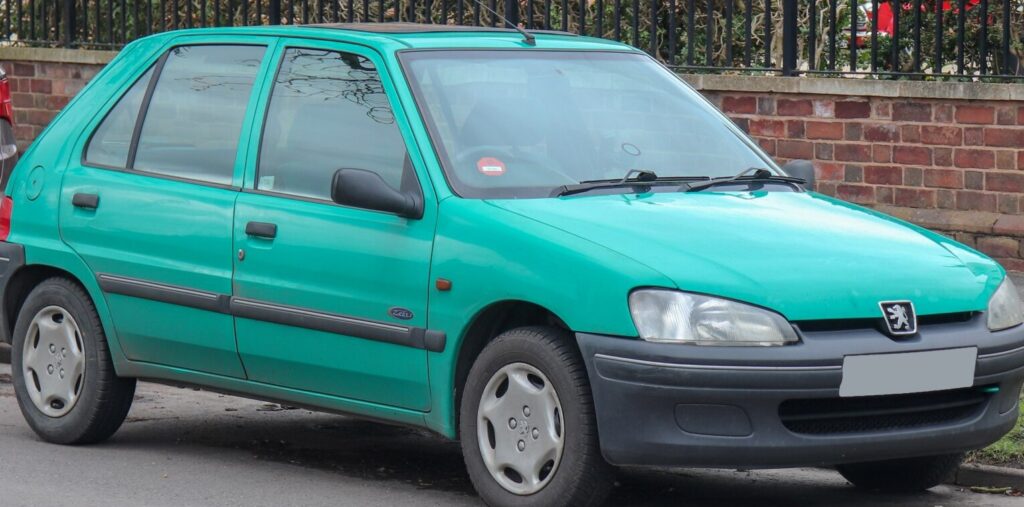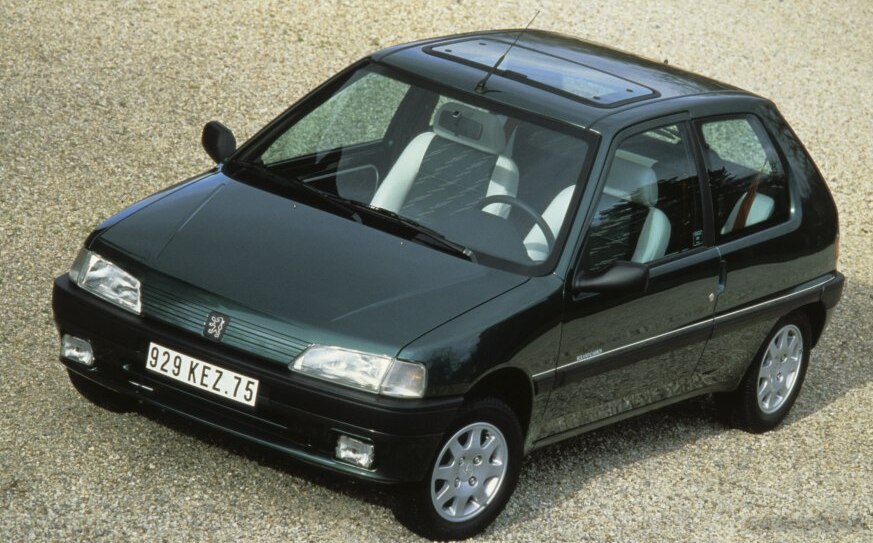
The Peugeot 106 I (1A/C) 1.4, producing 75 horsepower, was a popular subcompact hatchback manufactured between 1991 and 1996. It represented a key entry point into the Peugeot range during this period, positioned as an affordable and practical city car. The 106 I series, based on the shared platform with the Citroën Saxo, aimed to provide a modern and efficient alternative in the competitive small car segment. This specific 1.4-liter variant served as the mainstay of the lineup for many years, offering a balance between economy, usability, and purchase price.
Peugeot 106 I (1A/C) 1.4: An Overview
The 106 I (1A/C) was Peugeot’s response to the growing demand for small, fuel-efficient hatchbacks in Europe. Introduced as a replacement for the aging Peugeot 205, the 106 offered a more contemporary design and improved practicality. The 1.4-liter engine, designated KDX or KDY depending on minor revisions, became the most common powertrain option. The 106 was available in both 3-door and 5-door configurations, catering to different customer needs. It quickly gained a reputation for its nimble handling and relatively low running costs, making it a favorite among young drivers and urban commuters.
Powertrain & Engine Architecture
The heart of the 106 I 1.4 is the TU3MC (KDX) or TU3M (KDY) inline four-cylinder gasoline engine, displacing 1361 cc (83.05 cubic inches). This engine utilizes a naturally aspirated intake and a multi-port fuel injection system, providing a reasonable level of performance for its size and intended purpose. The engine features a single overhead camshaft (OHC) valvetrain with two valves per cylinder. Compression ratio is set at 9.3:1. The engine’s design prioritized fuel efficiency and reliability over outright power. Engine oil capacity is 3.2 liters (3.38 US quarts), and the recommended coolant capacity is 6 liters (6.34 US quarts).
While a five-speed manual transmission was the most frequently paired gearbox, a four-speed automatic transmission was also offered, though less common. This automatic option, while providing convenience, did impact acceleration and fuel economy compared to the manual version. The automatic transmission was a conventional hydraulic unit, known for its durability but lacking the sophistication of more modern automatic gearboxes.
Driving Characteristics
The 106 I 1.4, particularly in manual form, offered a surprisingly engaging driving experience for a small city car. The 75 hp output, delivered at 5800 rpm, and 111 Nm (81.87 lb-ft) of torque at 3400 rpm, provided adequate acceleration for everyday driving. The 0-62 mph (0-100 km/h) sprint took approximately 10.7 seconds. The automatic transmission version, however, noticeably dulled performance, extending the 0-60 mph time to around 10.2 seconds. The gear ratios in the manual transmission were well-chosen to maximize fuel efficiency and provide reasonable acceleration in each gear. The car’s light weight (approximately 820 kg or 1807.79 lbs) contributed to its nimble handling and responsive steering. The automatic transmission, while smooth, resulted in a less direct connection between the engine and the wheels.
Equipment & Trim Levels
The Peugeot 106 I 1.4 was typically equipped with basic but functional features. Standard equipment generally included power steering, central locking, and a basic stereo system. Interior upholstery was typically cloth, with a simple dashboard layout. Higher trim levels, such as the ‘X’ or ‘GL’ variants, added features like electric windows, upgraded interior trim, and alloy wheels. Optional extras included a sunroof, air conditioning, and upgraded audio systems. The 5-door version offered increased practicality for families, while the 3-door model appealed to those prioritizing a sportier aesthetic. Safety features were relatively basic for the time, typically consisting of seatbelts and an optional Anti-lock Braking System (ABS).
Chassis & Braking
The 106 I 1.4 featured a front-wheel-drive layout with a simple but effective chassis design. The front suspension utilized a wishbone configuration, while the rear suspension employed a trailing arm setup. This combination provided a comfortable ride quality and predictable handling. The braking system consisted of disc brakes on the front wheels and drum brakes on the rear wheels. ABS was available as an option, significantly improving braking performance, particularly in wet or slippery conditions. The steering system was a rack and pinion type, providing precise and responsive steering feel. Tire size was typically 165/65 R13.
Market Reception & Comparison
The Peugeot 106 I 1.4 was generally well-received by automotive critics for its affordability, fuel efficiency, and nimble handling. It was often compared to rivals such as the Renault Clio, Citroën Saxo, and Ford Fiesta. While the 1.4-liter engine wasn’t the most powerful in its class, it offered a good balance between performance and economy. Fuel consumption was rated at 6.8 l/100 km (34.6 US mpg, 41.5 UK mpg), making it an attractive option for budget-conscious buyers. Compared to the higher-performance 1.6-liter versions of the 106, the 1.4 offered lower running costs but less exciting acceleration. The 1.4 was also considered more reliable than some of the more complex engine options available in the range.
Technical Specifications
| Brand | Peugeot |
| Model | 106 |
| Generation | 106 I (1A/C) |
| Type (Engine) | 1.4 (75 Hp) |
| Start of production | 1991 |
| End of production | 1996 |
| Body type | Hatchback |
| Seats | 5 |
| Doors | 3-5 |
| Fuel consumption (combined) | 6.8 l/100 km |
| Fuel Type | Petrol (Gasoline) |
| Acceleration 0 – 100 km/h | 10.7 sec |
| Acceleration 0 – 62 mph | 10.7 sec |
| Acceleration 0 – 60 mph | 10.2 sec |
| Maximum speed | 175 km/h (108.74 mph) |
| Weight-to-power ratio | 10.9 kg/Hp |
| Power | 75 Hp @ 5800 rpm |
| Torque | 111 Nm @ 3400 rpm (81.87 lb.-ft. @ 3400 rpm) |
| Engine layout | Front, Transverse |
| Engine Model/Code | KDX TU3MC, KDY TU3M |
| Engine displacement | 1361 cm3 (83.05 cu. in.) |
| Number of cylinders | 4 |
| Engine configuration | Inline |
| Cylinder Bore | 75 mm (2.95 in.) |
| Piston Stroke | 77 mm (3.03 in.) |
| Compression ratio | 9.3:1 |
| Number of valves per cylinder | 2 |
| Fuel injection system | Multi-port manifold injection |
| Engine aspiration | Naturally aspirated |
| Valvetrain | OHC |
| Engine oil capacity | 3.2 l (3.38 US qt | 2.82 UK qt) |
| Coolant | 6 l (6.34 US qt | 5.28 UK qt) |
| Kerb Weight | 820 kg (1807.79 lbs.) |
| Max. weight | 1220 kg (2689.64 lbs.) |
| Max load | 400 kg (881.85 lbs.) |
| Trunk (boot) space – minimum | 215 l (7.59 cu. ft.) |
| Trunk (boot) space – maximum | 564 l (19.92 cu. ft.) |
| Fuel tank capacity | 45 l (11.89 US gal | 9.9 UK gal) |
| Length | 3564 mm (140.31 in.) |
| Width | 1590 mm (62.6 in.) |
| Height | 1369 mm (53.9 in.) |
| Wheelbase | 2385 mm (93.9 in.) |
| Front track | 1387 mm (54.61 in.) |
| Rear track | 1309 mm (51.54 in.) |
| Drivetrain Architecture | Front wheel drive |
| Number of gears | 5 (manual) / 4 (automatic) |
| Front suspension | Wishbone |
| Rear suspension | Trailing arm |
| Front brakes | Disc |
| Rear brakes | Drum |
| Assisting systems | ABS (optional) |
| Steering type | Steering rack and pinion |
| Tires size | 165/65 R13 |
Legacy
The Peugeot 106 I 1.4 remains a popular choice among classic car enthusiasts and budget-conscious buyers. Its simple mechanical design and readily available parts make it relatively easy to maintain. While examples are now over 25 years old, many are still in regular use. The 1.4-liter engine is known for its durability, although regular maintenance is essential to prevent issues. The automatic transmission versions, while less desirable to enthusiasts, offer a convenient and reliable option for everyday driving. Today, the 106 I 1.4 is often seen as a charming and affordable classic, representing a bygone era of simple, practical motoring.