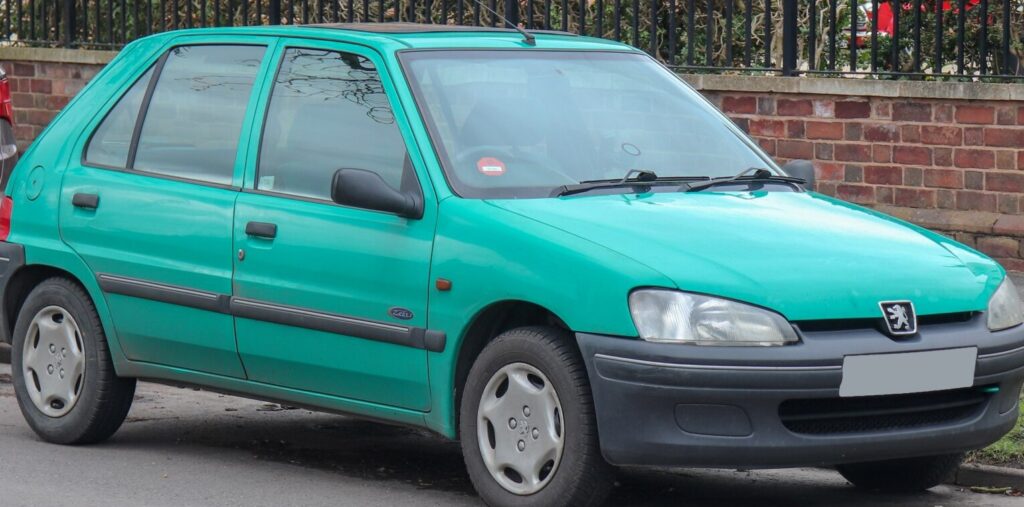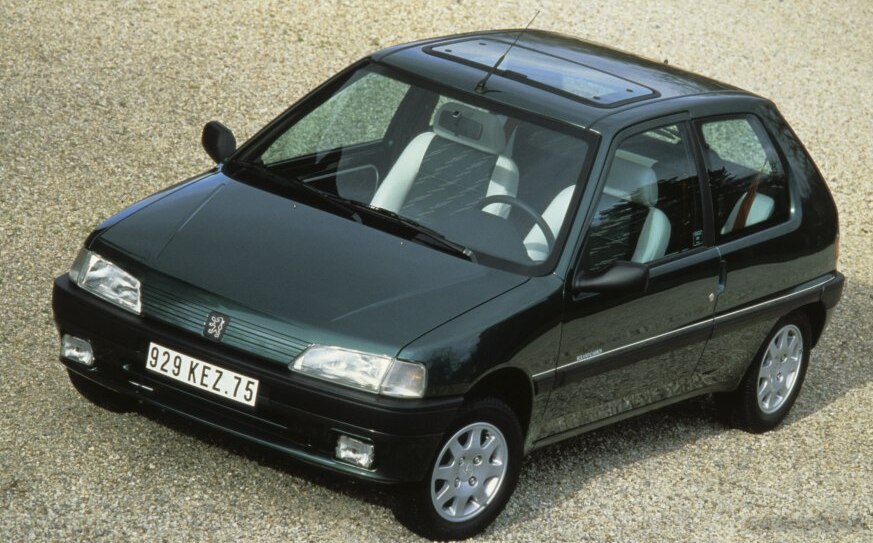
The Peugeot 106 I (1A/C) 1.5 D is a subcompact hatchback produced by the French manufacturer Peugeot between 1994 and 1996. This variant, powered by a 1.5-liter diesel engine producing 55 horsepower, represented the entry-level offering within the 106 range. It was positioned as an economical and practical city car, appealing to buyers prioritizing fuel efficiency and low running costs over outright performance. The 106 I (1A/C) was built on Peugeot’s small car platform, sharing components with the Citroën Saxo. This generation of the 106 was a significant model for Peugeot, offering a modern and affordable option in the competitive supermini segment.
Peugeot 106 I (1A/C) 1.5 D: An Overview
The 106 I (1A/C) 1.5 D was designed to provide basic transportation with a focus on affordability. It served as the foundation for the 106 lineup, with more powerful and better-equipped models available for those seeking a more premium experience. The “D” designation signifies the diesel engine, distinguishing it from the gasoline-powered variants. This model was particularly popular in European markets where diesel fuel was more affordable and fuel economy was a primary concern for car buyers. The 1.5 D offered a practical and reliable solution for urban commuting and short-distance travel.
Powertrain & Engine Architecture
The heart of the 106 I (1A/C) 1.5 D is the VJY TUD5 engine, a 1.5-liter inline four-cylinder diesel engine. This engine utilizes precombustion chamber injection, a common diesel technology of the era. This system involves injecting fuel into a precombustion chamber connected to the main cylinder, promoting more complete combustion and reducing engine noise. The engine displaces 1527 cm³ (93.18 cubic inches) and produces 55 hp at 5000 rpm and 95 Nm (70.07 lb-ft) of torque at 2250 rpm. The engine features an overhead camshaft (OHC) valvetrain with two valves per cylinder. The engine oil capacity is 4.5 liters (4.76 US qt / 3.96 UK qt) and the cooling system holds 6 liters (6.34 US qt / 5.28 UK qt). The engine is transversely mounted at the front of the vehicle.
The 106 I (1A/C) 1.5 D was exclusively offered with a five-speed manual transmission. This transmission was chosen to maximize fuel efficiency and provide a direct connection between the engine and the front wheels. The gear ratios were optimized for low-speed torque and economical cruising, reflecting the engine’s characteristics and the car’s intended use.
Driving Characteristics
The driving experience in the 106 I (1A/C) 1.5 D is characterized by its modest performance and focus on fuel economy. Acceleration from 0 to 100 km/h (0-62 mph) takes approximately 16.9 seconds, and 0 to 60 mph takes around 16.1 seconds. The top speed is 155 km/h (96.31 mph). While not particularly quick, the engine delivers adequate torque for everyday driving, making it suitable for urban environments and slower-speed roads. The five-speed manual transmission allows drivers to keep the engine in its optimal power band, maximizing efficiency and responsiveness. Compared to the gasoline-powered 106 variants, the 1.5 D offers significantly better fuel economy but sacrifices acceleration and overall performance. The weight-to-power ratio is 16 kg/hp, and the weight-to-torque ratio is 9.3 kg/Nm.
Equipment & Trim Levels
The 106 I (1A/C) 1.5 D was typically equipped with basic features, reflecting its entry-level positioning. Standard equipment generally included cloth upholstery, a basic dashboard layout, and manual windows and door locks. Safety features were limited, typically consisting of seatbelts and an optional Anti-lock Braking System (ABS). Optional extras included a sunroof, upgraded audio systems, and central locking. The interior was designed for practicality and durability, with hard-wearing materials used throughout. The trim level was generally quite spartan, focusing on providing essential functionality at a low cost.
Chassis & Braking
The 106 I (1A/C) 1.5 D features a front-wheel-drive layout with a simple suspension system. The front suspension utilizes a wishbone configuration, while the rear suspension employs a trailing arm setup. This suspension design provides a comfortable ride quality, particularly on smooth roads. The front brakes are disc brakes, offering adequate stopping power, while the rear brakes are drum brakes, a cost-saving measure common in entry-level vehicles of this era. The steering system is a steering rack and pinion, providing precise and responsive steering. The vehicle rides on 155/70 R13 tires. The kerb weight of the vehicle is 880 kg (1940.07 lbs), and the maximum weight is 1320 kg (2910.1 lbs).
Market Reception & Comparison
The Peugeot 106 I (1A/C) 1.5 D was generally well-received by critics as an affordable and economical city car. Its fuel efficiency was a major selling point, particularly in Europe. However, its modest performance and basic equipment levels were often noted. Compared to other trims in the 106 lineup, such as the 1.4 gasoline models, the 1.5 D offered superior fuel economy but lacked the same level of performance and refinement. It competed with other small diesel hatchbacks, such as the Renault Clio Diesel and the Citroën Saxo Diesel, offering a similar blend of affordability and fuel efficiency. The 1.5 D was often praised for its reliability and low running costs, making it a popular choice for budget-conscious buyers.
Technical Specifications
| Brand | Peugeot |
| Model | 106 |
| Generation | 106 I (1A/C) |
| Type (Engine) | 1.5 D (55 Hp) |
| Start of production | 1994 |
| End of production | 1996 |
| Fuel consumption (combined) | 4.8 l/100 km (49 US mpg / 58.9 UK mpg / 20.8 km/l) |
| Fuel Type | Diesel |
| Acceleration 0 – 100 km/h | 16.9 sec |
| Acceleration 0 – 62 mph | 16.9 sec |
| Acceleration 0 – 60 mph | 16.1 sec |
| Maximum speed | 155 km/h (96.31 mph) |
| Weight-to-power ratio | 16 kg/Hp |
| Weight-to-torque ratio | 9.3 kg/Nm |
| Power | 55 Hp @ 5000 rpm |
| Torque | 95 Nm @ 2250 rpm (70.07 lb.-ft. @ 2250 rpm) |
| Engine layout | Front, Transverse |
| Engine Model/Code | VJY TUD5 |
| Engine displacement | 1527 cm3 (93.18 cu. in.) |
| Number of cylinders | 4 |
| Engine configuration | Inline |
| Cylinder Bore | 77 mm (3.03 in.) |
| Piston Stroke | 82 mm (3.23 in.) |
| Compression ratio | 23:1 |
| Number of valves per cylinder | 2 |
| Fuel injection system | Precombustion chamber injection |
| Engine aspiration | Naturally aspirated |
| Valvetrain | OHC |
| Engine oil capacity | 4.5 l (4.76 US qt / 3.96 UK qt) |
| Coolant capacity | 6 l (6.34 US qt / 5.28 UK qt) |
| Kerb Weight | 880 kg (1940.07 lbs.) |
| Max. weight | 1320 kg (2910.1 lbs.) |
| Max load | 440 kg (970.03 lbs.) |
| Trunk (boot) space – minimum | 215 l (7.59 cu. ft.) |
| Trunk (boot) space – maximum | 564 l (19.92 cu. ft.) |
| Fuel tank capacity | 45 l (11.89 US gal / 9.9 UK gal) |
| Length | 3564 mm (140.31 in.) |
| Width | 1590 mm (62.6 in.) |
| Height | 1369 mm (53.9 in.) |
| Wheelbase | 2385 mm (93.9 in.) |
| Front track | 1387 mm (54.61 in.) |
| Rear track | 1309 mm (51.54 in.) |
| Drivetrain Architecture | Front wheel drive |
| Number of gears | 5 |
| Gearbox type | Manual transmission |
Legacy
The Peugeot 106 I (1A/C) 1.5 D, while not a performance icon, has earned a reputation for reliability and affordability. The VJY TUD5 diesel engine is known for its durability and relatively simple maintenance requirements. Today, these vehicles are increasingly sought after by enthusiasts and collectors looking for a classic and economical city car. Parts availability can be a challenge, but the engine’s simplicity makes it relatively easy to repair. The 106 I (1A/C) 1.5 D remains a testament to Peugeot’s ability to produce practical and reliable vehicles that appeal to a wide range of buyers. Its enduring popularity in the used car market reflects its lasting appeal as a budget-friendly and fuel-efficient option.