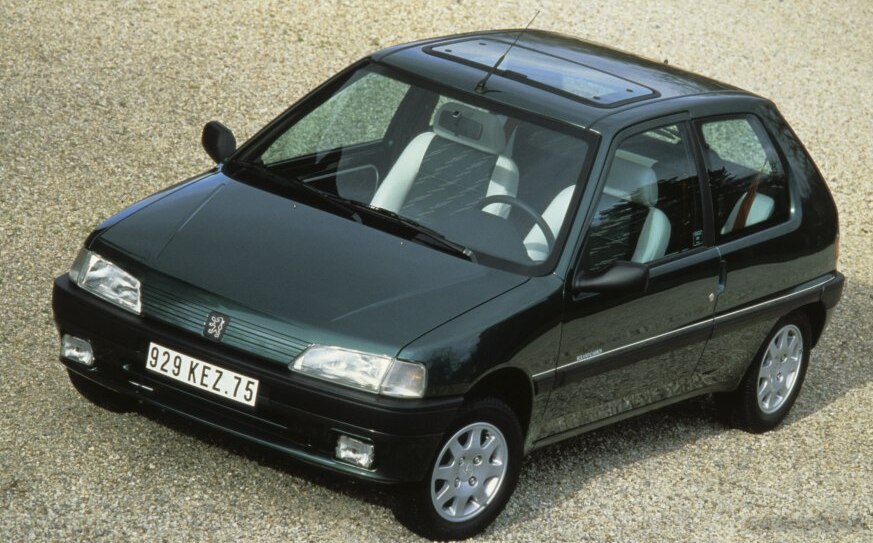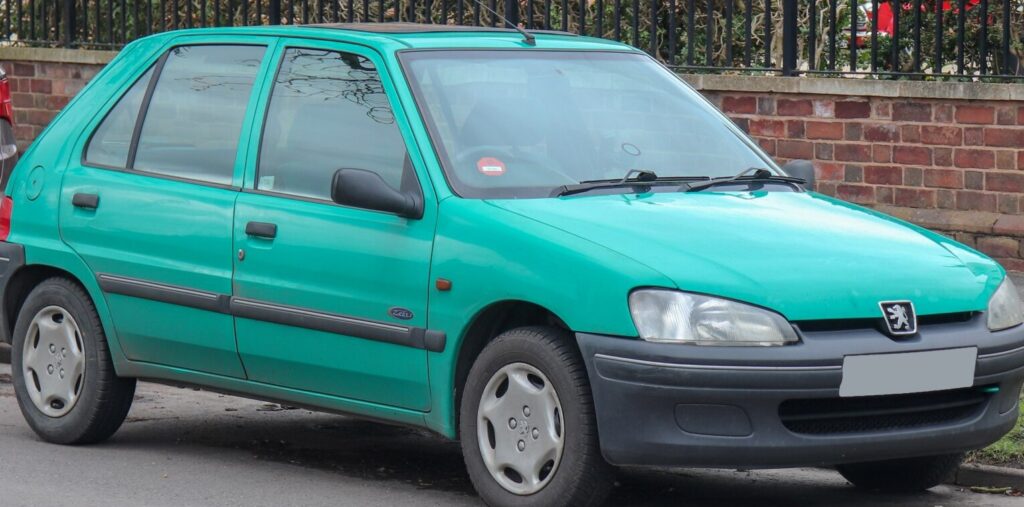
The Peugeot 106 II 1.4i, producing 75 horsepower, was a popular subcompact hatchback manufactured between May 1996 and October 2000. It represented a key variant within the 106 II range (often referred to as the 1A/1B platform), offering an accessible entry point into Peugeot ownership. This model aimed to provide affordable, reliable transportation with a focus on fuel efficiency and ease of use, making it a common sight on European roads. The 1.4i sat in the middle of the 106 II lineup, positioned above the base 1.1-liter engine and below the sportier 1.6-liter and diesel options.
Peugeot 106 II 1.4i: Overview and Positioning
The 106 II was a significant update to the original 106, featuring revised styling, improved safety features, and updated engine options. The 1.4i 75 hp model was designed to appeal to a broad customer base, including first-time car buyers, city commuters, and those seeking a practical and economical vehicle. It offered a balance between performance and running costs, making it a sensible choice for everyday driving. Compared to the base 1.1-liter, the 1.4i provided noticeably more power for highway driving and overtaking, while remaining more affordable and less complex than the higher-performance 1.6-liter variants.
Powertrain & Engine Architecture
The heart of the 106 II 1.4i is the Peugeot KFW (and later KFX) TU3JP engine. This is a 1.4-liter (1361 cc) inline four-cylinder engine utilizing a naturally aspirated configuration. The engine features a single overhead camshaft (OHC) valvetrain with two valves per cylinder. Fuel delivery is managed by a multi-port fuel injection system, contributing to improved fuel efficiency and smoother operation compared to earlier carbureted engines. The engine produces 75 hp at 5800 rpm and 111 Nm (81.87 lb-ft) of torque at 3400 rpm. The compression ratio is 9.3:1. Engine oil capacity is 3.2 liters (3.38 US qt / 2.82 UK qt) and coolant capacity is 6 liters (6.34 US qt / 5.28 UK qt).
The 1.4i was typically paired with a five-speed manual transmission, however, an optional four-speed automatic transmission was available. This automatic gearbox, while providing convenience, was known to slightly reduce fuel economy and performance compared to the manual version. The automatic transmission featured standard torque converter technology and was geared towards smooth, comfortable shifts rather than sporty responsiveness.
Driving Characteristics
The 106 II 1.4i with the five-speed manual transmission offered a reasonably engaging driving experience for its class. Acceleration from 0-100 km/h (0-62 mph) took approximately 13.2 seconds, while 0-60 mph was achieved in around 12.5 seconds. Top speed was rated at 178 km/h (110.6 mph). The engine felt lively enough for urban driving and could manage highway speeds without excessive strain, although overtaking required careful planning. The automatic transmission version saw a slight decrease in performance due to the transmission’s inherent efficiency losses. The gear ratios in the manual transmission were well-spaced, providing adequate acceleration in each gear. The power delivery was linear, making the car predictable and easy to control.
Equipment & Trim Levels
The 106 II 1.4i was available in several trim levels, varying by market. Base models typically included features such as power steering, central locking, and an adjustable steering column. Higher trim levels added features like electric windows, a sunroof, alloy wheels, and upgraded interior trim. Interior upholstery was generally cloth, with options for different patterns and colors. The dashboard layout was functional and straightforward, with clearly labeled controls. Optional extras included air conditioning, a radio/cassette player, and anti-theft alarm systems. Safety features included a driver’s airbag as standard, with passenger airbags available as an option on some models. ABS (Anti-lock Braking System) was also available as an optional extra.
Chassis & Braking
The 106 II 1.4i utilized a front-wheel-drive layout with a relatively simple suspension setup. The front suspension consisted of wishbones, while the rear suspension employed a trailing arm configuration. This setup provided a comfortable ride quality, although it wasn’t particularly sporty. The front brakes were disc brakes, providing adequate stopping power, while the rear brakes were typically drum brakes, a cost-saving measure for this trim level. The steering was rack and pinion with hydraulic power assistance, offering light and precise steering feel. Tire size was typically 165/70 R13.
Market Reception & Comparison
The Peugeot 106 II 1.4i was generally well-received by automotive critics as a practical and affordable supermini. It was praised for its fuel efficiency, reliability, and ease of driving. However, some critics noted that the interior was somewhat basic and that the performance wasn’t particularly exciting. Compared to other vehicles in its class, such as the Renault Clio, Volkswagen Polo, and Ford Fiesta, the 106 II 1.4i offered a competitive package in terms of price and running costs. Fuel consumption was rated at 9.4 l/100 km (25 US mpg / 30.1 UK mpg) in urban conditions and 5.4 l/100 km (43.6 US mpg / 52.3 UK mpg) on the extra-urban cycle. The 1.4i generally proved to be more reliable than the higher-performance 1.6-liter models, as it was less stressed and required less frequent maintenance.
Technical Specifications
| Brand | Peugeot |
| Model | 106 II |
| Type (Engine) | 1.4i (75 Hp) |
| Start of production | May, 1996 |
| End of production | October, 2000 |
| Powertrain Architecture | Internal Combustion engine |
| Body type | Hatchback |
| Seats | 5 |
| Doors | 3-5 |
| Fuel consumption (urban) | 9.4 l/100 km (25 US mpg / 30.1 UK mpg) |
| Fuel consumption (extra urban) | 5.4 l/100 km (43.6 US mpg / 52.3 UK mpg) |
| Fuel Type | Petrol (Gasoline) |
| Acceleration 0 – 100 km/h | 13.2 sec |
| Acceleration 0 – 62 mph | 13.2 sec |
| Acceleration 0 – 60 mph | 12.5 sec |
| Maximum speed | 178 km/h (110.6 mph) |
| Power | 75 Hp @ 5800 rpm |
| Torque | 111 Nm @ 3400 rpm (81.87 lb.-ft. @ 3400 rpm) |
| Engine layout | Front, Transverse |
| Engine Model/Code | KFW TU3JP, KFX TU3JP |
| Engine displacement | 1361 cm3 (83.05 cu. in.) |
| Number of cylinders | 4 |
| Engine configuration | Inline |
| Cylinder Bore | 75 mm (2.95 in.) |
| Piston Stroke | 77 mm (3.03 in.) |
| Compression ratio | 9.3:1 |
| Number of valves per cylinder | 2 |
| Fuel injection system | Multi-port manifold injection |
| Engine aspiration | Naturally aspirated |
| Valvetrain | OHC |
| Engine oil capacity | 3.2 l (3.38 US qt | 2.82 UK qt) |
| Coolant capacity | 6 l (6.34 US qt | 5.28 UK qt) |
| Kerb Weight | 815 kg (1796.77 lbs.) |
| Max. weight | 1315 kg (2899.08 lbs.) |
| Trunk (boot) space – minimum | 215 l (7.59 cu. ft.) |
| Trunk (boot) space – maximum | 953 l (33.65 cu. ft.) |
| Fuel tank capacity | 45 l (11.89 US gal | 9.9 UK gal) |
| Length | 3678 mm (144.8 in.) |
| Width | 1594 mm (62.76 in.) |
| Height | 1376 mm (54.17 in.) |
| Wheelbase | 2385 mm (93.9 in.) |
Legacy
The Peugeot 106 II 1.4i remains a popular choice in the used car market, particularly for those seeking an affordable and reliable city car. The TU3JP engine is known for its durability and relatively low maintenance costs. While older examples may require some attention to age-related issues, such as rust and worn suspension components, the 1.4i powertrain is generally considered to be robust. The availability of spare parts is good, and the car’s simple mechanical design makes it relatively easy to repair. The 106 II 1.4i continues to be appreciated for its practicality, fuel efficiency, and charming retro styling.