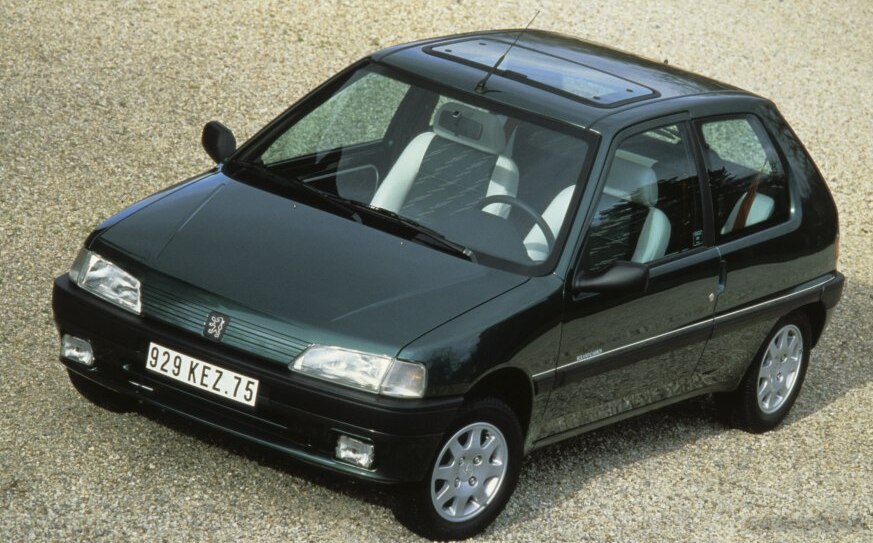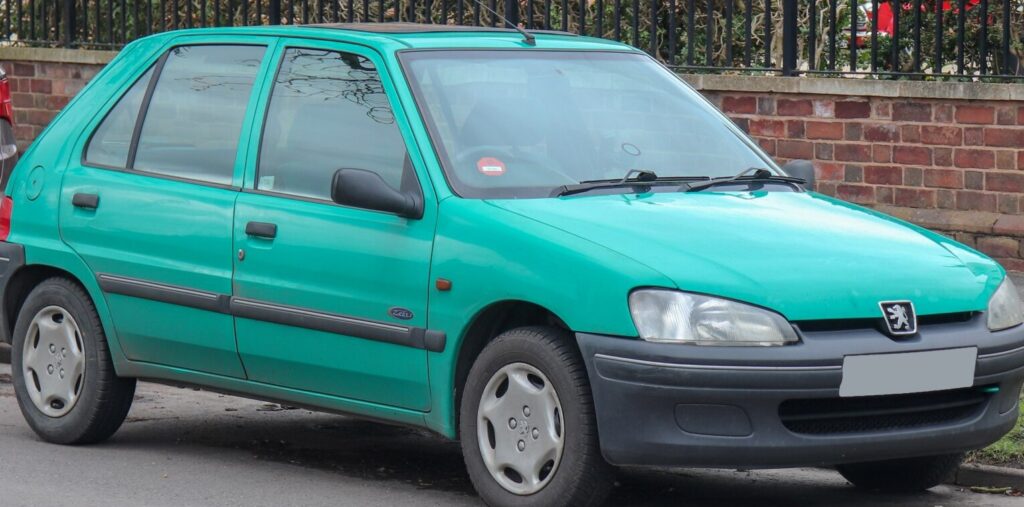
The Peugeot 106 II 1.5 D, producing 57 horsepower, was a mainstay of the Peugeot 106 range from October 2000 to December 2003. Positioned as the entry-level diesel variant within the 106 II (1) generation (based on the X10 chassis), it offered economical motoring for a broad customer base. This model represented a practical and affordable option in the supermini segment, prioritizing fuel efficiency over outright performance. The 106 II series, and this variant specifically, was primarily sold in Europe and did not see significant sales volume in the North American market.
Peugeot 106 II 1.5 D: An Overview
The 106 II represented a significant refresh of the original 106, launched in 1991. The second generation brought updated styling, improved safety features, and revised engine options. The 1.5 D model was particularly popular due to its low running costs and suitability for urban driving. It catered to buyers seeking a reliable and economical city car, often favored by first-time drivers, commuters, and those on a budget. The 1.5 D was available with both 3-door and 5-door body styles, offering flexibility to suit different needs.
Powertrain & Engine Architecture
The heart of the 106 II 1.5 D is the VJX TUD5 diesel engine, a 1.5-liter inline four-cylinder unit. This engine is characterized by its naturally aspirated design and precombustion chamber injection system. This system, common in older diesel engines, utilizes a small precombustion chamber to initiate combustion before the main cylinder, improving cold-starting performance and reducing engine noise. The engine displaces 1527 cm³ (93.18 cubic inches) and produces 57 hp at 5000 rpm and 95 Nm (70.07 lb-ft) of torque at 2250 rpm. The compression ratio is a relatively high 23:1, typical for diesel engines. The engine features an overhead camshaft (OHC) valvetrain with two valves per cylinder.
While the 106 II was offered with a range of petrol (gasoline) engines and a 1.6L 16v petrol engine, the 1.5 D was exclusively paired with a 5-speed manual transmission. This was a deliberate choice to maximize fuel economy and keep costs down. The transmission is a standard front-wheel-drive configuration, delivering power to the front wheels. The gearbox ratios were geared towards economy, prioritizing fuel efficiency over rapid acceleration.
Driving Characteristics
The driving experience in the 106 II 1.5 D is best described as utilitarian. With only 57 hp, acceleration is modest, taking approximately 18.5 seconds to reach 62 mph (100 km/h). Top speed is limited to 98.18 mph (158 km/h). The engine delivers its peak torque at a relatively low 2250 rpm, providing adequate pulling power for everyday driving situations. However, it lacks the responsiveness of the higher-powered petrol variants. The 5-speed manual transmission is light and easy to use, but the long gearing emphasizes fuel economy over spirited driving. Compared to the 1.6L petrol models, the 1.5 D offers significantly less power but substantially better fuel economy. The 1.6L models provided a more engaging driving experience, but at the cost of increased fuel consumption.
Equipment & Trim Levels
The 106 II 1.5 D was typically equipped with basic, but functional, features. Standard equipment generally included power steering, central locking, and an immobilizer. Interior upholstery was typically cloth, with a simple dashboard layout. Options available included power windows, a sunroof, and upgraded audio systems. Trim levels varied depending on the market, but generally followed a progressive structure, with higher trims adding more comfort and convenience features. The focus remained on affordability, so luxury features were generally limited. The interior space, while adequate for a supermini, was not particularly generous, prioritizing practicality over passenger comfort.
Chassis & Braking
The 106 II 1.5 D utilizes a front-wheel-drive chassis with a wishbone front suspension and a trailing arm rear suspension. This setup provides a reasonable balance between ride comfort and handling. The relatively light weight of the vehicle (875 kg / 1929.04 lbs) contributes to its nimble handling characteristics. The braking system consists of disc brakes on the front wheels and drum brakes on the rear wheels. Anti-lock Braking System (ABS) was available as an option, enhancing braking performance and safety. The steering is a rack and pinion system with hydraulic power assistance, providing light and precise steering feel. Tire size was typically 165/70 R13, mounted on 13-inch steel wheels.
Market Reception & Comparison
The Peugeot 106 II 1.5 D was well-received in the European market as a practical and economical city car. Critics praised its fuel efficiency and low running costs, but noted its lack of performance. Compared to competitors such as the Renault Clio, Fiat Punto, and Volkswagen Polo, the 106 II 1.5 D offered a competitive price point and excellent fuel economy. However, it lacked the refinement and features of some of its rivals. Fuel consumption figures were impressive, averaging around 5.1 l/100 km (46.1 US mpg) on a combined cycle. Reliability was generally good, although the diesel engine required regular maintenance to ensure optimal performance. The 1.5 D was often seen as a more sensible alternative to the sportier petrol variants, appealing to a different segment of the market.
Technical Specifications
| Brand | Peugeot |
| Model | 106 |
| Generation | 106 II (1) |
| Type (Engine) | 1.5 D (57 Hp) |
| Start of production | October, 2000 |
| End of production | December, 2003 |
| Powertrain Architecture | Internal Combustion engine |
| Body type | Hatchback |
| Seats | 5 |
| Doors | 3-5 |
| Fuel consumption (urban) | 6.9 l/100 km (34.1 US mpg) |
| Fuel consumption (extra urban) | 4.3 l/100 km (54.7 US mpg) |
| Fuel consumption (combined) | 5.1 l/100 km (46.1 US mpg) |
| Fuel Type | Diesel |
| Acceleration 0 – 100 km/h | 18.5 sec |
| Acceleration 0 – 62 mph | 18.5 sec |
| Acceleration 0 – 60 mph | 17.6 sec |
| Maximum speed | 158 km/h (98.18 mph) |
| Emission standard | Euro 3 |
| Weight-to-power ratio | 15.4 kg/Hp |
| Power | 57 Hp @ 5000 rpm |
| Torque | 95 Nm @ 2250 rpm (70.07 lb.-ft. @ 2250 rpm) |
| Engine layout | Front, Transverse |
| Engine Model/Code | VJX TUD5 |
| Engine displacement | 1527 cm3 (93.18 cu. in.) |
| Number of cylinders | 4 |
| Engine configuration | Inline |
| Cylinder Bore | 77 mm (3.03 in.) |
| Piston Stroke | 82 mm (3.23 in.) |
| Compression ratio | 23:1 |
| Number of valves per cylinder | 2 |
| Fuel injection system | Precombustion chamber injection |
| Engine aspiration | Naturally aspirated |
| Valvetrain | OHC |
| Engine oil capacity | 4.5 l (4.76 US qt | 3.96 UK qt) |
| Coolant | 6 l (6.34 US qt | 5.28 UK qt) |
| Kerb Weight | 875 kg (1929.04 lbs.) |
| Max. weight | 1375 kg (3031.36 lbs.) |
| Max load | 500 kg (1102.31 lbs.) |
| Trunk (boot) space – minimum | 215 l (7.59 cu. ft.) |
| Trunk (boot) space – maximum | 953 l (33.65 cu. ft.) |
| Fuel tank capacity | 45 l (11.89 US gal | 9.9 UK gal) |
| Length | 3678 mm (144.8 in.) |
| Width | 1594 mm (62.76 in.) |
| Height | 1376 mm (54.17 in.) |
| Wheelbase | 2385 mm (93.9 in.) |
| Drivetrain Architecture | Front wheel drive |
| Number of gears and type of gearbox | 5 gears, manual transmission |
Legacy
The Peugeot 106 II 1.5 D remains a popular choice in the used car market, particularly for those seeking an affordable and economical runabout. The TUD5 diesel engine is known for its durability and relatively simple construction, making it relatively easy and inexpensive to maintain. However, potential buyers should be aware of the age-related issues common to older diesel engines, such as injector wear and potential turbocharger problems (though this model is naturally aspirated). Despite its age, the 106 II 1.5 D continues to offer a practical and economical transportation solution, embodying the spirit of a classic European city car.