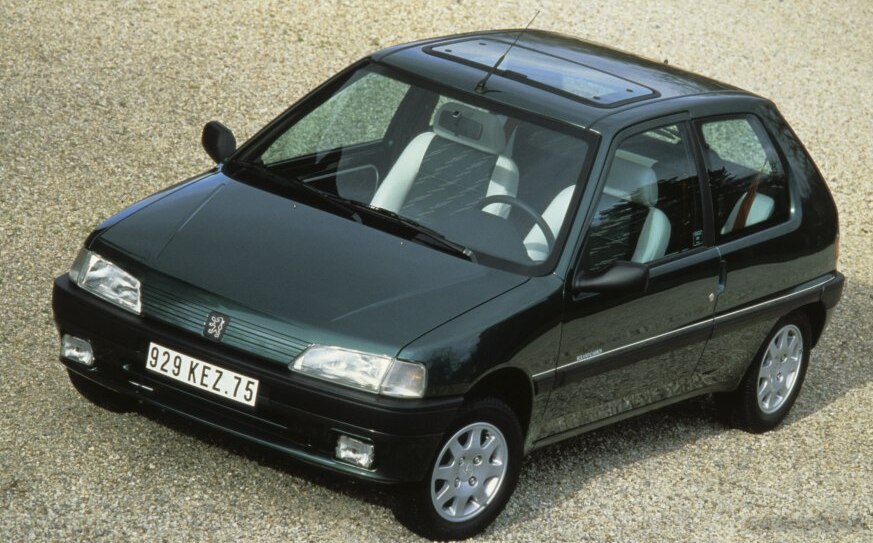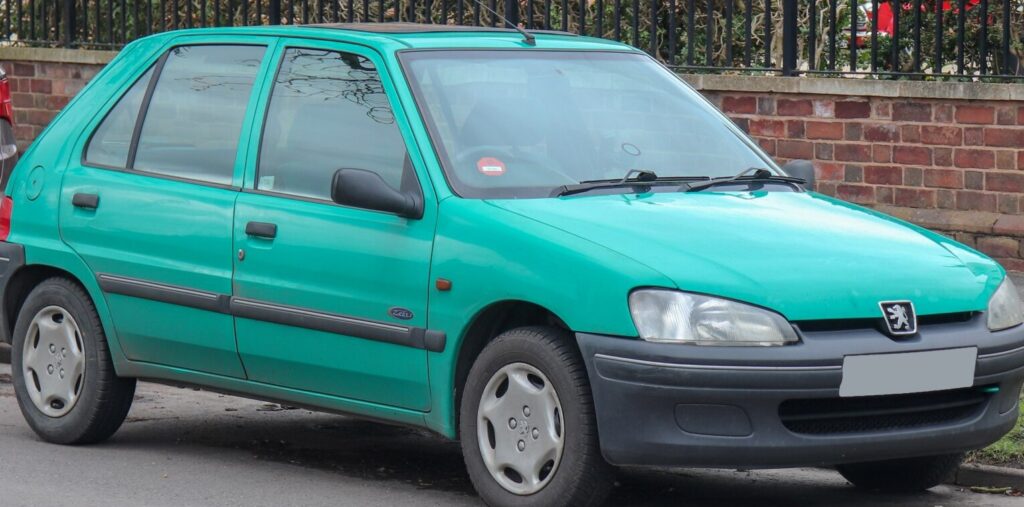
The Peugeot 106 II 1.6i (101 hp) was a performance-oriented variant of the popular Peugeot 106 supermini, produced between May 1996 and March 1997. Positioned as a near-top-of-the-line model within the 106 II range, it offered a significant power upgrade over the base models, appealing to drivers seeking a more engaging and sporty driving experience. This model was part of the broader 106 II series (built on the D8 platform), which represented a substantial refresh of the original 106, improving both aesthetics and mechanical refinement. The 1.6i model aimed to bridge the gap between the more economical engine options and the rally-inspired 106 GTI.
Peugeot 106 II 1.6i: A Performance Enhancement
The 1.6i variant distinguished itself from other 106 II models primarily through its larger displacement engine and increased power output. While the 1.4-liter and 1.1-liter engines focused on fuel efficiency and affordability, the 1.6i offered a noticeable performance boost. This made it a popular choice for those who wanted a more spirited drive without the higher price tag and insurance costs associated with the full-fledged GTI model. It was available in both 3-door and 5-door body styles, catering to a wider range of customer needs.
Powertrain & Engine Architecture
At the heart of the 106 II 1.6i lay the Peugeot NFW (and sometimes NFY) TU5J2 engine, a 1.6-liter inline-four cylinder gasoline engine. This engine featured a single overhead camshaft (OHC) valvetrain with two valves per cylinder. The engine’s displacement was 1587 cm³ (96.84 cubic inches), and it produced 101 horsepower at 6200 rpm and 132 Nm (97.36 lb-ft) of torque at 3500 rpm. The engine utilized multi-port fuel injection, contributing to improved fuel efficiency and throttle response compared to earlier carburetor-equipped engines. The compression ratio was set at 10.2:1. Engine oil capacity was 3.2 liters (3.38 US quarts), and the cooling system required 6 liters (6.34 US quarts) of coolant.
Unlike the GTI models which were exclusively offered with manual transmissions, the 1.6i was primarily paired with a 5-speed manual gearbox. This transmission was chosen to complement the engine’s power characteristics and provide a direct connection to the drivetrain. The gearbox ratios were tuned to provide a balance between acceleration and cruising efficiency.
Driving Characteristics
The 106 II 1.6i offered a noticeable improvement in driving dynamics compared to the lower-powered variants. Acceleration from 0 to 100 km/h (0-62 mph) took approximately 9.6 seconds, while 0-60 mph was achieved in around 9.1 seconds. The top speed was rated at 195 km/h (121.17 mph). While not a sports car by any means, the 1.6i provided a lively and engaging driving experience, particularly on winding roads. The relatively lightweight chassis (900 kg / 1984.16 lbs kerb weight) contributed to its nimble handling. The engine delivered a usable amount of torque throughout the rev range, making it easy to drive in everyday traffic. Compared to the GTI, the 1.6i felt less raw and aggressive, offering a more refined and comfortable ride.
Equipment & Trim Levels
The 1.6i trim level generally included features such as power steering, front ventilated disc brakes, and ABS (Anti-lock Braking System) as standard equipment. Interior appointments typically included cloth upholstery, although optional upgrades were available. The dashboard layout was similar to other 106 II models, featuring a functional and straightforward design. Optional extras could include electric windows, a sunroof, and upgraded audio systems. The 1.6i often served as a base for customers who wanted to add optional equipment without stepping up to the more expensive GTI model.
Chassis & Braking
The 106 II 1.6i utilized a front-wheel-drive layout with a wishbone front suspension and a trailing arm rear suspension. This suspension setup provided a good balance between ride comfort and handling. The front brakes were ventilated discs, offering good stopping power, while the rear brakes were solid discs. The steering system employed a rack and pinion setup with hydraulic power assistance, providing precise and responsive steering feel. The standard tire size was 175/60 R14.
Market Reception & Comparison
The Peugeot 106 II 1.6i was generally well-received by automotive critics as a capable and enjoyable small car. It was praised for its lively engine, nimble handling, and relatively affordable price. Compared to the 1.4-liter models, the 1.6i offered a significant performance upgrade without a substantial increase in running costs. However, it didn’t quite match the outright performance of the 106 GTI, which featured a more powerful engine and a sport-tuned suspension. Fuel economy was respectable, with combined fuel consumption figures around 8.5 km/l (20.1 US mpg / 24.1 UK mpg) in urban conditions and 15.2 km/l (35.6 US mpg / 42.8 UK mpg) on the open road. Reliability was generally good, although like all cars of this era, regular maintenance was essential.
Technical Specifications
| Brand | Peugeot |
| Model | 106 II |
| Type | 1.6i (101 hp) |
| Start of Production | May 1996 |
| End of Production | March 1997 |
| Engine Model/Code | NFW TU5J2, NFY TU5J2 |
| Engine Displacement | 1587 cm³ (96.84 cu. in.) |
| Number of Cylinders | 4 |
| Engine Configuration | Inline |
| Cylinder Bore | 78.5 mm (3.09 in.) |
| Piston Stroke | 82 mm (3.23 in.) |
| Compression Ratio | 10.2:1 |
| Power | 101 hp @ 6200 rpm |
| Torque | 132 Nm @ 3500 rpm (97.36 lb-ft @ 3500 rpm) |
| Fuel Consumption (Urban) | 11.7 l/100 km (20.1 US mpg / 24.1 UK mpg) |
| Fuel Consumption (Extra Urban) | 6.6 l/100 km (35.6 US mpg / 42.8 UK mpg) |
| Acceleration 0-100 km/h | 9.6 sec |
| Acceleration 0-62 mph | 9.6 sec |
| Acceleration 0-60 mph | 9.1 sec |
| Maximum Speed | 195 km/h (121.17 mph) |
| Kerb Weight | 900 kg (1984.16 lbs) |
| Max. Weight | 1320 kg (2910.1 lbs) |
| Fuel Tank Capacity | 45 l (11.89 US gal / 9.9 UK gal) |
| Trunk Space (Min) | 215 l (7.59 cu. ft.) |
| Trunk Space (Max) | 530 l (18.72 cu. ft.) |
| Transmission | 5-speed manual |
Legacy
The Peugeot 106 II 1.6i remains a popular choice among enthusiasts and used car buyers seeking an affordable and reliable small car with a bit more performance than the base models. The TU5J2 engine is known for its durability and relatively simple maintenance requirements. While parts availability may become more challenging over time, the engine is well-understood by mechanics, and many components are still readily available. Today, these cars are often sought after as classic city cars or as a starting point for motorsport projects. The 1.6i variant represents a sweet spot in the 106 II range, offering a good balance of performance, economy, and practicality.