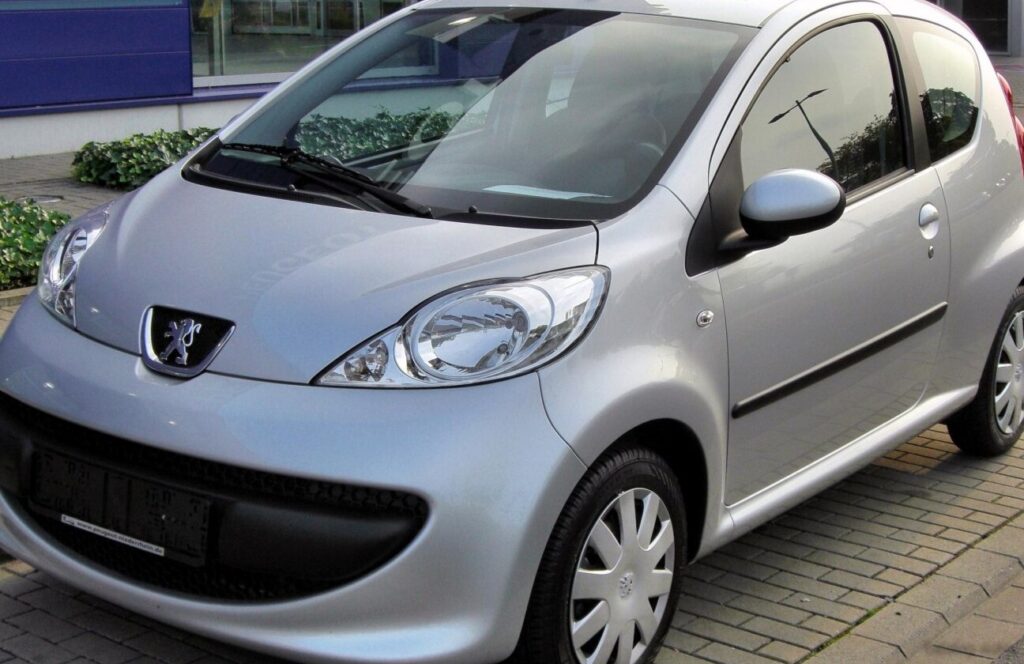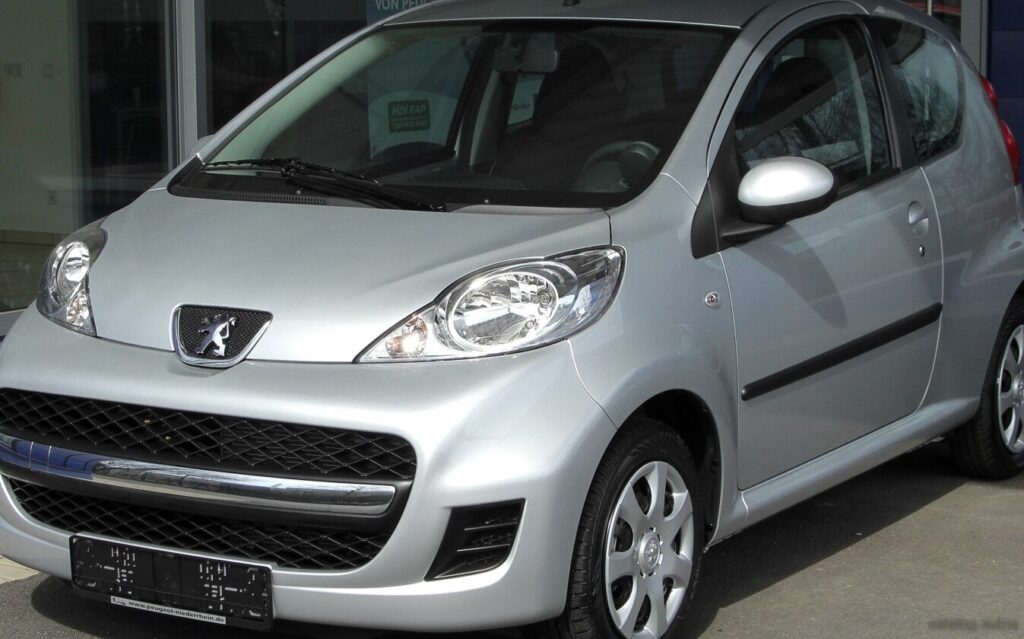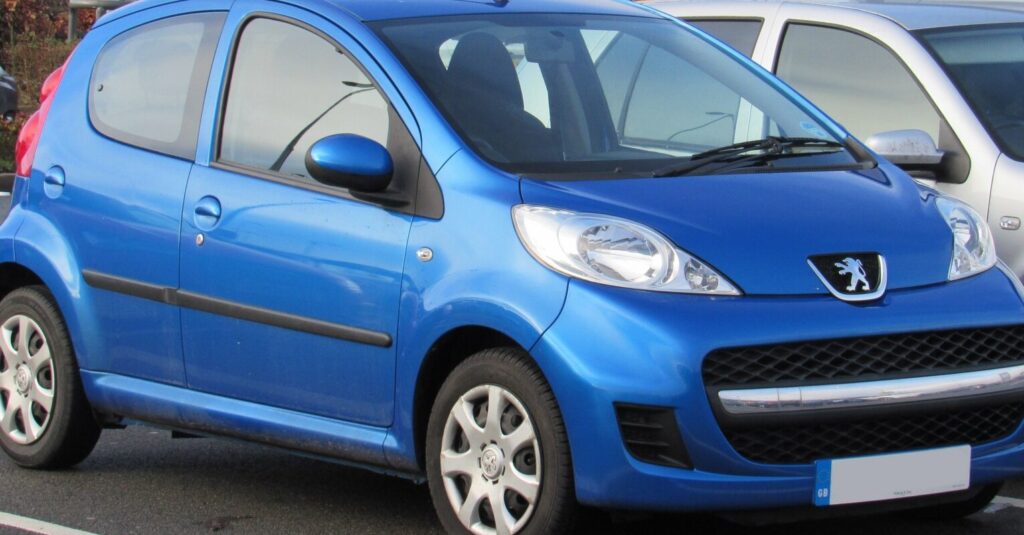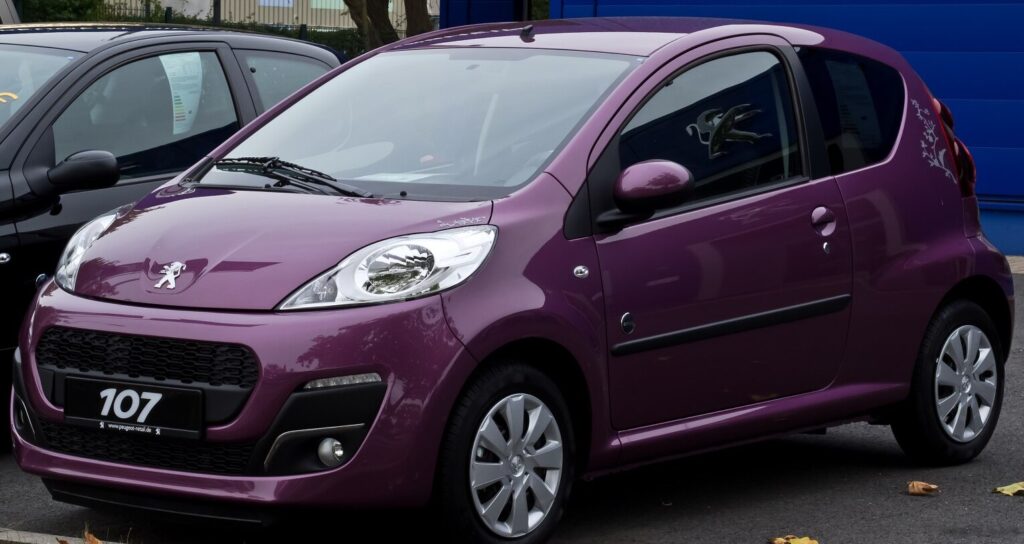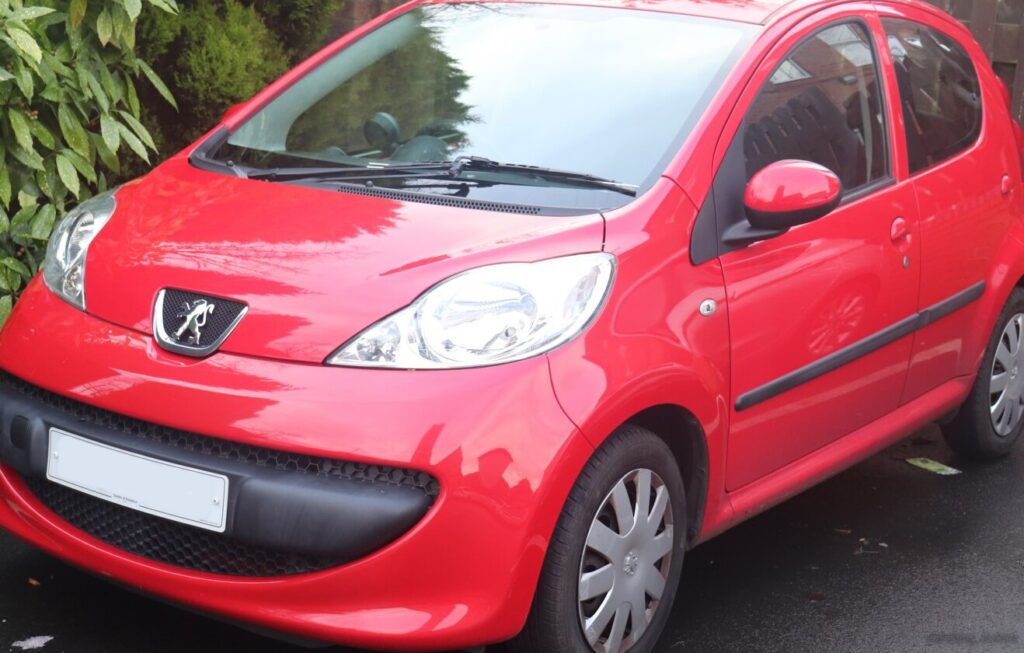
The Peugeot 107, launched in June 2005, was a city car jointly developed by Peugeot and Toyota, sharing its platform and many components with the Toyota Aygo and Citroën C1. This collaborative effort, known internally as the A9 project, aimed to reduce development costs and offer an affordable, fuel-efficient vehicle to the European market. The Phase I 107, produced through December 2008, was available in both 3-door and 5-door configurations. The 1.0-liter (68 hp) 2-Tronic variant represented an entry-level offering, positioned as the most accessible and economical version within the 107 lineup. It targeted urban drivers prioritizing fuel efficiency and ease of use over outright performance.
The 1.0-Liter 2-Tronic: A Detailed Overview
The 1.0-liter 2-Tronic Peugeot 107 was specifically designed for buyers seeking a practical and inexpensive mode of transportation. Its appeal lay in its compact size, low running costs, and the convenience of an automatic transmission. While not offering the sporty driving experience of manual transmission models or the potential for customization found in higher trim levels, the 2-Tronic provided a comfortable and user-friendly experience for navigating city streets. It was particularly popular with new drivers, those seeking a second car for short trips, and individuals who preferred the simplicity of an automatic gearbox.
Powertrain & Engine Architecture
At the heart of the 1.0-liter 2-Tronic 107 lies the CFA 384F engine, a 998 cc inline-3 cylinder petrol engine. This engine, also found in the Toyota Aygo and Citroën C1, is characterized by its lightweight construction and relatively simple design. It features a multi-port fuel injection system and a double overhead camshaft (DOHC) valvetrain with four valves per cylinder. The engine produces a maximum power output of 68 horsepower at 6000 rpm and 93 Nm (68.59 lb-ft) of torque at 3600 rpm. The engine’s compression ratio is 10.5:1, contributing to its efficiency. Engine oil capacity is 3.2 liters (3.38 US qt / 2.82 UK qt) and requires a specification adhering to Peugeot’s standards.
The “2-Tronic” transmission is a 5-speed automated manual transmission developed by Toyota. It’s not a traditional automatic with a torque converter; instead, it utilizes electronic controls to shift gears automatically. This system offers a degree of fuel efficiency comparable to a manual transmission, but with the convenience of automatic operation. It operates with a single clutch and can be operated in fully automatic mode or with manual gear selection via a shift lever. The transmission’s gear ratios are optimized for urban driving, prioritizing acceleration from a standstill and fuel economy at lower speeds.
Driving Characteristics
The 1.0-liter 2-Tronic 107 delivers modest performance. Acceleration is best described as adequate for city driving, with a 0-60 mph time around 14-15 seconds. The 2-Tronic transmission, while convenient, can exhibit slightly jerky shifts, particularly at lower speeds. This is a characteristic of single-clutch automated manual transmissions. Compared to the 5-speed manual version of the 1.0-liter engine, the 2-Tronic offers slightly reduced fuel economy due to the transmission’s inherent losses. However, the convenience of automatic operation often outweighs this minor drawback for its target audience. The power delivery is linear, but the engine requires relatively high engine speeds to achieve optimal acceleration. The weight-to-power ratio of 12.4 kg/hp and weight-to-torque ratio of 9 kg/Nm reflect the car’s modest performance capabilities.
Equipment & Trim Levels
The 1.0-liter 2-Tronic 107 typically came equipped with a basic but functional set of features. Standard equipment generally included power steering, central locking, electric front windows, and an adjustable steering column. Safety features included ABS (Anti-lock Braking System) and driver and passenger airbags. Interior upholstery was typically cloth, and the dashboard featured a simple, functional design. Optional extras available for this trim level included air conditioning, a radio/CD player, and alloy wheels. Higher trim levels, such as the Sportium, offered additional features like electric door mirrors, remote central locking, and a more comprehensive audio system.
Chassis & Braking
The 107 utilizes a front-engine, front-wheel-drive layout. The front suspension consists of an independent McPherson strut setup with a coil spring and anti-roll bar, providing a comfortable ride on most road surfaces. The rear suspension employs a simple elastic beam configuration, which is cost-effective and space-efficient. The braking system features ventilated discs on the front wheels and drum brakes on the rear wheels. The electric power steering provides light and easy steering, making it ideal for maneuvering in tight urban environments. Tire size is typically 155/65 R14, mounted on 4.5J x 14 inch wheel rims.
Market Reception & Comparison
The Peugeot 107 1.0-liter 2-Tronic received generally positive reviews for its affordability, fuel efficiency, and ease of use. Critics praised its compact size and maneuverability, making it well-suited for city driving. However, the 2-Tronic transmission was often criticized for its slightly jerky shifts and lack of refinement compared to traditional automatic transmissions. Compared to the manual transmission version, the 2-Tronic offered a slight compromise in fuel economy and driving engagement. In terms of fuel economy, the 107 1.0-liter 2-Tronic achieved approximately 51.1 US mpg (61.4 UK mpg) on the combined cycle, with CO2 emissions of 109 g/km (NEDC). This placed it among the most fuel-efficient cars in its class. Compared to other city cars like the Fiat Panda or Volkswagen Fox, the 107 offered a competitive price point and a similar level of practicality.
Technical Specifications
| Brand | Peugeot |
| Model | 107 |
| Generation | 107 (Phase I, 2005) 5-door |
| Type (Engine) | 1.0 (68 Hp) 2-Tronic |
| Start of production | June, 2005 |
| End of production | December, 2008 |
| Powertrain Architecture | Internal Combustion engine |
| Body type | Hatchback |
| Seats | 4 |
| Doors | 5 |
| Fuel consumption (urban) | 5.5 l/100 km (42.8 US mpg, 51.4 UK mpg, 18.2 km/l) |
| Fuel consumption (extra urban) | 4.1 l/100 km (57.4 US mpg, 68.9 UK mpg, 24.4 km/l) |
| Fuel consumption (combined) | 4.6 l/100 km (51.1 US mpg, 61.4 UK mpg, 21.7 km/l) |
| CO2 emissions | 109 g/km |
| Fuel Type | Petrol (Gasoline) |
| Emission standard | Euro 4 |
| Weight-to-power ratio | 12.4 kg/Hp |
| Weight-to-torque ratio | 9 kg/Nm |
| Power | 68 Hp @ 6000 rpm |
| Torque | 93 Nm @ 3600 rpm (68.59 lb.-ft. @ 3600 rpm) |
| Engine layout | Front, Transverse |
| Engine Model/Code | CFA 384F |
| Engine displacement | 998 cm3 (60.9 cu. in.) |
| Number of cylinders | 3 |
| Engine configuration | Inline |
| Cylinder Bore | 71 mm (2.8 in.) |
| Piston Stroke | 84 mm (3.31 in.) |
| Compression ratio | 10.5:1 |
| Number of valves per cylinder | 4 |
| Fuel injection system | Multi-port manifold injection |
| Engine aspiration | Naturally aspirated |
| Valvetrain | DOHC |
| Engine oil capacity | 3.2 l (3.38 US qt | 2.82 UK qt) |
| Coolant capacity | 4 l (4.23 US qt | 3.52 UK qt) |
| Kerb Weight | 840 kg (1851.88 lbs.) |
| Max. weight | 1190 kg (2623.5 lbs.) |
| Max load | 350 kg (771.62 lbs.) |
| Trunk (boot) space (min) | 130 l (4.59 cu. ft.) |
| Trunk (boot) space (max) | 712 l (25.14 cu. ft.) |
| Fuel tank capacity | 35 l (9.25 US gal | 7.7 UK gal) |
| Length | 3430 mm (135.04 in.) |
| Width | 1630 mm (64.17 in.) |
| Height | 1470 mm (57.87 in.) |
| Wheelbase | 2340 mm (92.13 in.) |
| Gears/Transmission | 5 gears, automatic transmission 2-Tronic |
Legacy
The Peugeot 107 1.0-liter 2-Tronic, while not known for exceptional reliability or performance, has proven to be a relatively durable and economical vehicle. The CFA engine is generally considered robust, although regular maintenance is crucial to prevent issues. The 2-Tronic transmission, however, can be prone to occasional failures, and finding replacement parts can sometimes be challenging. On the used car market, these 107s are typically very affordable, making them attractive to budget-conscious buyers. They remain popular as city runabouts and first cars, appreciated for their low running costs and ease of parking. Despite its age, a well-maintained 107 1.0-liter 2-Tronic can still provide reliable transportation for many years to come.