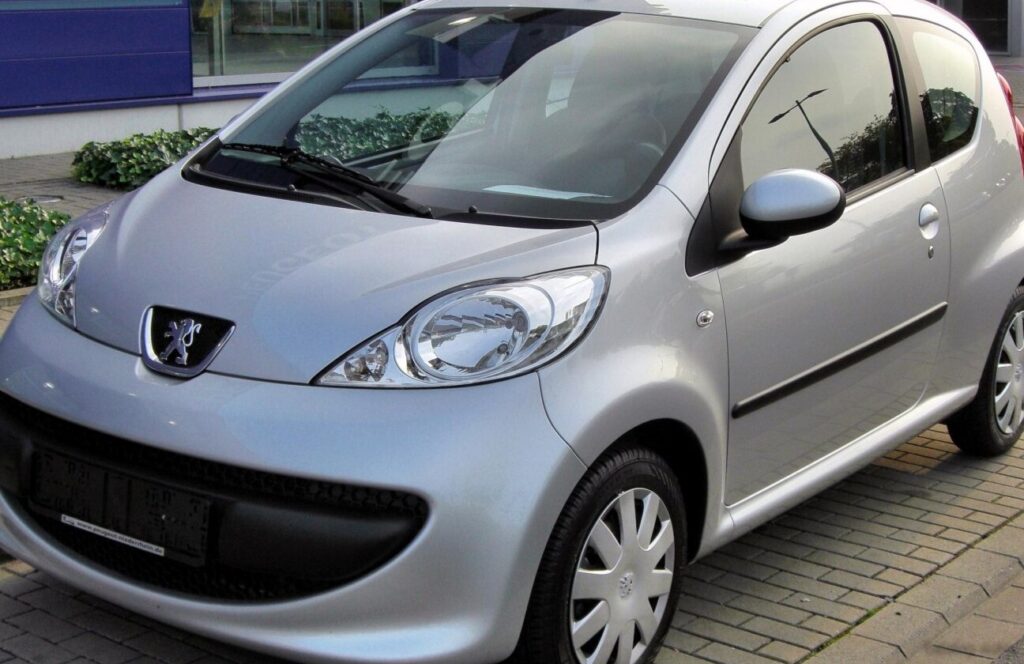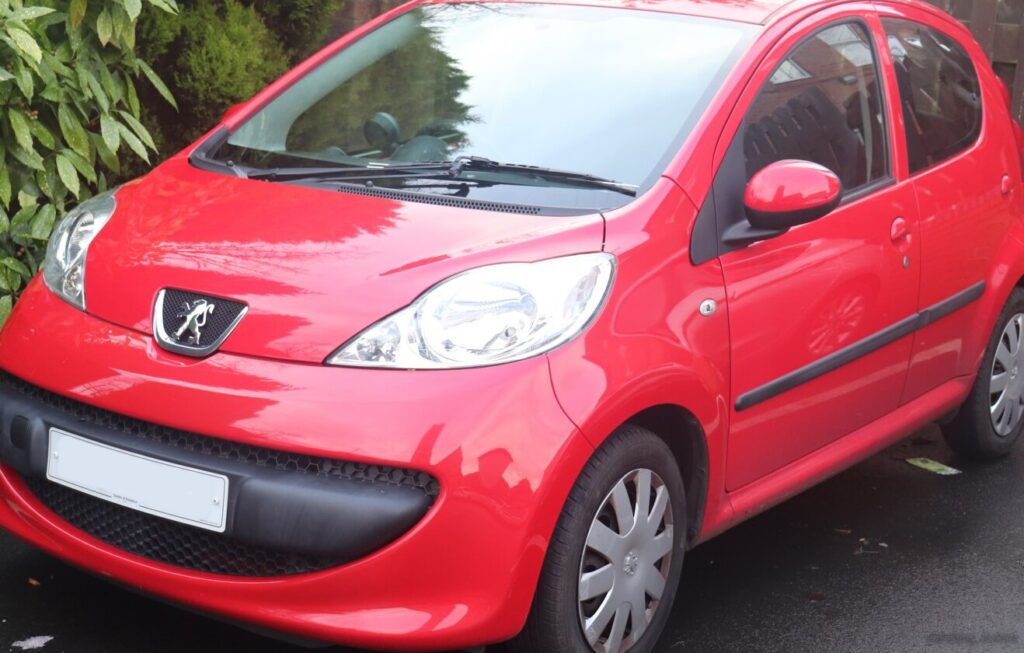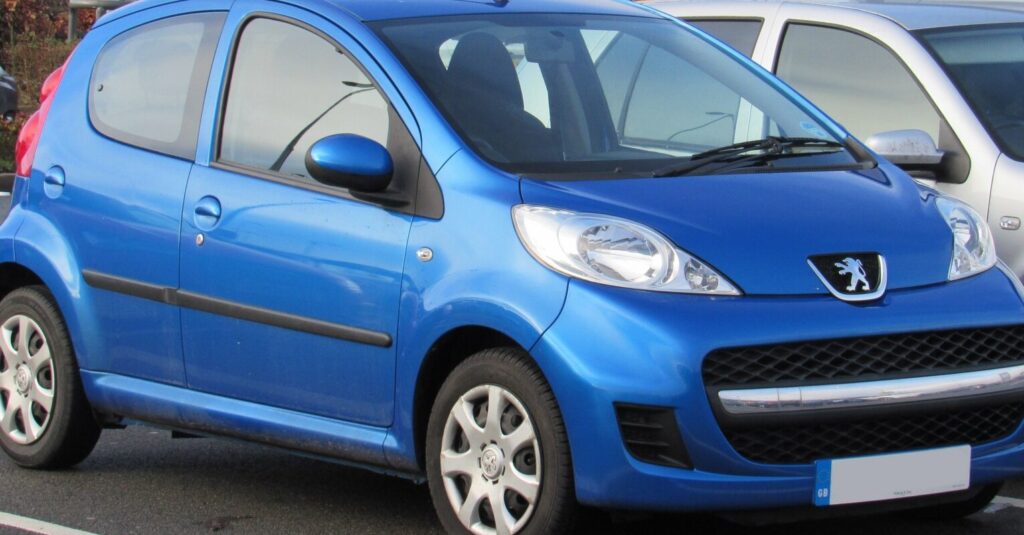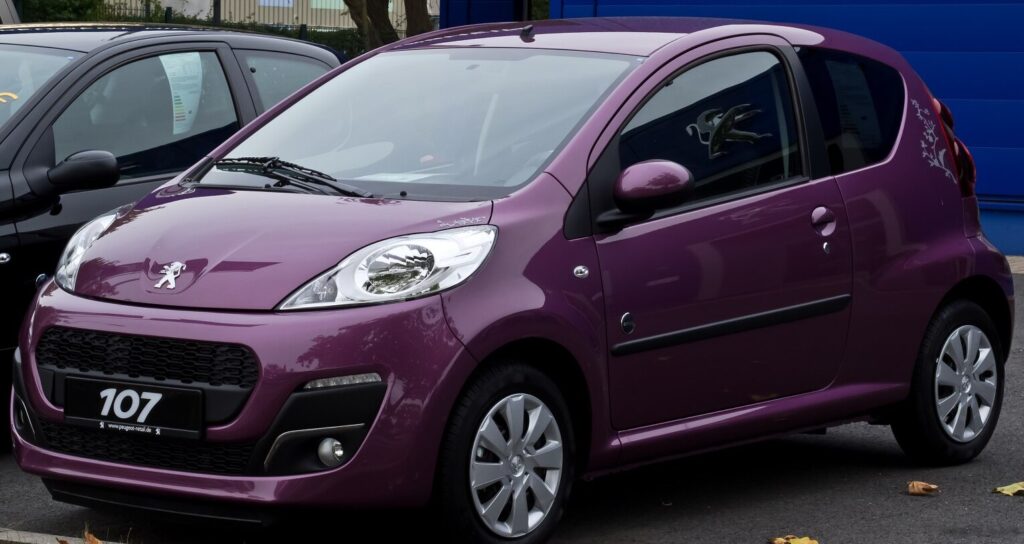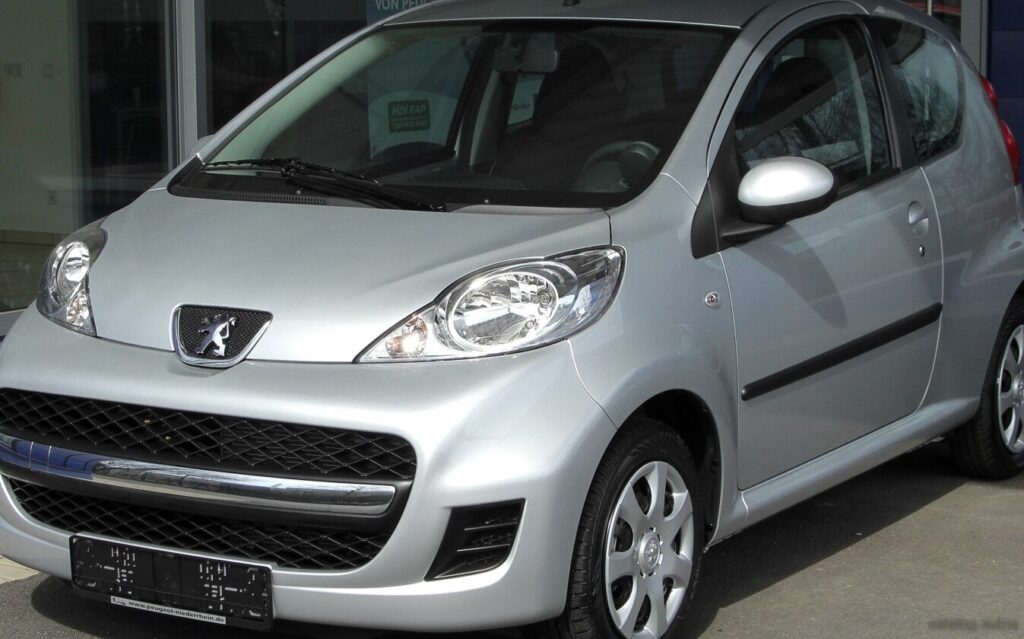
The Peugeot 107, specifically the Phase II 3-door 1.0-liter (68 hp) model produced between December 2008 and September 2010, represents an entry-level offering within the broader 107 range. This variant was part of the first generation of the 107 (A8 series), a city car jointly developed by Peugeot, Citroën, and Toyota – sharing its platform and many components with the Citroën C1 and Toyota Aygo. The Phase II update brought minor cosmetic revisions and refinements to the original design. Positioned as the most affordable and fuel-efficient option in the 107 lineup, it targeted urban commuters and first-time car buyers prioritizing economy and practicality over outright performance.
Powertrain & Engine Architecture
The heart of the Peugeot 107 1.0 is the CFA 384F engine, a 998 cc inline-three cylinder petrol engine. This engine utilizes a naturally aspirated configuration and multi-port fuel injection. The engine’s design emphasizes simplicity and efficiency, contributing to its low fuel consumption. It features a double overhead camshaft (DOHC) valvetrain with four valves per cylinder, optimizing gas flow for improved performance within its displacement limitations. The compression ratio is set at 10.5:1. Lubrication is provided by a 3.2-liter (3.38 US qt, 2.82 UK qt) oil supply, adhering to manufacturer-specified oil standards. Cooling is managed by a 4-liter (4.23 US qt, 3.52 UK qt) coolant system.
This particular 107 variant was exclusively offered with a five-speed manual transmission. The transmission is a standard configuration for this class of vehicle, designed for durability and ease of use. The gear ratios are optimized for maximizing fuel efficiency and providing adequate acceleration in urban driving conditions. The drivetrain is front-wheel drive, a common layout for compact city cars.
Engine Specifications (CFA 384F)
- Displacement: 998 cm³ (60.9 cu. in.)
- Configuration: Inline-3
- Bore x Stroke: 71 mm x 84 mm (2.8 in x 3.31 in)
- Compression Ratio: 10.5:1
- Valves per Cylinder: 4
- Fuel Injection: Multi-port
- Maximum Power: 68 hp @ 6000 rpm
- Maximum Torque: 93 Nm (68.59 lb-ft) @ 3600 rpm
Driving Characteristics
The 1.0-liter, 68 hp engine in the Peugeot 107 delivers modest performance. Acceleration from 0 to 100 km/h (0-62 mph) takes approximately 13.7 seconds, and 0 to 60 mph is achieved in around 13 seconds. The top speed is rated at 157 km/h (97.56 mph). While not designed for rapid acceleration, the engine provides sufficient power for navigating city streets and maintaining reasonable speeds on highways. The five-speed manual transmission allows drivers to optimize engine speed for fuel efficiency or to extract the most available power when needed. Compared to potential higher-output versions (which were not offered on the 107), this variant prioritizes fuel economy and ease of driving over sporty performance. The power delivery is linear, making it predictable and easy to control, particularly for novice drivers.
Equipment & Trim Levels
The Phase II 3-door 1.0-liter Peugeot 107 was typically equipped as a base model, focusing on essential features. Standard equipment generally included power steering, a driver’s airbag, and basic instrumentation. Interior upholstery was typically cloth, with a functional and durable design. The dashboard layout was simple and straightforward, prioritizing usability. Optional extras available for this trim level often included air conditioning, central locking, and electric front windows. Higher trim levels, not available with this engine, offered features like alloy wheels, upgraded audio systems, and more comprehensive safety equipment.
Chassis & Braking
The Peugeot 107 utilizes a McPherson strut independent suspension system at the front, providing a comfortable ride and responsive handling. The rear suspension employs an elastic beam configuration, a cost-effective solution that offers adequate stability for everyday driving. The front brakes are ventilated discs, providing good stopping power, while the rear brakes are drums. This combination is typical for vehicles in this weight class. The steering system is a rack and pinion type with electric power assistance, offering light and precise steering feel. The vehicle rides on 155/65 R14 tires mounted on 4.5J x 14 inch steel wheels.
Market Reception & Comparison
The Peugeot 107 1.0 was generally well-received by critics as an affordable and economical city car. Its primary strengths were its low running costs, compact size, and ease of parking. Fuel economy figures of 4.5 l/100 km (52.3 US mpg, 62.8 UK mpg) combined were highly competitive in its segment. Compared to other trims within the 107 range, the 1.0-liter model offered the lowest purchase price and the best fuel efficiency, but at the expense of performance. Reliability was generally considered good, with the simple engine design contributing to its durability. However, some reviewers noted the basic interior and limited features as drawbacks. Compared to competitors like the Fiat Panda and Renault Twingo, the 107 offered a similar level of practicality and economy, with its styling being a key differentiator.
Technical Specifications
| Brand | Peugeot |
| Model | 107 |
| Generation | 107 (Phase II, 2008) 3-door |
| Type (Engine) | 1.0 (68 Hp) |
| Start of production | December, 2008 |
| End of production | September, 2010 |
| Body type | Hatchback |
| Seats | 4 |
| Doors | 3 |
| Fuel consumption (urban) | 5.5 l/100 km (42.8 US mpg, 51.4 UK mpg) |
| Fuel consumption (extra urban) | 3.9 l/100 km (60.3 US mpg, 72.4 UK mpg) |
| Fuel consumption (combined) | 4.5 l/100 km (52.3 US mpg, 62.8 UK mpg) |
| CO2 emissions | 106 g/km |
| Fuel Type | Petrol (Gasoline) |
| Acceleration 0-100 km/h | 13.7 sec |
| Acceleration 0-62 mph | 13.7 sec |
| Maximum speed | 157 km/h (97.56 mph) |
| Engine displacement | 998 cm³ (60.9 cu. in.) |
| Engine Power | 68 Hp @ 6000 rpm |
| Engine Torque | 93 Nm (68.59 lb.-ft.) @ 3600 rpm |
| Kerb Weight | 800 kg (1763.7 lbs.) |
| Max. weight | 1180 kg (2601.45 lbs.) |
| Trunk (boot) space (min) | 130 l (4.59 cu. ft.) |
| Trunk (boot) space (max) | 712 l (25.14 cu. ft.) |
| Fuel tank capacity | 35 l (9.25 US gal, 7.7 UK gal) |
Legacy
The Peugeot 107 1.0, while a basic city car, has proven to be a relatively reliable and durable vehicle. The simple engine design and robust transmission contribute to its longevity. In the used car market, these models are often sought after for their affordability and low running costs. While not known for its performance or luxurious features, the 107 1.0 remains a practical and economical choice for urban drivers. Common maintenance issues are generally minor, relating to wear and tear on components like brakes, tires, and suspension parts. The availability of spare parts is good, due to the shared platform with Citroën and Toyota models. Overall, the Peugeot 107 1.0 represents a sensible and cost-effective option for those seeking a basic, reliable, and fuel-efficient city car.