
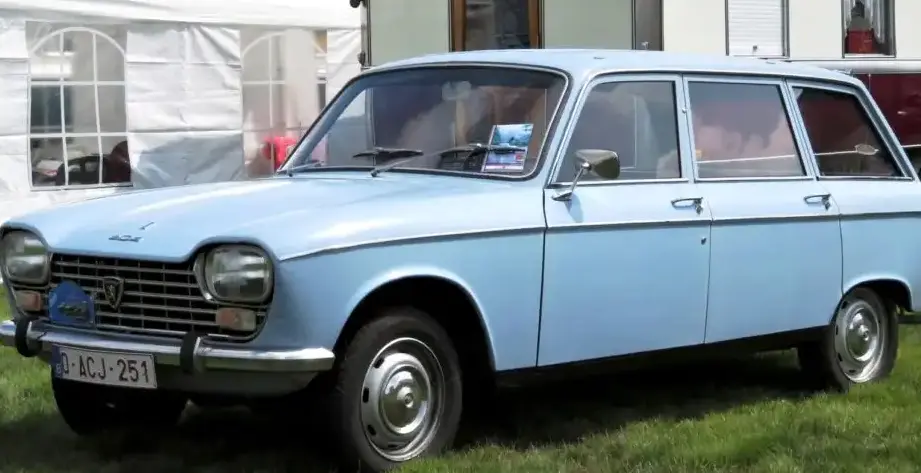
The Peugeot 204 Break 1.3 D, produced between 1973 and 1977, represents a practical and economical variant of the popular Peugeot 204 series. As a diesel-powered station wagon (estate), it catered to buyers seeking fuel efficiency and load-carrying capacity, particularly in the European market. The “Break” designation signified Peugeot’s station wagon body style, and the 1.3 D denoted the engine displacement and fuel type. This model occupied the lower end of the 204 Break lineup, positioned as a workhorse alternative to the gasoline-powered versions and offering a more affordable entry point into Peugeot ownership.
Technical Specifications
| Brand | Peugeot |
| Model | 204 |
| Generation | 204 Break |
| Type (Engine) | 1.3 D (45 Hp) |
| Start of production | 1973 |
| End of production | 1977 |
| Powertrain Architecture | Internal Combustion engine |
| Body type | Station wagon (estate) |
| Fuel Type | Diesel |
| Power | 45 Hp |
| Engine Model/Code | XL4D |
| Engine aspiration | Naturally aspirated engine |
| Engine oil capacity | 5 l (5.28 US qt | 4.4 UK qt) |
| Coolant capacity | 6.5 l (6.87 US qt | 5.72 UK qt) |
Powertrain & Engine Architecture
The 204 Break 1.3 D was powered by the XL4D engine, a 1288cc inline-four cylinder diesel engine. This engine was a relatively simple, naturally aspirated design, reflecting the technology available in the early 1970s. It featured indirect injection, utilizing a pre-combustion chamber system. This system involved injecting fuel into a small chamber connected to the main cylinder, where it was partially combusted before igniting the main charge. This design helped with cold starting and reduced engine noise, common challenges with early diesel engines. The engine employed a single overhead camshaft operating a two-valve per cylinder configuration. The XL4D engine was known for its robustness and durability, though it produced a modest 45 horsepower at around 4,000 rpm and approximately 88 lb-ft of torque. The engine was typically paired with a four-speed manual transmission, although a three-speed automatic transmission was available as an option, albeit less common. The automatic transmission was a conventional hydraulic torque converter type, offering smooth but relatively slow gear changes.
Driving Characteristics
The driving experience of the 204 Break 1.3 D was defined by its practicality and economy rather than performance. With only 45 horsepower, acceleration was slow, and overtaking required careful planning. The engine’s torque characteristics meant that it performed best at lower engine speeds, making it suitable for relaxed cruising and hauling loads. The four-speed manual transmission allowed drivers to maximize the engine’s limited power, while the optional automatic transmission prioritized ease of use over performance. The suspension, consisting of independent front suspension with torsion bars and a live axle with trailing arms at the rear, provided a comfortable ride, even when the vehicle was fully loaded. Steering was relatively light, making it easy to maneuver in urban environments. Compared to the gasoline-powered 204s, the diesel version offered significantly better fuel economy, but at the expense of responsiveness and refinement. The 1.6L gasoline engine, for example, produced around 80 hp, offering a noticeably more spirited driving experience.
Equipment & Trim Levels
The 204 Break 1.3 D was generally equipped with basic, functional features. Standard equipment typically included cloth upholstery, vinyl floor covering, and a simple dashboard layout. The instrument panel featured a speedometer, fuel gauge, and temperature gauge. Heating and ventilation were standard, but air conditioning was not typically offered on this trim level. Optional extras included a radio, upgraded upholstery, and a sunroof. The interior was designed for durability and ease of cleaning, reflecting the vehicle’s utilitarian purpose. Trim levels were relatively limited, with the 1.3 D representing the base model. Higher-spec 204 Breaks featured more luxurious interiors, additional chrome trim, and more powerful engines.
Chassis & Braking
The 204 Break 1.3 D utilized a monocoque chassis construction, providing a good balance of strength and weight. The front suspension featured independent torsion bar springs, offering a comfortable ride and good handling. The rear suspension employed a live axle with trailing arms and coil springs. Braking was initially provided by drum brakes on all four wheels, although later models were upgraded with front disc brakes. The braking system was adequate for the vehicle’s weight and performance, but lacked the stopping power of more modern systems. Steering was a recirculating ball type, providing a relatively light and precise feel. The 204 Break’s chassis was designed to handle the demands of carrying loads, with a reinforced rear suspension and a robust frame.
Market Reception & Comparison
The Peugeot 204 Break 1.3 D was well-received in the European market as a practical and economical workhorse. Critics praised its fuel efficiency, durability, and load-carrying capacity. However, the engine’s lack of power and refinement were often noted. Compared to other station wagons of the time, such as the Renault 12 Estate or the Citroën Break, the 204 Break offered a competitive combination of features and price. The diesel version was particularly popular with businesses and individuals who required a reliable and fuel-efficient vehicle for everyday use. Fuel economy was significantly better than the gasoline-powered 204s, making it an attractive option for those covering long distances. However, the diesel engine was also more expensive to maintain, due to the complexity of the fuel injection system.
Legacy
The Peugeot 204 Break 1.3 D holds a significant place in automotive history as one of the first mass-produced diesel-powered station wagons. Its robust engine and practical design ensured its longevity, and many examples are still in use today. The XL4D engine proved to be remarkably durable, and with proper maintenance, it can provide many years of reliable service. In the used car market, the 204 Break 1.3 D is valued by enthusiasts for its simplicity, affordability, and classic French charm. While not a performance car, it represents a significant step forward in diesel engine technology and a testament to Peugeot’s commitment to building practical and reliable vehicles. Finding parts can be challenging, but a dedicated community of enthusiasts ensures that the 204 Break remains a viable classic car for those willing to invest the time and effort.
