
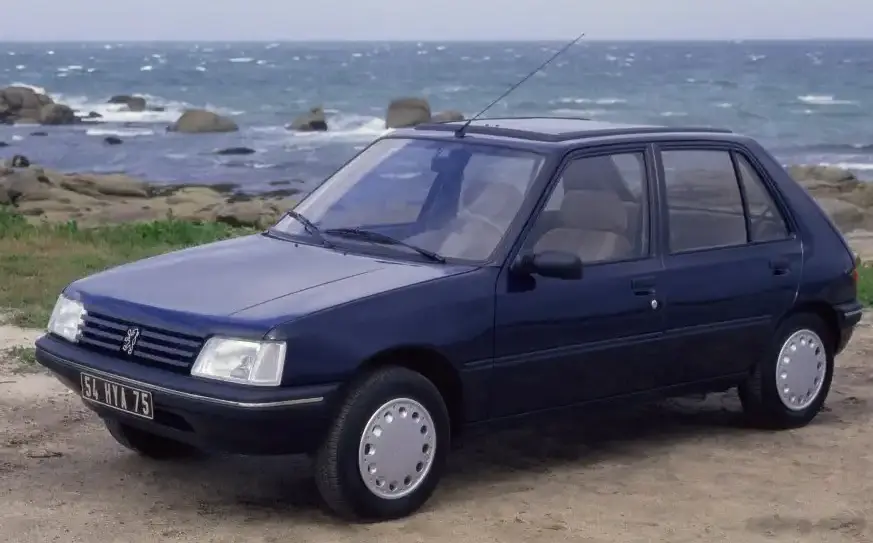
The Peugeot 205 I, specifically the 1.1-liter (49 horsepower) variant produced between 1987 and 1990, represents an entry-level offering within the highly successful 205 series. This model, designated as 20A/C following the 1987 facelift, played a crucial role in making the 205 accessible to a wider market, particularly in Europe where it competed directly with vehicles like the Renault 5 and Citroën AX. The 205, overall, was a significant departure for Peugeot, embracing a more modern, lightweight design compared to its predecessor, the 204. This particular 1.1L engine and trim level was designed for economy and practicality, prioritizing affordability over outright performance.
Technical Specifications
| Brand | Peugeot |
| Model | 205 |
| Generation | 205 I (20A/C, facelift 1987) |
| Type (Engine) | 1.1 (49 Hp) |
| Start of production | 1987 |
| End of production | 1990 |
| Powertrain Architecture | Internal Combustion engine |
| Body type | Hatchback |
| Fuel Type | Petrol (Gasoline) |
| Power | 49 Hp |
| Engine Model/Code | 109N XW7 |
| Engine aspiration | Naturally aspirated engine |
| Engine oil capacity | 4.5 l (4.76 US qt | 3.96 UK qt) |
| Coolant capacity | 5.8 l (6.13 US qt | 5.1 UK qt) |
Powertrain & Engine Architecture
The heart of this 205 variant is the Peugeot 109N XW7 engine, a 1.1-liter inline-four cylinder petrol engine. This engine is a naturally aspirated unit, meaning it doesn’t employ a turbocharger or supercharger. It features a single overhead camshaft (SOHC) valvetrain operating two valves per cylinder. Fuel delivery is managed by a single point fuel injection system, a relatively simple setup for the time, prioritizing reliability and cost-effectiveness over ultimate performance. The XW7 engine was known for its robustness, though it wasn’t particularly powerful. The engine’s design focused on maximizing fuel efficiency and minimizing emissions, aligning with the growing environmental concerns of the late 1980s. The engine is paired with a four-speed automatic transmission, a relatively uncommon option for this class of vehicle at the time, and further emphasizing the model’s focus on ease of use and accessibility. The automatic transmission was a three-speed unit, designed to provide smooth, if not particularly rapid, gear changes.
Driving Characteristics
The 1.1-liter engine and automatic transmission combination resulted in a driving experience geared towards urban commuting and relaxed cruising. With only 49 horsepower on tap, acceleration was modest, and overtaking required careful planning. The automatic transmission, while convenient, further reduced performance due to its inherent efficiency losses and limited gear selection. Gear ratios were optimized for fuel economy rather than spirited driving. The car felt most comfortable at lower speeds, and highway driving demanded a more deliberate approach. Compared to the more powerful 1.4, 1.6, and GTI versions of the 205, this variant was significantly slower. The manual transmission versions of the 1.1 offered a slightly more engaging driving experience, allowing the driver to better utilize the available power, but the automatic was favored by those prioritizing convenience.
Equipment & Trim Levels
The 1.1-liter automatic 205 typically represented the base trim level. Standard equipment was relatively sparse, reflecting its position as an affordable entry point into the 205 range. Interior upholstery was typically cloth, often in a simple, durable pattern. The dashboard featured basic instrumentation, including a speedometer, fuel gauge, and temperature gauge. Power steering was not standard, and air conditioning was rarely fitted. Optional extras included a sunroof, upgraded audio systems, and different wheel covers. The overall interior design was functional and practical, prioritizing durability and ease of maintenance. The exterior trim was also basic, with black plastic bumpers and relatively simple steel wheels with hubcaps being common features.
Chassis & Braking
The 205 I featured a relatively lightweight chassis, contributing to its nimble handling despite its modest power output. The suspension consisted of independent front suspension with MacPherson struts and a torsion beam rear axle. This setup provided a reasonable balance between ride comfort and handling. Braking was typically accomplished with disc brakes on the front wheels and drum brakes on the rear wheels. The braking system was adequate for the car’s performance, but lacked the stopping power of the larger, more powerful 205 variants. Stabilizer bars were often omitted from the base trim level, further contributing to a softer, more comfortable ride. The steering was unassisted, providing a direct feel but requiring more effort at low speeds.
Market Reception & Comparison
The 1.1-liter automatic 205 was generally well-received as an affordable and practical city car. Critics acknowledged its limitations in terms of performance, but praised its fuel efficiency and ease of driving. Compared to other trims in the 205 lineup, such as the 1.6 and GTI, this variant offered significantly lower running costs but lacked the excitement and performance of its more powerful siblings. The 1.9 TDI diesel version, introduced later, offered superior fuel economy and torque, but at a higher purchase price. The automatic transmission, while convenient, was often criticized for its sluggishness and impact on fuel economy compared to the manual gearbox. However, it appealed to drivers who preferred the convenience of an automatic in urban environments.
Legacy
The 1.1-liter automatic Peugeot 205 has become a relatively rare sight on the roads today. While the more powerful GTI and 1.6 models are highly sought after by enthusiasts, the base 1.1 variants are often overlooked. However, the XW7 engine is known for its durability and relative simplicity, making it a relatively reliable powertrain. Parts availability can be a challenge, but many components are still available through specialist suppliers. In the used car market, these models typically command low prices, making them an affordable entry point into classic Peugeot ownership. The 205, as a whole, is remembered as a landmark vehicle for Peugeot, and the 1.1-liter variant played a vital role in its success by making it accessible to a broader range of buyers.
