
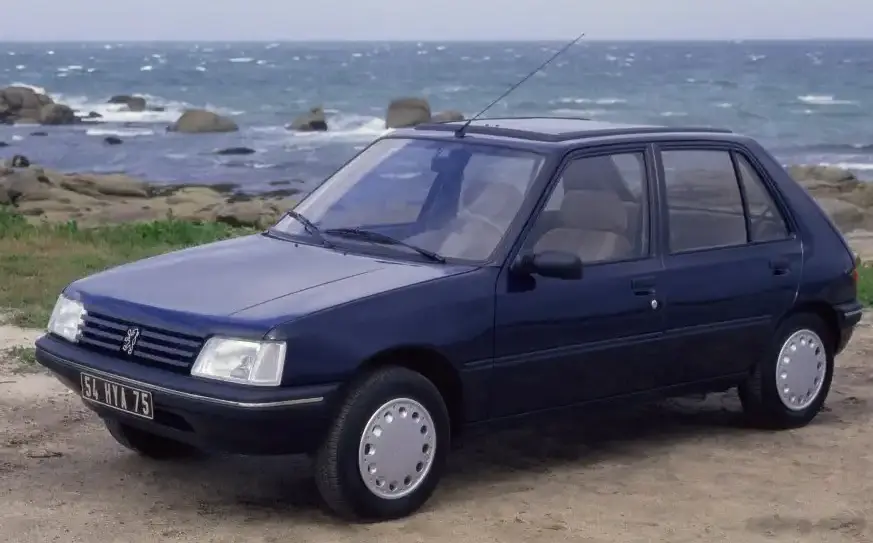
The Peugeot 205, launched in 1983, quickly became a cornerstone of the European supermini segment. The 205 I, encompassing the original production run and a facelift in 1987 (designated 20A/C), represented a significant departure from its predecessors, offering a blend of practicality, affordability, and surprisingly engaging driving dynamics. The 1.4-liter (60 horsepower) variant, produced from 1987 to 1989, occupied the entry-level position within the 205 range, serving as an accessible and economical option for a broad customer base. This model was particularly popular in France and other European markets where fuel efficiency and low running costs were prioritized.
Technical Specifications
| Brand | Peugeot |
| Model | 205 |
| Generation | 205 I (20A/C, facelift 1987) |
| Type (Engine) | 1.4 (60 Hp) |
| Start of production | 1987 |
| End of production | 1989 |
| Powertrain Architecture | Internal Combustion engine |
| Body type | Hatchback |
| Fuel Type | Petrol (Gasoline) |
| Power | 60 Hp |
| Engine Model/Code | 150D XY7, 150G XY7 |
| Engine aspiration | Naturally aspirated engine |
| Engine oil capacity | 5 l (5.28 US qt | 4.4 UK qt) |
| Coolant capacity | 5.8 l (6.13 US qt | 5.1 UK qt) |
Powertrain & Engine Architecture
The 1.4-liter engine, identified by codes 150D XY7 and 150G XY7, was a naturally aspirated, inline-four cylinder unit. It featured a single overhead camshaft (SOHC) valvetrain operating two valves per cylinder. Fuel delivery was managed by a single, down-draft carburetor – typically a Solex – a relatively simple system compared to the fuel injection found in higher-spec 205 models. This carburetor setup contributed to the engine’s affordability and ease of maintenance, but also limited its overall power output and responsiveness. The engine’s bore and stroke measured 76mm x 82mm, resulting in a displacement of 1360cc. The engine was designed for durability and low-end torque, prioritizing fuel economy over outright performance. The 1.4L engine was paired exclusively with a four-speed manual transmission in most markets, though a three-speed automatic transmission was offered as an optional extra, primarily in certain European countries.
Driving Characteristics
The 1.4-liter 205, particularly when equipped with the optional three-speed automatic transmission, offered a decidedly unhurried driving experience. With 60 horsepower on tap, acceleration was modest, and overtaking required careful planning. The automatic transmission, while providing convenience, further diminished performance due to its relatively slow shift times and conservative gear ratios. Compared to the more popular 1.6-liter and 1.9-liter versions of the 205, the 1.4 felt noticeably slower. The manual transmission version offered a slightly more engaging experience, allowing the driver to better utilize the engine’s limited power band. However, even with the manual, the 1.4 was primarily geared towards urban driving and shorter commutes. The suspension, while simple – typically featuring MacPherson struts at the front and a torsion beam rear axle – provided a comfortable ride, absorbing bumps and imperfections in the road reasonably well. Steering was light and precise, contributing to the 205’s reputation for nimble handling, even in this base specification.
Equipment & Trim Levels
The 1.4-liter 205 typically represented the base trim level. Standard equipment was fairly basic, reflecting its position as an affordable entry point into the 205 range. Interior appointments generally included cloth upholstery, a simple dashboard layout with analog gauges, and minimal exterior embellishments. Features like central locking, electric windows, and a sunroof were typically optional extras. The interior plastics were durable but utilitarian, prioritizing functionality over luxury. The 205’s interior design, however, was praised for its logical layout and driver-focused ergonomics. Optional extras could include upgraded seat fabrics, a radio cassette player, and even a basic air conditioning system, though these were relatively uncommon on the base 1.4 model.
Chassis & Braking
The 205’s chassis was a key element in its success. The lightweight construction, utilizing a monocoque body shell, contributed significantly to its agile handling. The front suspension employed MacPherson struts, while the rear utilized a torsion beam axle – a cost-effective and space-efficient design. Braking on the 1.4-liter model typically consisted of disc brakes at the front and drum brakes at the rear. The braking system was adequate for the car’s performance, but lacked the stopping power of the larger-engined, higher-spec 205 variants. Steering was unassisted, providing good feedback and a direct connection to the road. The relatively narrow tires, typically 165/70 R13, further emphasized the car’s focus on fuel efficiency and affordability rather than outright grip.
Market Reception & Comparison
The 1.4-liter 205 was generally well-received as an affordable and reliable city car. Critics acknowledged its modest performance but praised its fuel economy, ease of driving, and surprisingly nimble handling. Compared to its rivals, such as the Renault 5 and Fiat Uno, the 205 offered a more refined driving experience and a more modern interior. However, the 1.6-liter and 1.9-liter 205 models were significantly more popular, offering a better balance of performance and practicality. The automatic transmission version of the 1.4 was often criticized for its sluggishness and reduced fuel economy compared to the manual. In terms of reliability, the 1.4-liter engine proved to be robust and relatively trouble-free, provided it was regularly maintained. Its simple carburetor setup also made it easier and cheaper to repair than the fuel-injected engines found in higher-spec models.
Legacy
The Peugeot 205, in all its variants, left a lasting legacy on the automotive landscape. The 1.4-liter model, while not the most sought-after version today, remains a popular choice for classic car enthusiasts seeking an affordable and reliable entry point into the 205 ownership experience. The engine’s simplicity and durability mean that many examples are still on the road today, albeit often requiring regular maintenance and occasional repairs. The 1.4-liter 205 is often viewed as a practical and economical classic, ideal for everyday use. Its affordability and readily available parts make it a relatively easy car to maintain and restore. In the used car market, prices for well-maintained 1.4-liter 205s remain relatively low, making them an attractive option for those looking for a classic French hatchback.
