
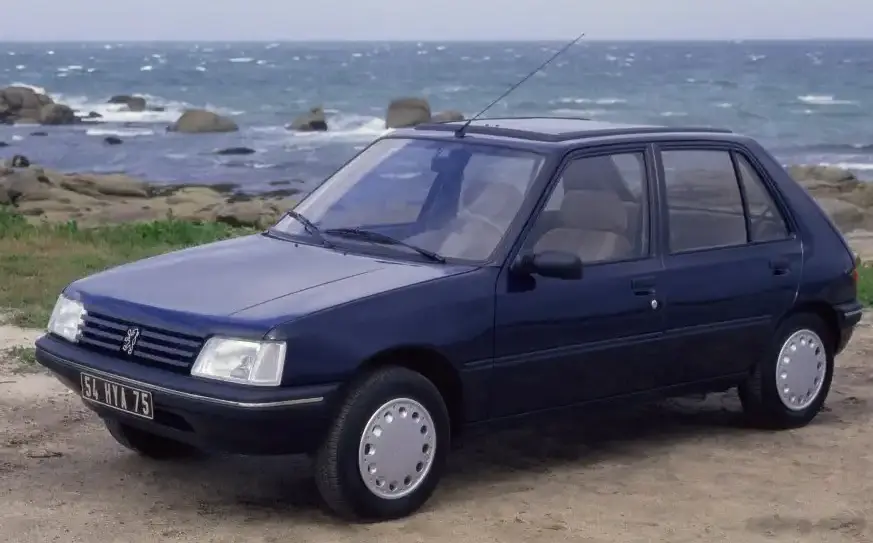
The Peugeot 205 I, specifically the 1.7 Diesel variant produced from 1987 to 1998 (following the 1987 facelift of the 20A/C series), represents a significant entry point into the hugely popular 205 range. This model was primarily aimed at the European market, where fuel efficiency and low running costs were paramount. It served as the workhorse of the lineup, offering practical transportation for a broad demographic, and was particularly popular with first-time car buyers and those seeking an economical daily driver. The 1.7 Diesel occupied the lower end of the 205 spectrum, positioned below the more powerful petrol variants like the 1.4, 1.6, and the performance-oriented GTI models.
Technical Specifications
| Brand | Peugeot |
| Model | 205 |
| Generation | 205 I (20A/C, facelift 1987) |
| Type (Engine) | 1.7 Diesel (60 Hp) |
| Start of production | 1987 |
| End of production | 1998 |
| Powertrain Architecture | Internal Combustion engine |
| Body type | Hatchback |
| Doors | 5 |
| Fuel Type | Diesel |
| Power | 60 Hp |
| Engine layout | Front, Transverse |
| Engine Model/Code | 161A XUD7 |
| Number of cylinders | 4 |
| Number of valves per cylinder | 2 |
| Engine aspiration | Naturally aspirated engine |
| Engine oil capacity | 4.5 l (4.76 US qt | 3.96 UK qt) |
| Coolant capacity | 8.3 l (8.77 US qt | 7.3 UK qt) |
Powertrain & Engine Architecture
The heart of the 205 1.7 Diesel is the XUD7 engine, specifically the 161A variant. This engine is a naturally aspirated, indirect injection diesel engine, renowned for its robustness and longevity. The XUD7 family of engines were widely used across various Peugeot and Citroën models during the 1980s and 1990s. The indirect injection system, while less efficient than direct injection, contributed to quieter operation and reduced emissions for the time. The engine features a cast iron block and cylinder head, contributing to its durability. It utilizes a Bosch rotary injection pump, delivering fuel to the pre-chamber where combustion is initiated. The 2-valve per cylinder configuration, operated by a single overhead camshaft, is a relatively simple design, further enhancing reliability. The 1.7L engine produces 60 horsepower and approximately 86 lb-ft of torque. The transmission paired with this engine is typically a four or five-speed manual gearbox, though a three-speed automatic transmission was also available, albeit less common. The automatic transmission, while offering convenience, noticeably impacted performance and fuel economy.
Driving Characteristics
The 205 1.7 Diesel, particularly in its automatic guise, was not designed for spirited driving. Acceleration was modest, with a 0-60 mph time estimated around 15-17 seconds. The focus was firmly on fuel economy and ease of driving. The engine’s torque characteristics meant that it felt relatively strong at low speeds, making it suitable for urban environments. However, overtaking maneuvers required careful planning. The automatic transmission, while smooth, had relatively long gear ratios, further diminishing acceleration. Compared to the manual transmission versions, the automatic suffered a noticeable performance penalty. The manual gearbox allowed drivers to better utilize the engine’s torque, resulting in a more responsive driving experience. Compared to the petrol-powered 205s, the diesel offered significantly better fuel economy, but at the expense of performance and refinement. The ride quality was typical of small hatchbacks of the era – firm but generally comfortable on smooth roads.
Equipment & Trim Levels
The 1.7 Diesel 205 typically came with a fairly basic level of equipment. Standard features generally included cloth upholstery, a simple dashboard layout, and manual windows and door locks. Power steering was not standard, though it was available as an option. The interior was functional and durable, prioritizing practicality over luxury. Higher trim levels, such as the “GR” (Grand Rallye) offered upgrades like upgraded interior trim, a more comprehensive instrument cluster, and potentially features like a sunroof. Optional extras included a radio, central locking, and metallic paint. The overall interior design was typical of French cars of the period, with a focus on ergonomics and ease of use.
Chassis & Braking
The 205 1.7 Diesel utilized a MacPherson strut front suspension and a torsion beam rear suspension. This setup provided a good balance between ride comfort and handling. The torsion beam rear suspension was a cost-effective solution that minimized complexity. Braking was typically accomplished with disc brakes on the front wheels and drum brakes on the rear. The braking system was adequate for the car’s performance, but lacked the stopping power of the higher-spec models with all-round disc brakes. Stabilizer bars were often omitted on the base models to further reduce cost, impacting handling slightly. The steering was unassisted on many models, providing a direct feel but requiring more effort at low speeds.
Market Reception & Comparison
The 205 1.7 Diesel was well-received in the European market as an affordable and economical car. Critics praised its fuel efficiency and reliability, but noted its lack of performance. Compared to other diesel-powered small cars of the time, such as the Renault 5 Diesel and the Fiat Uno Diesel, the 205 offered a slightly more refined driving experience and a more modern interior. However, it was often more expensive than its rivals. The 1.7 Diesel was significantly more economical than the petrol-powered 1.4 and 1.6 versions of the 205, making it a popular choice for those covering high mileages. The GTI models, while offering significantly more performance, were in a different price bracket and targeted a different demographic.
Legacy
The XUD7 engine, found in the 205 1.7 Diesel, has a reputation for exceptional durability. Many examples have exceeded 200,000 miles with minimal major repairs. The 205 1.7 Diesel remains a relatively affordable classic car today, and well-maintained examples are sought after by enthusiasts. While not a performance icon like the GTI, the 1.7 Diesel represents a significant part of the 205’s success story, providing practical and economical transportation for millions of drivers. Its simplicity and robust construction make it a relatively easy car to maintain, even for amateur mechanics. The availability of spare parts remains good, ensuring that these cars can continue to be enjoyed for years to come.
