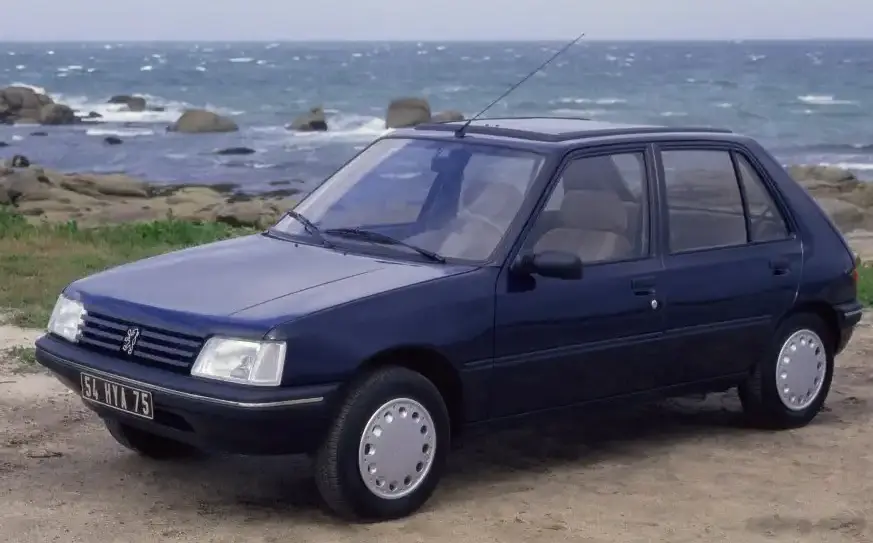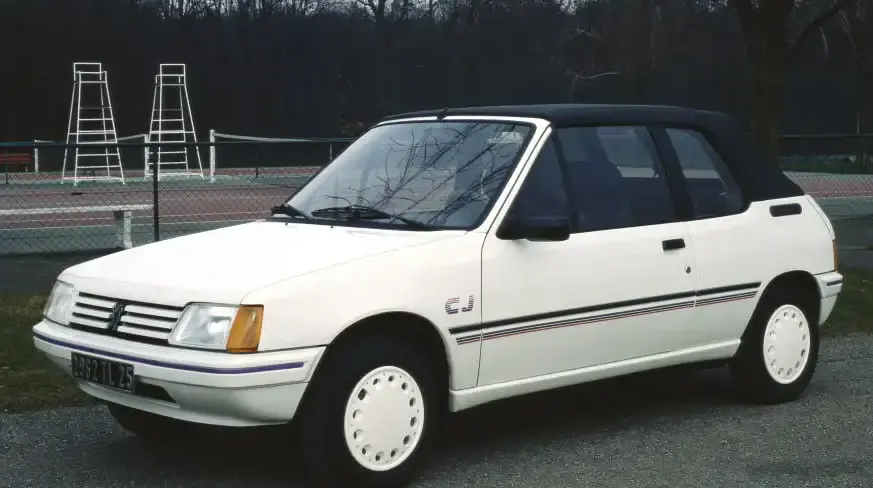
The Peugeot 205 I Cabrio 1.1 CJ (60 hp) was a popular entry-level variant of the iconic 205 Cabriolet, produced between 1989 and 1994. Falling within the 741B and 20D chassis codes, this model represented an accessible and stylish open-top motoring option within the broader 205 range, which was a cornerstone of Peugeot’s success in the supermini segment. The 205 Cabriolet, launched in 1986, brought open-air enjoyment to a wider audience, and the 1.1 CJ version served as the gateway to this experience for many buyers, particularly in European markets.
Technical Specifications
| Brand | Peugeot |
| Model | 205 |
| Generation | 205 I Cabrio (741B,20D) |
| Type (Engine) | 1.1 CJ (60 Hp) |
| Start of production | 1989 |
| End of production | 1994 |
| Powertrain Architecture | Internal Combustion engine |
| Body type | Cabriolet |
| Seats | 4 |
| Doors | 2 |
| Fuel consumption (urban) | 8.4 l/100 km (28 US mpg, 33.6 UK mpg, 11.9 km/l) |
| Fuel consumption (extra urban) | 5 l/100 km (47 US mpg, 56.5 UK mpg, 20 km/l) |
| Fuel Type | Petrol (Gasoline) |
| Acceleration 0 – 100 km/h | 14.6 sec |
| Acceleration 0 – 62 mph | 14.6 sec |
| Acceleration 0 – 60 mph | 13.9 sec |
| Maximum speed | 160 km/h (99.42 mph) |
| Weight-to-power ratio | 14.1 kg/Hp, 70.9 Hp/tonne |
| Weight-to-torque ratio | 9.5 kg/Nm, 105.2 Nm/tonne |
| Power | 60 Hp @ 6200 rpm |
| Power per litre | 53.4 Hp/l |
| Torque | 89 Nm @ 3800 rpm (65.64 lb.-ft. @ 3800 rpm) |
| Engine layout | Front, Transverse |
| Engine Model/Code | TU1M |
| Engine displacement | 1124 cm3 (68.59 cu. in.) |
| Number of cylinders | 4 |
| Engine configuration | Inline |
| Cylinder Bore | 72 mm (2.83 in.) |
| Piston Stroke | 69 mm (2.72 in.) |
| Compression ratio | 9.4:1 |
| Number of valves per cylinder | 2 |
| Fuel injection system | Single-point injection |
| Engine aspiration | Naturally aspirated engine |
| Valvetrain | OHC |
| Engine oil capacity | 3.5 l (3.7 US qt | 3.08 UK qt) |
| Coolant | 5.8 l (6.13 US qt | 5.1 UK qt) |
| Kerb Weight | 846 kg (1865.11 lbs.) |
| Max. weight | 1210 kg (2667.59 lbs.) |
| Max load | 364 kg (802.48 lbs.) |
| Trunk (boot) space – minimum | 216 l (7.63 cu. ft.) |
| Trunk (boot) space – maximum | 564 l (19.92 cu. ft.) |
| Fuel tank capacity | 50 l (13.21 US gal | 11 UK gal) |
| Length | 3705 mm (145.87 in.) |
| Width | 1572 mm (61.89 in.) |
| Height | 1375 mm (54.13 in.) |
| Wheelbase | 2420 mm (95.28 in.) |
| Front track | 1350 mm (53.15 in.) |
| Rear (Back) track | 1305 mm (51.38 in.) |
| Minimum turning circle | 10.3 m (33.79 ft.) |
| Drivetrain Architecture | The Internal combustion engine (ICE) drives the front wheels of the vehicle. |
| Drive wheel | Front wheel drive |
| Number of gears and type of gearbox | 5 gears, manual transmission |
| Front suspension | Independent, type McPherson with coil spring and anti-roll bar |
| Rear suspension | Torsion |
| Front brakes | Disc |
| Rear brakes | Drum |
| Steering type | Steering rack and pinion |
| Tires size | 165/70 R13 |
| Wheel rims size | 13 |
Powertrain & Engine Architecture
The 1.1 CJ engine, designated with the code TU1M, was a naturally aspirated, inline-four cylinder petrol engine. It featured a single overhead camshaft (OHC) and a relatively simple single-point fuel injection system. This setup was chosen for its cost-effectiveness and reliability, making it suitable for the entry-level 205 Cabriolet. The engine displaced 1124 cc (68.59 cubic inches) and produced 60 horsepower at 6200 rpm and 89 Nm (65.64 lb-ft) of torque at 3800 rpm. The engine’s modest output was paired with a five-speed manual transmission, which was the standard offering for this variant. The TU1M engine was a common sight in various Peugeot and Citroën models of the era, known for its durability and ease of maintenance.
Driving Characteristics
The 1.1 CJ-equipped 205 Cabriolet offered a relaxed and undemanding driving experience. Acceleration was not its strong suit, taking approximately 14.6 seconds to reach 62 mph (100 km/h). However, the car was perfectly adequate for urban driving and leisurely country roads. The five-speed gearbox allowed drivers to keep the engine in its optimal power band, although frequent downshifts were often necessary for overtaking or climbing hills. Compared to the more powerful 1.6 and 1.9-liter versions of the 205, the 1.1 CJ felt noticeably slower, but it offered better fuel economy and a lighter feel. The relatively low weight of the 205 Cabriolet helped to mitigate the effects of the engine’s modest power output, providing a reasonably nimble and enjoyable driving experience.
Equipment & Trim Levels
The 1.1 CJ Cabriolet typically came with a basic level of equipment, reflecting its position as the entry-level model. Standard features included cloth upholstery, basic instrumentation, and manual windows and door locks. The dashboard was typically finished in a simple plastic trim. Optional extras included upgraded upholstery, a radio/cassette player, and power steering. The convertible top was manually operated, adding to the car’s simplicity and affordability. The interior space was relatively compact, typical of supermini convertibles, but offered sufficient room for two adults and occasional rear passengers.
Chassis & Braking
The 205 Cabriolet utilized a McPherson strut front suspension with a torsion beam rear suspension. This setup provided a good balance of ride comfort and handling. The front brakes were disc brakes, while the rear brakes were drum brakes, a common configuration for cars in this price range during the late 1980s and early 1990s. The steering was a rack and pinion system, providing precise and responsive steering feel. The car’s relatively light weight contributed to its agile handling characteristics. Stabilizer bars were fitted to improve body roll during cornering.
Market Reception & Comparison
The Peugeot 205 I Cabrio 1.1 CJ was generally well-received as an affordable and stylish entry into the convertible market. Critics praised its nimble handling and attractive design, but noted its modest performance. Compared to the higher-spec 205 Cabriolet models, the 1.1 CJ offered significantly better fuel economy, making it a popular choice for drivers who prioritized efficiency. Its reliability was also a strong point, thanks to the robust and well-proven TU1M engine. The 1.1 CJ competed with other small convertibles of the era, such as the Fiat Punto Cabriolet and the Renault 5 Cabriolet.
Legacy
The Peugeot 205 I Cabrio 1.1 CJ remains a popular choice among classic car enthusiasts today. The TU1M engine is known for its durability and relatively simple maintenance requirements. Parts availability is generally good, although some trim-specific components may be difficult to find. Well-maintained examples of the 1.1 CJ Cabriolet are increasingly sought after as affordable and charming classic cars. The 205 Cabriolet, in all its variants, is remembered as a pivotal model in Peugeot’s history, helping to establish the brand as a leader in the small car segment and bringing open-top motoring to a wider audience.