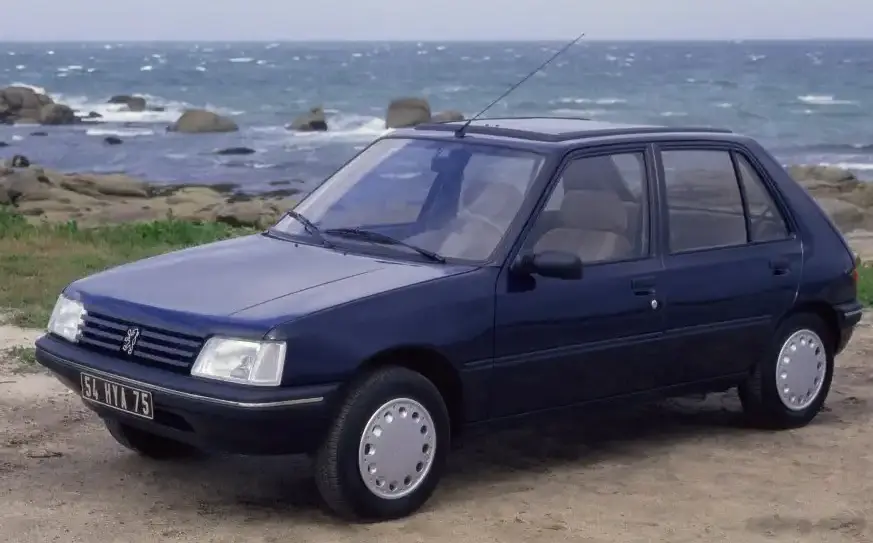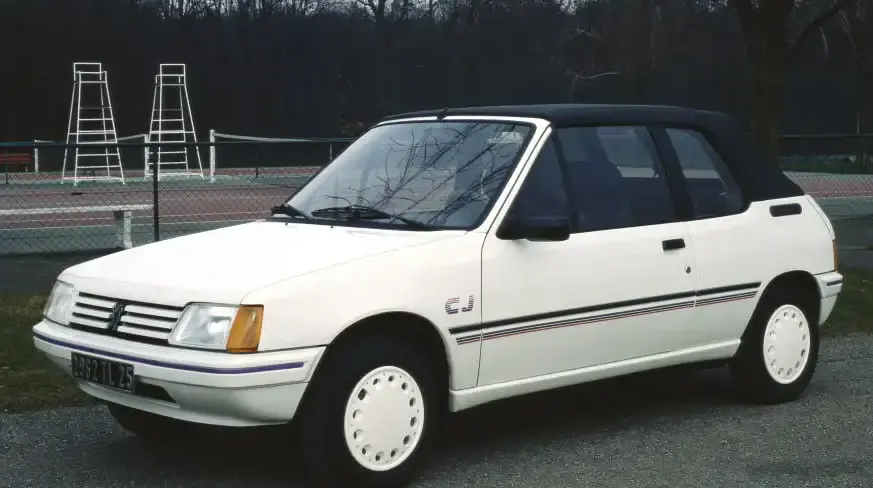
The Peugeot 205 I Cabrio 1.9 CTI, produced between 1987 and 1994, represents a compelling blend of French style and spirited performance within the iconic 205 range. Falling within the 741B/20D chassis code designation for the Cabriolet variant, the 1.9 CTI occupied a premium position in the lineup, offering a more potent engine and enhanced features compared to lower-spec models like the 1.0 or 1.4-liter versions. It was a popular choice for drivers seeking an open-top experience with a degree of refinement and driving enjoyment. The 205 Cabriolet, in general, was a significant success for Peugeot, extending the appeal of the hugely popular 205 hatchback into the convertible market.
Technical Specifications
| Brand | Peugeot |
| Model | 205 |
| Generation | 205 I Cabrio (741B,20D) |
| Type (Engine) | 1.9 CTI (102 Hp) |
| Start of production | 1987 |
| End of production | 1994 |
| Powertrain Architecture | Internal Combustion engine |
| Body type | Cabriolet |
| Seats | 4 |
| Doors | 2 |
| Fuel consumption (urban) | 10.7 l/100 km (22 US mpg, 26.4 UK mpg, 9.3 km/l) |
| Fuel consumption (extra urban) | 6.8 l/100 km (34.6 US mpg, 41.5 UK mpg, 14.7 km/l) |
| Fuel Type | Petrol (Gasoline) |
| Acceleration 0 – 100 km/h | 10.6 sec |
| Acceleration 0 – 62 mph | 10.6 sec |
| Acceleration 0 – 60 mph | 10.1 sec |
| Maximum speed | 185 km/h (114.95 mph) |
| Weight-to-power ratio | 9.1 kg/Hp, 109.7 Hp/tonne |
| Weight-to-torque ratio | 6.4 kg/Nm, 155.9 Nm/tonne |
| Power | 102 Hp @ 6000 rpm |
| Power per litre | 53.5 Hp/l |
| Torque | 145 Nm @ 3000 rpm (106.95 lb.-ft. @ 3000 rpm) |
| Engine layout | Front, Transverse |
| Engine Model/Code | XU9JA |
| Engine displacement | 1905 cm3 (116.25 cu. in.) |
| Number of cylinders | 4 |
| Engine configuration | Inline |
| Cylinder Bore | 83 mm (3.27 in.) |
| Piston Stroke | 88 mm (3.46 in.) |
| Compression ratio | 8.4:1 |
| Number of valves per cylinder | 2 |
| Fuel injection system | Multi-port manifold injection |
| Engine aspiration | Naturally aspirated engine |
| Valvetrain | OHC |
| Engine oil capacity | 5 l (5.28 US qt | 4.4 UK qt) |
| Coolant capacity | 6.6 l (6.97 US qt | 5.81 UK qt) |
| Kerb Weight | 930 kg (2050.3 lbs.) |
| Max. weight | 1265 kg (2788.85 lbs.) |
| Max load | 335 kg (738.55 lbs.) |
| Trunk (boot) space – minimum | 216 l (7.63 cu. ft.) |
| Trunk (boot) space – maximum | 564 l (19.92 cu. ft.) |
| Fuel tank capacity | 50 l (13.21 US gal | 11 UK gal) |
| Length | 3705 mm (145.87 in.) |
| Width | 1589 mm (62.56 in.) |
| Height | 1375 mm (54.13 in.) |
| Wheelbase | 2420 mm (95.28 in.) |
| Front track | 1395 mm (54.92 in.) |
| Rear track | 1330 mm (52.36 in.) |
| Drivetrain Architecture | Front wheel drive |
| Number of gears | 5 |
| Gearbox type | Manual transmission |
| Front suspension | Independent, McPherson with coil spring and anti-roll bar |
| Rear suspension | Torsion |
| Front brakes | Ventilated discs |
| Rear brakes | Drum |
| Steering type | Steering rack and pinion |
| Power steering | Hydraulic |
| Tires size | 185/60 R14 |
| Wheel rims size | 14 |
Powertrain & Engine Architecture
The heart of the 205 1.9 CTI is the XU9JA engine, a 1.9-liter inline-four cylinder powerplant. This engine is a member of Peugeot-Citroën’s XU series, known for its robustness and relatively simple design. The XU9JA features a single overhead camshaft (OHC) operating two valves per cylinder. Fuel delivery is managed by a multi-port fuel injection system, providing a good balance between performance and fuel efficiency for its time. The engine produces 102 horsepower at 6000 rpm and 145 Nm (107 lb-ft) of torque at 3000 rpm. The engine’s transverse mounting and front-wheel drive configuration were typical for European hatchbacks of the era. A five-speed manual transmission was the only gearbox option available with this engine, providing precise control and enhancing the driving experience.
Driving Characteristics
The 1.9 CTI offered a noticeable step up in performance compared to the lower-displacement 205 Cabriolet models. While not a sports car in the modern sense, the 1.9-liter engine provided ample power for spirited driving, particularly on winding roads. The five-speed manual transmission allowed drivers to keep the engine in its optimal power band. Acceleration from 0 to 60 mph took around 10.1 seconds, and the car could reach a top speed of 115 mph. The relatively light weight of the 205 – around 2050 lbs – contributed to its nimble handling. The steering was precise, and the suspension provided a comfortable ride without sacrificing too much handling capability. Compared to the 1.6-liter versions, the 1.9 CTI felt significantly more responsive, especially during overtaking maneuvers.
Equipment & Trim Levels
The CTI trim level represented a well-equipped version of the 205 Cabriolet. Standard features typically included power steering, alloy wheels, a more refined interior trim, and upgraded seats. The interior often featured cloth upholstery, although leather was available as an option. Additional options could include a sunroof, upgraded sound system, and central locking. The dashboard layout was functional and driver-focused, with clear instrumentation. The CTI trim aimed to provide a more premium experience than the base models, appealing to buyers who wanted a stylish and comfortable open-top car.
Chassis & Braking
The 205 Cabriolet utilized a McPherson strut front suspension with coil springs and an anti-roll bar, providing good handling and ride comfort. The rear suspension employed a torsion beam setup, which was a cost-effective and space-efficient solution. Braking duties were handled by ventilated discs at the front and drum brakes at the rear. While adequate for the car’s performance, the rear drum brakes were a point of criticism compared to the all-disc setups found on some higher-performance models. The steering system was a rack-and-pinion setup, offering precise and responsive steering feel.
Market Reception & Comparison
The Peugeot 205 1.9 CTI was generally well-received by automotive critics. It was praised for its stylish design, enjoyable driving experience, and relatively affordable price. Compared to the lower-spec 205 Cabriolet models, the 1.9 CTI offered a significant performance upgrade, making it a more appealing option for drivers who enjoyed spirited driving. Fuel economy was reasonable for the time, averaging around 22 mpg in the city and 35 mpg on the highway. Reliability was generally good, although regular maintenance was essential to keep the engine running smoothly. The 1.9 CTI competed with other small convertibles of the era, such as the Fiat Punto Cabriolet and the Renault 5 Cabriolet.
Legacy
The Peugeot 205 1.9 CTI remains a popular classic car today, appreciated for its timeless design and enjoyable driving characteristics. The XU9JA engine is known for its durability, and well-maintained examples can still provide reliable service. However, like any classic car, the 205 CTI requires regular maintenance and attention to prevent corrosion. Parts availability can be a challenge, but a dedicated community of enthusiasts ensures that spares are still obtainable. The 205 CTI represents a high point in Peugeot’s history, and it continues to be a cherished car for many enthusiasts.