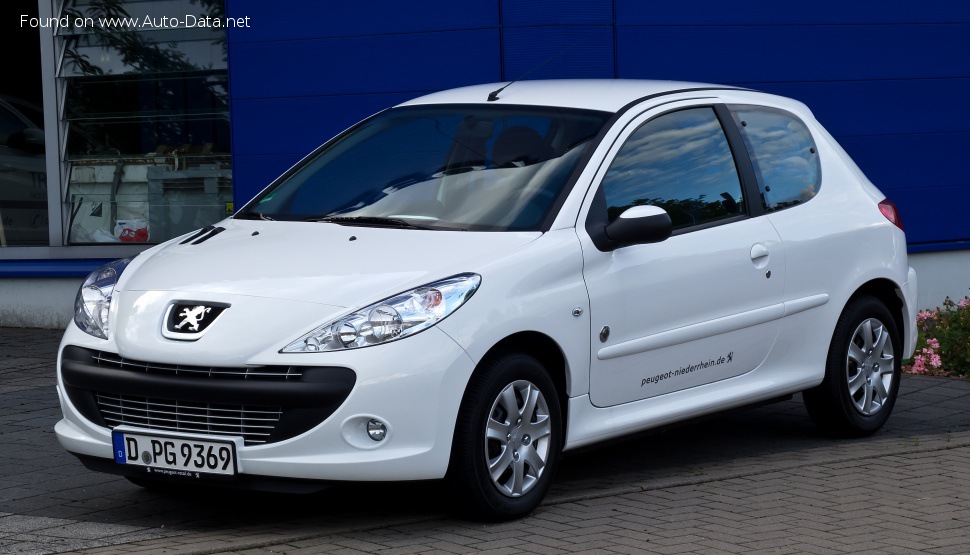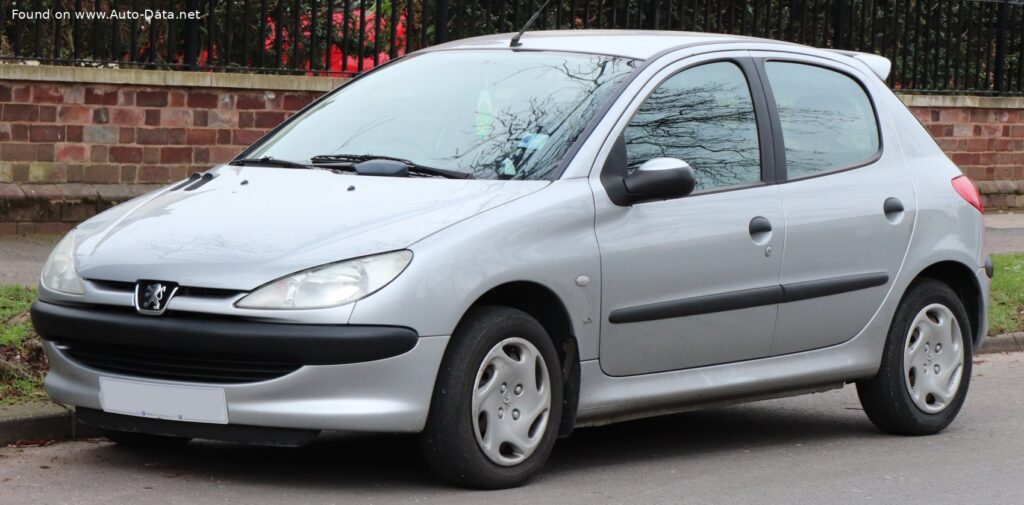
The Peugeot 206 1.4 HDi, producing 68 horsepower, was a mainstay of the 206 range from 2001 to 2003. Positioned as the entry-level diesel variant within the second-generation 206 (T1 series), it offered a compelling blend of fuel efficiency and affordability. This model played a significant role in establishing the 206 as a popular choice in the European supermini segment, particularly for drivers seeking low running costs. It was built on the Peugeot 206 platform, sharing its basic architecture with the Citroën 206, and later, the Peugeot 207.
The 1.4 HDi Powertrain & Engine Architecture
The heart of the 206 1.4 HDi is the 8HX (DV4TD) engine, a 1.4-liter inline-four cylinder diesel. This engine is a representative of early common-rail direct injection technology, offering improved refinement and efficiency over older diesel designs. The DV4TD engine family was widely used across PSA Peugeot Citroën vehicles during this period. It features a single overhead camshaft (SOHC) valvetrain operating two valves per cylinder. The engine’s key specifications include a bore of 73.7 mm, a stroke of 82 mm, and a compression ratio of 17.9:1.
The fuel injection system utilizes a diesel common rail system, delivering fuel at extremely high pressure directly into the combustion chamber. This allows for precise control of fuel delivery, optimizing combustion and reducing emissions. A turbocharger with an intercooler is employed to increase power output and improve engine responsiveness. The intercooler cools the compressed air from the turbocharger, increasing its density and further enhancing performance. Engine oil capacity is 3.75 liters (3.96 US quarts), and the recommended oil specification should be consulted in the vehicle’s owner’s manual.
The 206 1.4 HDi was exclusively offered with a five-speed manual transmission. This transmission was chosen to maximize fuel economy and provide a direct driving experience, aligning with the target audience’s priorities. The gearbox is a standard, non-synchronized setup, designed for durability and ease of maintenance.
Driving Characteristics
The 206 1.4 HDi, with its 68 horsepower and 150 Nm (110.63 lb-ft) of torque, provided adequate, though not exhilarating, performance. Acceleration from 0 to 100 km/h (0-62 mph) took approximately 14.7 seconds, and the top speed was around 168 km/h (104.39 mph). The engine’s torque peak at 1750 rpm meant that it felt relatively responsive in everyday driving situations, particularly for overtaking at lower speeds. However, compared to the more powerful petrol variants of the 206, such as the 1.6 or 2.0-liter engines, the 1.4 HDi felt noticeably slower. The five-speed manual transmission allowed drivers to keep the engine in its optimal power band, but required frequent gear changes to maintain momentum, especially when climbing hills or carrying a full load.
The driving experience was characterized by its fuel efficiency and relatively quiet operation for a diesel engine. The turbocharger minimized turbo lag, providing a reasonably linear power delivery. The suspension, tuned for comfort, absorbed bumps and imperfections in the road surface effectively, making it a pleasant car to drive on a daily basis.
Equipment & Trim Levels
The 206 1.4 HDi typically came with a basic level of equipment, reflecting its position as the entry-level diesel model. Standard features generally included power steering, central locking, and an immobilizer. Interior upholstery was typically cloth, and the dashboard featured a simple, functional design. Air conditioning, alloy wheels, and electric windows were often available as optional extras, allowing buyers to customize the car to their preferences. Higher trim levels, such as the ‘LX’ or ‘GLX’, added features like upgraded interior trim, a CD player, and sometimes, rear headrests.
Safety features were relatively basic for the time, typically including ABS (Anti-lock Braking System) and driver and passenger airbags. The 206 scored reasonably well in European crash tests, but lacked some of the advanced safety features found in more expensive vehicles.
Chassis & Braking
The 206 1.4 HDi utilized a front-wheel-drive layout with a MacPherson strut front suspension and a torsion beam rear suspension. This suspension setup provided a good balance between ride comfort and handling. The torsion beam rear suspension was a cost-effective solution that minimized complexity and weight. The front brakes were ventilated discs, providing adequate stopping power, while the rear brakes were typically solid discs. The steering was a hydraulic power steering system, offering a light and responsive feel. Tire size was commonly 175/65 R13.
The kerb weight of the 206 1.4 HDi was approximately 975 kg (2149.51 lbs), contributing to its relatively good fuel economy. The weight distribution was generally well-balanced, enhancing handling stability.
Market Reception & Comparison
The Peugeot 206 1.4 HDi was generally well-received by critics and consumers alike. It was praised for its exceptional fuel economy, low running costs, and comfortable ride. However, it was also criticized for its relatively slow performance and basic interior. Compared to the petrol-powered 206 models, the 1.4 HDi offered significantly better fuel economy but lacked the same level of performance. Compared to other diesel superminis of the time, such as the Renault Clio 1.5 dCi and the Volkswagen Polo 1.4 TDI, the 206 1.4 HDi offered a competitive package in terms of price, fuel economy, and reliability.
Fuel consumption figures were impressive, with combined fuel economy averaging around 4.3 l/100 km (54.7 US mpg, 65.7 UK mpg). This made it an attractive option for drivers who covered high mileages or were concerned about fuel costs.
Technical Specifications
| Brand | Peugeot |
| Model | 206 |
| Type (Engine) | 1.4 HDi (68 Hp) |
| Start of production | 2001 |
| End of production | 2003 |
| Powertrain Architecture | Internal Combustion engine |
| Body type | Hatchback |
| Seats | 5 |
| Doors | 3-5 |
| Fuel consumption (urban) | 5.5 l/100 km (42.8 US mpg, 51.4 UK mpg) |
| Fuel consumption (extra urban) | 3.6 l/100 km (65.3 US mpg, 78.5 UK mpg) |
| Fuel consumption (combined) | 4.3 l/100 km (54.7 US mpg, 65.7 UK mpg) |
| Fuel Type | Diesel |
| Acceleration 0 – 100 km/h | 14.7 sec |
| Acceleration 0 – 62 mph | 14.7 sec |
| Acceleration 0 – 60 mph | 14 sec |
| Maximum speed | 168 km/h (104.39 mph) |
| Weight-to-power ratio | 14.3 kg/Hp |
| Weight-to-torque ratio | 6.5 kg/Nm |
| Power | 68 Hp @ 4000 rpm |
| Torque | 150 Nm @ 1750 rpm (110.63 lb.-ft. @ 1750 rpm) |
| Engine layout | Front, Transverse |
| Engine Model/Code | 8HX DV4TD |
| Engine displacement | 1398 cm3 (85.31 cu. in.) |
| Number of cylinders | 4 |
| Engine configuration | Inline |
| Cylinder Bore | 73.7 mm (2.9 in.) |
| Piston Stroke | 82 mm (3.23 in.) |
| Compression ratio | 17.9:1 |
| Number of valves per cylinder | 2 |
| Fuel injection system | Diesel Commonrail |
| Engine aspiration | Turbocharger, Intercooler |
| Valvetrain | DOHC |
| Engine oil capacity | 3.75 l (3.96 US qt | 3.3 UK qt) |
| Kerb Weight | 975 kg (2149.51 lbs.) |
| Max. weight | 1525 kg (3362.05 lbs.) |
| Trunk (boot) space – minimum | 245 l (8.65 cu. ft.) |
| Trunk (boot) space – maximum | 1130 l (39.91 cu. ft.) |
| Fuel tank capacity | 50 l (13.21 US gal | 11 UK gal) |
| Length | 3835 mm (150.98 in.) |
| Width | 1652 mm (65.04 in.) |
| Height | 1428 mm (56.22 in.) |
| Wheelbase | 2442 mm (96.14 in.) |
| Number of gears and type of gearbox | 5 gears, manual transmission |
Legacy
The Peugeot 206 1.4 HDi powertrain proved to be relatively reliable, with many examples still on the road today. The DV4TD engine is known for its durability, although regular maintenance is essential to prevent issues such as turbocharger failure and injector problems. In the used car market, the 206 1.4 HDi remains a popular choice for budget-conscious buyers seeking a fuel-efficient and practical supermini. Its low running costs and simple mechanical design make it an attractive option for those who prioritize affordability and reliability over performance and luxury.
However, potential buyers should be aware of the age-related issues common to older vehicles, such as corrosion and wear and tear on suspension components. A thorough inspection by a qualified mechanic is recommended before purchasing a used 206 1.4 HDi.