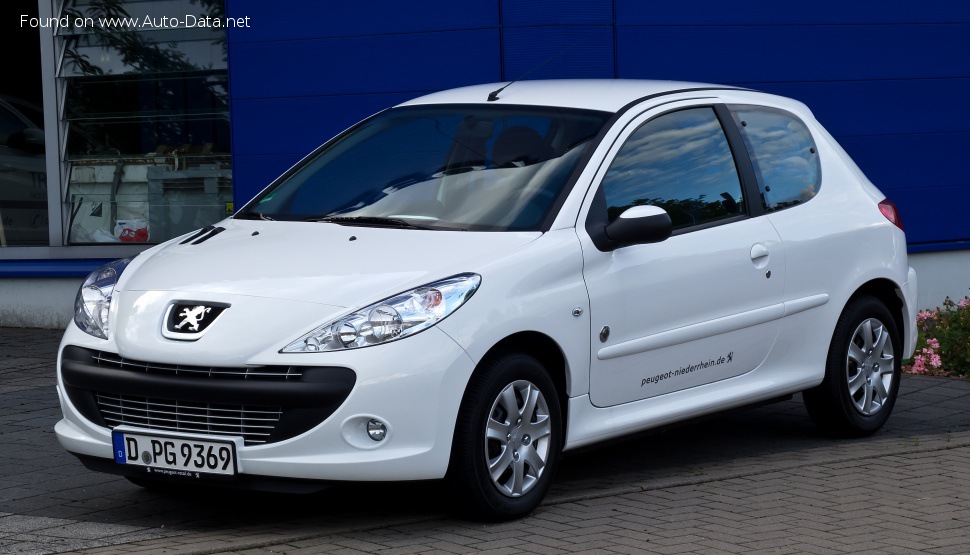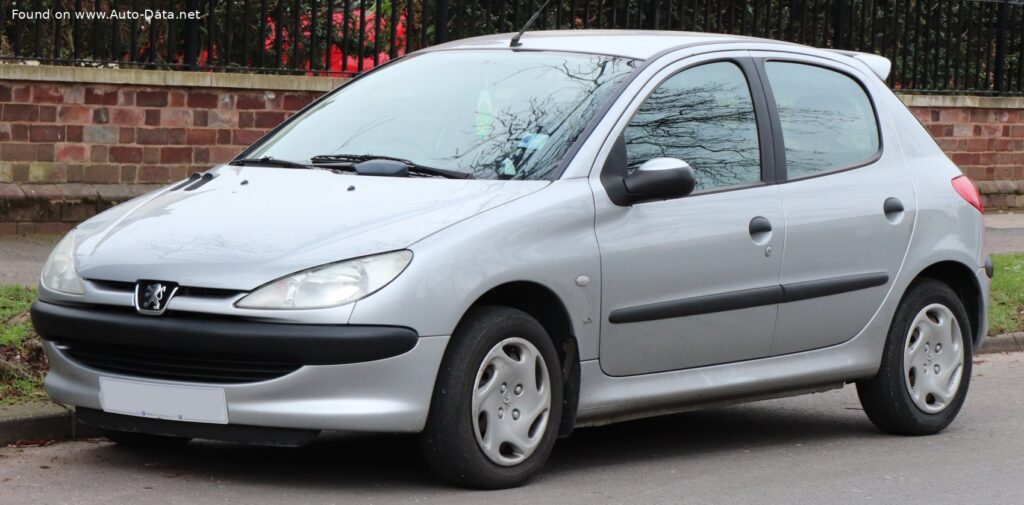
The Peugeot 206 1.4i Automatic, produced between 1998 and 2003, represented an entry-level offering within the highly successful 206 range. Part of the first generation (T1 platform), this variant aimed to provide affordable and convenient transportation, particularly appealing to drivers prioritizing ease of use over outright performance. It occupied the lower end of the 206 lineup, positioned below the more powerful 1.6 and 2.0-liter engine options, as well as the diesel variants. The 1.4i Automatic was available in both 3-door and 5-door hatchback configurations, catering to a broad range of customer needs.
The 1.4i Automatic: Positioning and Target Audience
The 1.4i Automatic trim was specifically designed for drivers seeking a comfortable and uncomplicated driving experience. It was often favored by new drivers, urban commuters, and those who preferred the convenience of an automatic transmission. Compared to the manual transmission 1.4i, the automatic version traded some responsiveness for ease of operation. Against the higher-spec 1.6 and 2.0-liter models, the 1.4i Automatic offered a more economical purchase price and lower running costs, albeit at the expense of acceleration and overall performance. The diesel variants, such as the 1.9D and later the 2.0HDi, provided superior fuel economy but typically carried a higher initial cost and potentially more complex maintenance requirements.
Powertrain & Engine Architecture
The heart of the 206 1.4i Automatic is the KFX (TU3JP) engine, a 1361cc inline-four cylinder petrol engine. This engine utilizes a naturally aspirated intake and a multi-port fuel injection system. The engine’s valvetrain features an overhead camshaft (OHC) design with two valves per cylinder. The KFX engine is known for its relative simplicity and durability, although it isn’t renowned for high performance. It produces a maximum power output of 75 horsepower (hp) at 5800 rpm and 111 Newton-meters (81.87 lb-ft) of torque at 3400 rpm. The compression ratio is 9.3:1.
Crucially, this variant is paired with a four-speed automatic transmission. This transmission, while providing convenience, is not known for its particularly quick shifts or fuel efficiency compared to more modern automatic gearboxes. The gear ratios are optimized for smooth cruising and acceptable acceleration in typical urban driving conditions. The transmission is a conventional hydraulic automatic, lacking the electronic controls found in later designs. The engine oil capacity is 3 liters (3.17 US qt / 2.64 UK qt) and requires a specification appropriate for Peugeot engines of the period. The cooling system holds 7 liters (7.4 US qt / 6.16 UK qt) of coolant.
Driving Characteristics
The driving experience in the 206 1.4i Automatic is best described as relaxed and undemanding. Acceleration from 0 to 60 mph takes approximately 14.1 seconds, and 0-100 km/h in 14.8 seconds, making it noticeably slower than the manual transmission version or the higher-powered models. The automatic transmission contributes to a smoother, albeit less engaging, driving experience. The four-speed gearbox means the engine can feel strained at higher speeds, and overtaking maneuvers require careful planning. The power delivery is linear, with peak torque arriving at 3400 rpm. The weight-to-power ratio of 12.7 kg/hp and weight-to-torque ratio of 8.6 kg/Nm reflect the car’s modest performance capabilities. In city driving, the automatic transmission shines, simplifying stop-and-go traffic. However, on winding roads or during more spirited driving, the lack of manual control and the relatively slow gear changes become more apparent.
Equipment & Trim Levels
The standard equipment level on the 206 1.4i Automatic varied slightly depending on the market and year of production. Generally, it included central locking, power steering, and an adjustable steering column. Interior upholstery was typically cloth, with a relatively basic dashboard layout. Air conditioning was often an optional extra, as were electric windows and alloy wheels. Safety features included an Anti-lock Braking System (ABS) as standard equipment. Higher trim levels, often denoted by suffixes like ‘LX’ or ‘GLX’, added features such as upgraded upholstery, a CD player, and additional exterior trim. The 3-door version often appealed to younger buyers, while the 5-door offered greater practicality for families.
Chassis & Braking
The 206 1.4i Automatic utilizes a front-wheel-drive layout with a MacPherson strut suspension at the front and a torsion beam suspension at the rear. This suspension setup provides a reasonable balance between comfort and handling, although it is not particularly sporty. The front brakes are discs, providing adequate stopping power, while the rear brakes are drums, a cost-saving measure common in this segment. The steering is a hydraulic power-assisted rack and pinion system, offering light and easy steering feel. The standard tire size is 165/70 R13, fitted to 13-inch steel wheels, although alloy wheels were available as an option. The kerb weight of 950 kg (2094.39 lbs) contributes to the car’s relatively nimble handling.
Market Reception & Comparison
The Peugeot 206 1.4i Automatic was generally well-received as a practical and affordable city car. Critics praised its comfortable ride, easy-to-use controls, and relatively low running costs. However, the automatic transmission was often criticized for its sluggishness and lack of responsiveness. Fuel economy figures are approximately 6.3 l/100 km (37.3 US mpg / 44.8 UK mpg), which is reasonable for a car of this type and age, but less efficient than the manual version or the diesel alternatives. Reliability is generally good, although regular maintenance is essential to prevent issues with the engine and transmission. Compared to rivals like the Renault Clio Automatic and the Ford Fiesta Automatic, the 206 offered a stylish design and a comfortable interior, but often lacked the refinement of some competitors.
Technical Specifications
| Brand | Peugeot |
| Model | 206 |
| Type | 1.4i (75 Hp) Automatic |
| Start of production | 1998 |
| End of production | 2003 |
| Engine Code | KFX TU3JP |
| Engine Displacement | 1361 cm3 (83.05 cu. in.) |
| Number of Cylinders | 4 |
| Power | 75 Hp @ 5800 rpm |
| Torque | 111 Nm @ 3400 rpm (81.87 lb.-ft. @ 3400 rpm) |
| Fuel Type | Petrol (Gasoline) |
| Transmission | 4-speed Automatic |
| Drive Wheels | Front Wheel Drive |
| Acceleration 0-60 mph | 14.1 sec |
| Acceleration 0-100 km/h | 14.8 sec |
| Maximum Speed | 160 km/h (99.42 mph) |
| Kerb Weight | 950 kg (2094.39 lbs) |
| Fuel Consumption (Urban) | 10 l/100 km (23.5 US mpg) |
| Fuel Consumption (Extra Urban) | 5.6 l/100 km (42 US mpg) |
| Fuel Consumption (Combined) | 6.3 l/100 km (37.3 US mpg) |
| Fuel Tank Capacity | 50 l (13.21 US gal) |
| Trunk Space (Minimum) | 245 l (8.65 cu. ft.) |
| Trunk Space (Maximum) | 1130 l (39.91 cu. ft.) |
Legacy
The Peugeot 206 1.4i Automatic remains a relatively common sight on used car markets today. The KFX engine is generally considered reliable, although regular maintenance is crucial. The automatic transmission, while not the most sophisticated, can provide years of service with proper care. Parts availability is generally good, and repair costs are relatively low. However, potential buyers should be aware of common issues such as oil leaks and wear in the suspension components. The 206’s enduring popularity is a testament to its stylish design, practicality, and affordability. While it may not offer the performance or refinement of more modern vehicles, the 1.4i Automatic continues to provide a comfortable and convenient driving experience for those seeking a budget-friendly city car.