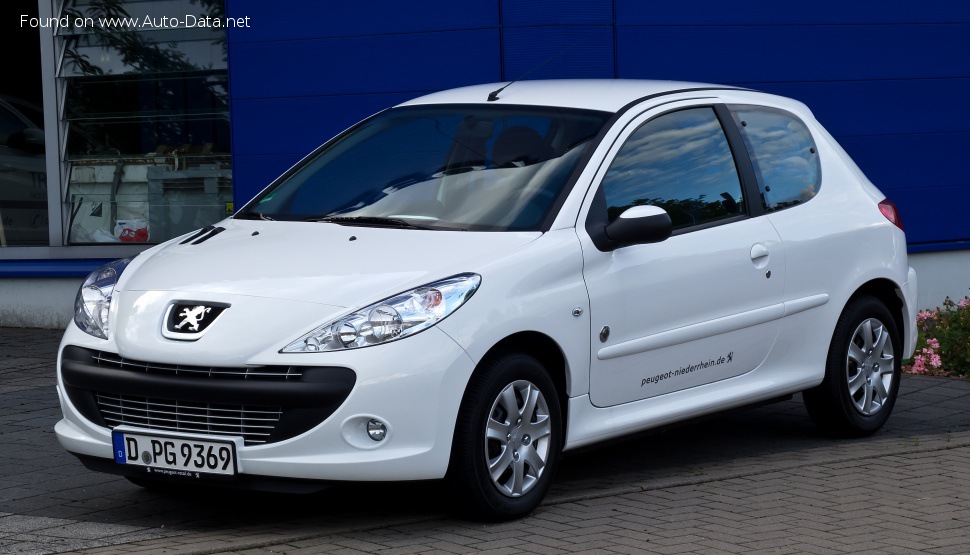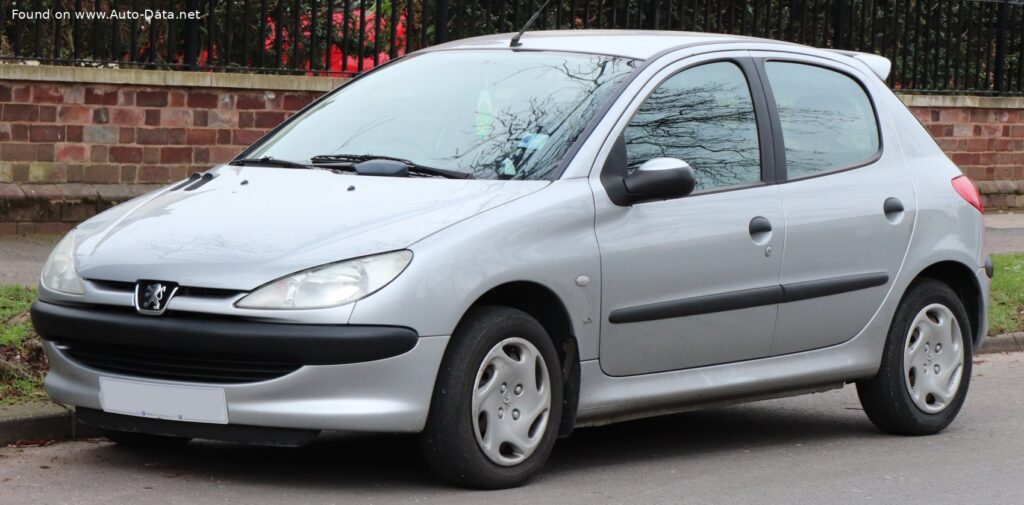
The Peugeot 206 1.9 D, produced between 1998 and 2003, was a key variant within the highly successful 206 series. Representing an entry-level diesel option, it offered economical motoring within the supermini segment. The 206, overall, was a significant model for Peugeot, built on the 20XX platform (later known as the T1 platform), and aimed to replace the aging Peugeot 205. The 1.9 D specifically targeted buyers prioritizing fuel efficiency and low running costs over outright performance, and served as a practical and affordable choice in the European market.
Peugeot 206 1.9 D: An Overview
The 1.9 D model occupied the lower end of the 206 range, positioned below the petrol-powered variants and the more powerful 2.0 HDI diesel. It was available in both 3-door and 5-door hatchback configurations, catering to different lifestyle needs. While not offering the sporty appeal of the GTI or the refined power of the HDI models, the 1.9 D provided a dependable and economical transportation solution. Its simplicity and robust engine design contributed to its popularity, particularly among drivers covering high annual mileages.
Powertrain & Engine Architecture
The heart of the 206 1.9 D is the WJZ (DW8) 1.9-liter inline-four diesel engine. This engine, a mainstay in Peugeot and Citroën vehicles of the era, is a naturally aspirated, indirect injection diesel. It utilizes a precombustion chamber injection system, a common technology in diesel engines of the late 1990s and early 2000s. This system involves injecting fuel into a precombustion chamber, where it partially ignites before entering the main combustion chamber, promoting more complete combustion. The engine features an overhead camshaft (OHC) valvetrain with two valves per cylinder.
The engine’s specifications include a bore of 82.2 mm and a stroke of 88 mm, resulting in a displacement of 1868 cc (113.99 cubic inches). The compression ratio is relatively high at 23:1, typical for diesel engines. The engine produces 71 horsepower (hp) at 4600 rpm and 125 Newton-meters (92.2 lb-ft) of torque at 2500 rpm. The engine oil capacity is 4.75 liters (5.02 US quarts / 4.18 UK quarts), and the cooling system requires 8.2 liters (8.66 US quarts / 7.21 UK quarts) of coolant.
The 206 1.9 D was exclusively offered with a 5-speed manual transmission. This transmission was chosen to maximize fuel efficiency and provide a direct connection between the engine and the front wheels. The gearbox ratios were geared towards economy, prioritizing lower engine speeds at cruising speeds.
Driving Characteristics
The driving experience in the 206 1.9 D is characterized by its modest performance and focus on fuel economy. Acceleration from 0 to 100 km/h (0 to 62 mph) takes approximately 15.1 seconds, and 0 to 60 mph is achieved in around 14.3 seconds. The top speed is 165 km/h (102.53 mph). While these figures are not particularly impressive, they were adequate for everyday driving and urban commuting. The engine delivers its peak torque at 2500 rpm, providing reasonable pulling power for overtaking maneuvers, although it requires downshifting for more spirited acceleration. The 5-speed manual transmission allows drivers to keep the engine within its optimal operating range, maximizing fuel efficiency. Compared to the more powerful 2.0 HDI models, the 1.9 D feels noticeably slower, but it offers a simpler and more predictable driving experience.
Equipment & Trim Levels
The 206 1.9 D typically came with a basic level of equipment, reflecting its position as an entry-level model. Standard features generally included power steering, central locking, and an immobilizer. Interior upholstery was typically cloth, and the dashboard featured a functional, if somewhat basic, design. Optional extras included air conditioning, electric windows, and a radio/CD player. Higher trim levels, such as the “LX” or “GL” variants, offered additional features like alloy wheels, upgraded interior trim, and fog lights. The overall interior ambiance was practical and durable, prioritizing functionality over luxury.
Chassis & Braking
The 206 1.9 D utilizes an independent McPherson strut suspension system at the front, providing a comfortable ride and decent handling. The rear suspension employs a torsion beam setup, which is a cost-effective and space-efficient solution. The front brakes are disc brakes, offering good stopping power, while the rear brakes are drum brakes, a common feature in this class of vehicle to reduce costs. Anti-lock Braking System (ABS) was often included as standard equipment, enhancing safety. The steering is a hydraulic power steering system, providing light and easy steering input. The 206 1.9 D is equipped with 175/65 R14 tires mounted on 6J x 14 inch wheel rims.
Market Reception & Comparison
The Peugeot 206 1.9 D was generally well-received by critics for its fuel efficiency and low running costs. It was praised as a practical and reliable choice for drivers seeking economical transportation. However, its modest performance was often noted as a drawback. Compared to the petrol-powered 206 variants, the 1.9 D offered significantly better fuel economy, but at the expense of acceleration and refinement. Against the 2.0 HDI diesel, the 1.9 D lacked the power and sophistication of the more advanced common-rail diesel engine. However, the 1.9 D’s simpler engine design often translated to lower maintenance costs and greater long-term reliability. Fuel consumption figures were around 7.8 l/100 km (30.2 US mpg / 36.2 UK mpg) in urban conditions and 4.5 l/100 km (52.3 US mpg / 62.8 UK mpg) on the extra-urban cycle.
Technical Specifications
| Brand | Peugeot |
| Model | 206 |
| Type (Engine) | 1.9 D (71 Hp) |
| Start of production | 1998 |
| End of production | 2003 |
| Engine Displacement | 1868 cm3 (113.99 cu. in.) |
| Number of Cylinders | 4, Inline |
| Power | 71 Hp @ 4600 rpm |
| Torque | 125 Nm @ 2500 rpm (92.2 lb.-ft. @ 2500 rpm) |
| Fuel Type | Diesel |
| Acceleration 0-100 km/h | 15.1 sec |
| Acceleration 0-60 mph | 14.3 sec |
| Maximum Speed | 165 km/h (102.53 mph) |
| Kerb Weight | 1040 kg (2292.81 lbs.) |
| Fuel Tank Capacity | 50 l (13.21 US gal / 11 UK gal) |
| Length | 3835 mm (150.98 in.) |
| Width | 1652 mm (65.04 in.) |
| Height | 1428 mm (56.22 in.) |
| Transmission | 5-speed Manual |
Legacy
The Peugeot 206 1.9 D has proven to be a durable and reliable vehicle, particularly when well-maintained. The DW8 engine is known for its robustness and longevity. Today, these vehicles are relatively common on the used car market, often offering exceptional value for money. While they may not be as desirable as the more powerful or refined variants, the 1.9 D remains a practical and economical choice for those seeking a simple and dependable supermini. Common issues include wear and tear on suspension components and potential fuel injector problems, but these are generally inexpensive to repair. The 206 1.9 D represents a solid example of a late-1990s/early-2000s diesel car, prioritizing fuel efficiency and practicality over outright performance.