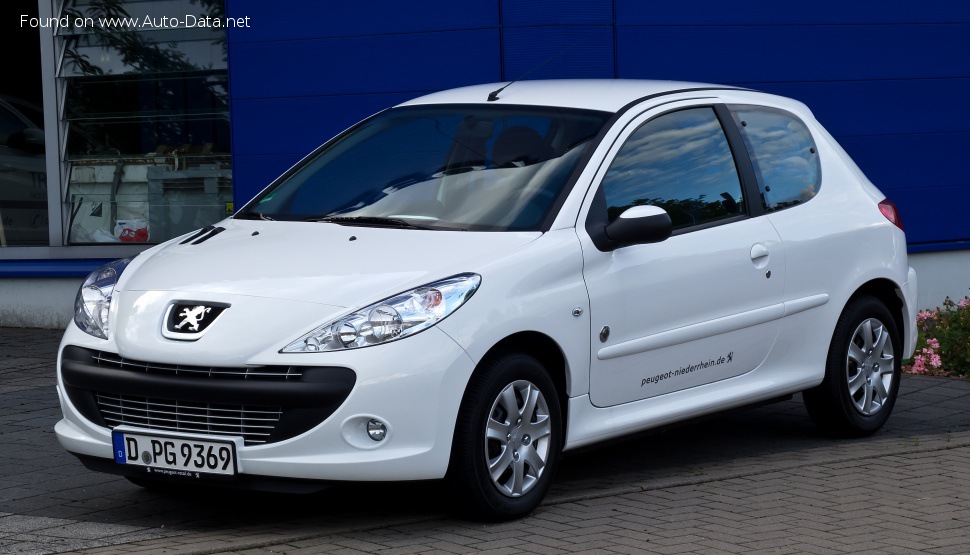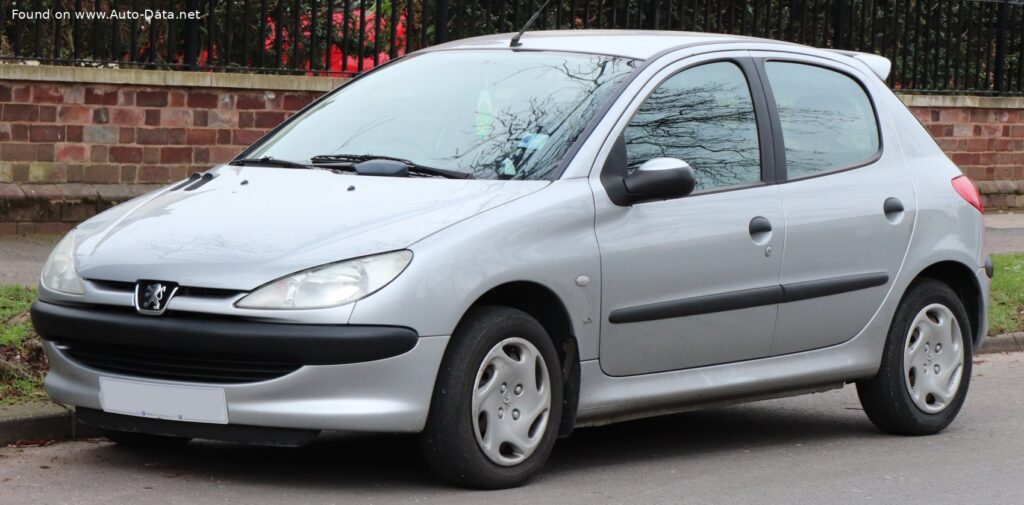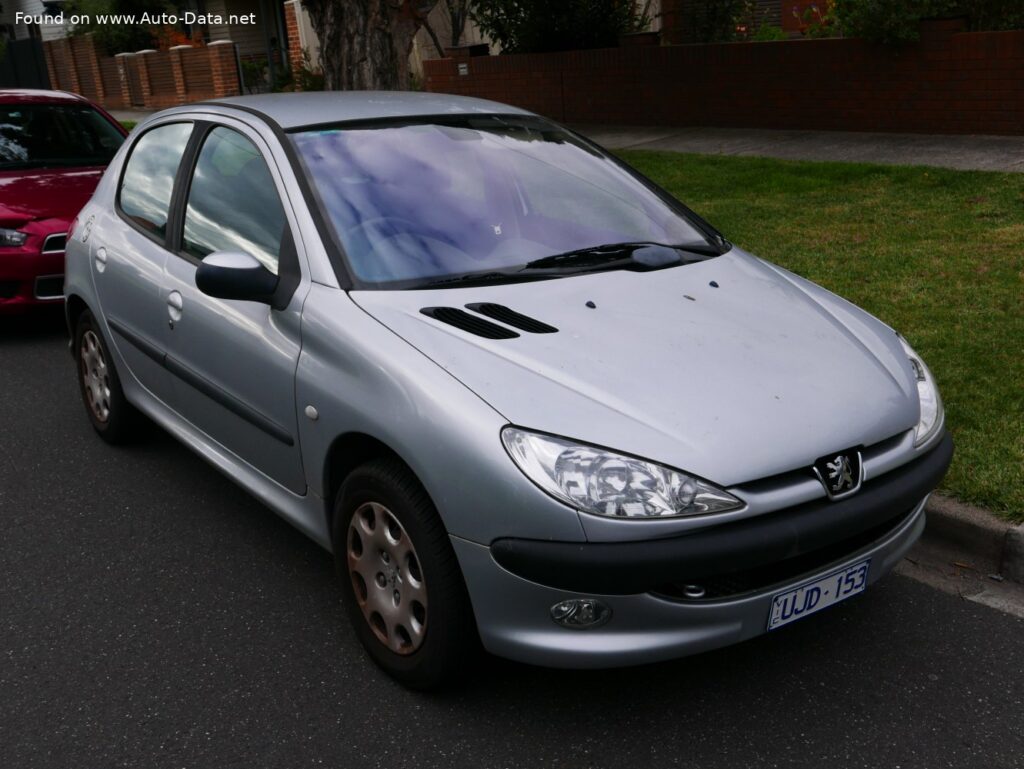
The Peugeot 206, produced from 1998 to 2012, was a supermini car that represented a significant step forward for the French manufacturer in terms of design, build quality, and driving dynamics. The facelifted version, introduced in 2003, brought revised styling and updated features. Among the various engine and transmission combinations offered, the 1.6i 16V (109 hp) automatic variant occupied a middle ground in the lineup, appealing to buyers seeking a balance between performance, comfort, and ease of use. Production of this specific configuration ran from 2003 to 2009, primarily targeting the European market.
The 1.6i 16V Automatic: Positioning and Overview
The 1.6i 16V automatic version of the 206 facelift was positioned as a step up from the base 1.4-liter models, offering noticeably more power and refinement. It wasn’t intended to be a performance flagship – that role was reserved for the GTI and Rallye variants – but rather a comfortable and capable everyday vehicle. Compared to the diesel options, like the 2.0 HDI, the 1.6i offered a smoother, quieter driving experience, albeit with slightly higher fuel consumption. The automatic transmission was a key selling point for drivers prioritizing convenience, particularly in urban environments.
Powertrain & Engine Architecture
The heart of the 206 1.6i 16V automatic is the NFU (and sometimes TU5JP4) engine, a 1.6-liter inline four-cylinder gasoline engine. This engine is a naturally aspirated unit, meaning it doesn’t utilize a turbocharger or supercharger. It features a double overhead camshaft (DOHC) valvetrain with four valves per cylinder, contributing to its relatively high power output for its displacement. The engine’s bore and stroke are 78.5 mm (3.09 in) and 82 mm (3.23 in) respectively, resulting in a displacement of 1587 cm³ (96.84 cu. in). The compression ratio is 11:1.
Fuel delivery is managed by a multi-port manifold injection system, providing precise fuel metering for optimal combustion. The engine produces 109 hp at 5750 rpm and 147 Nm (108.42 lb-ft) of torque at 4000 rpm. This translates to a power-to-liter ratio of 68.7 hp/l. The engine oil capacity is 3.25 liters (3.43 US qt | 2.86 UK qt), and the cooling system requires 7 liters (7.4 US qt | 6.16 UK qt) of coolant.
The automatic transmission paired with this engine is a four-speed unit. While not the most modern transmission by today’s standards, it provided smooth and reliable operation. Gear ratios were optimized for a balance of acceleration and fuel efficiency, though it lacked the responsiveness of a manual transmission. The transmission’s shift points were programmed to prioritize comfort and fuel economy over aggressive acceleration.
Engine Code Specifics
The NFU engine code is the most commonly found variant in this application. The TU5JP4 code is also seen, representing a slightly earlier iteration of the same engine family. Both codes share the same fundamental architecture and specifications, with minor differences in calibration and component sourcing. Both engines are known for their relative reliability, provided they are properly maintained.
Driving Characteristics
The 206 1.6i 16V automatic offered a comfortable and predictable driving experience. Acceleration from 0 to 100 km/h (0-62 mph) took approximately 11.6 seconds, while 0-60 mph was achieved in around 11 seconds. The top speed was 188 km/h (116.82 mph). While these figures weren’t particularly impressive compared to sportier versions of the 206, they were adequate for everyday driving. The automatic transmission smoothed out power delivery, making it easy to navigate city streets and highways. However, the four-speed transmission limited the engine’s ability to stay in its optimal power band, especially during overtaking maneuvers. Compared to the five-speed manual version, the automatic felt slightly less responsive and consumed more fuel.
The weight-to-power ratio of 9.6 kg/hp and the weight-to-torque ratio of 7.1 kg/Nm indicated a reasonable balance between power and weight, contributing to a generally pleasant driving experience. The car felt stable and predictable in corners, although it wasn’t designed for aggressive handling.
Equipment & Trim Levels
The 1.6i 16V automatic trim level typically included features such as air conditioning, power steering, central locking, electric front windows, and an audio system. Interior upholstery was usually cloth, with options for upgraded materials available. The dashboard layout was functional and straightforward, with easy-to-read gauges and controls. Optional extras included alloy wheels, a sunroof, and upgraded audio systems. Safety features included ABS (Anti-lock Braking System) and driver and passenger airbags. The specific equipment level varied depending on the market and optional packages selected by the original buyer.
Chassis & Braking
The 206 1.6i 16V automatic utilized a MacPherson strut front suspension and a torsion beam rear suspension. This setup provided a good balance of ride comfort and handling. The front brakes were ventilated discs, while the rear brakes were discs. The ABS system helped to maintain control during emergency braking situations. Tire size was typically 195/55 R15 H, mounted on 15-inch steel or alloy wheels. The car’s curb weight of 1050 kg (2314.85 lbs) contributed to its relatively nimble handling.
Market Reception & Comparison
The Peugeot 206 1.6i 16V automatic received generally positive reviews from automotive critics. It was praised for its comfortable ride, refined engine, and ease of use. However, some critics noted that the automatic transmission felt dated compared to newer designs and that the fuel economy wasn’t as competitive as some of its rivals. Compared to the 1.4-liter models, the 1.6i offered a significant performance upgrade, while remaining more affordable than the sportier GTI and Rallye versions. Fuel consumption was rated at 7.4 l/100 km (31.8 US mpg, 38.2 UK mpg, 13.5 km/l) combined, with CO2 emissions of 176 g/km (Euro 3 emission standard).
Technical Specifications
| Brand | Peugeot |
| Model | 206 |
| Generation | 206 (facelift 2003) |
| Type | 1.6i 16V (109 Hp) Automatic |
| Start of production | 2003 |
| End of production | 2009 |
| Engine Code | NFU / TU5JP4 |
| Engine Displacement | 1587 cm³ (96.84 cu. in.) |
| Number of Cylinders | 4 |
| Engine Configuration | Inline |
| Power | 109 hp @ 5750 rpm |
| Torque | 147 Nm (108.42 lb-ft) @ 4000 rpm |
| Fuel Injection | Multi-port manifold injection |
| Valvetrain | DOHC |
| Transmission | 4-speed automatic |
| Drive Wheels | Front |
| Curb Weight | 1050 kg (2314.85 lbs) |
| Max Weight | 1590 kg (3505.35 lbs) |
| Fuel Consumption (Urban) | 10.2 l/100 km (23.1 US mpg, 27.7 UK mpg, 9.8 km/l) |
| Fuel Consumption (Extra Urban) | 5.7 l/100 km (41.3 US mpg, 49.6 UK mpg, 17.5 km/l) |
| Fuel Consumption (Combined) | 7.4 l/100 km (31.8 US mpg, 38.2 UK mpg, 13.5 km/l) |
| CO2 Emissions | 176 g/km |
| Acceleration 0-100 km/h | 11.6 sec |
| Maximum Speed | 188 km/h (116.82 mph) |
Legacy
The Peugeot 206 1.6i 16V automatic, while not a particularly rare or sought-after variant, has proven to be a relatively reliable and durable vehicle. The NFU/TU5JP4 engine is known for its longevity, and the four-speed automatic transmission, while not cutting-edge, is generally robust. Today, these cars can be found on the used car market at affordable prices. They represent a good value for buyers seeking a comfortable and economical city car. However, potential buyers should be aware of the age-related issues common to older vehicles, such as corrosion and wear and tear on suspension components. Regular maintenance and careful inspection are essential to ensure continued reliability.